
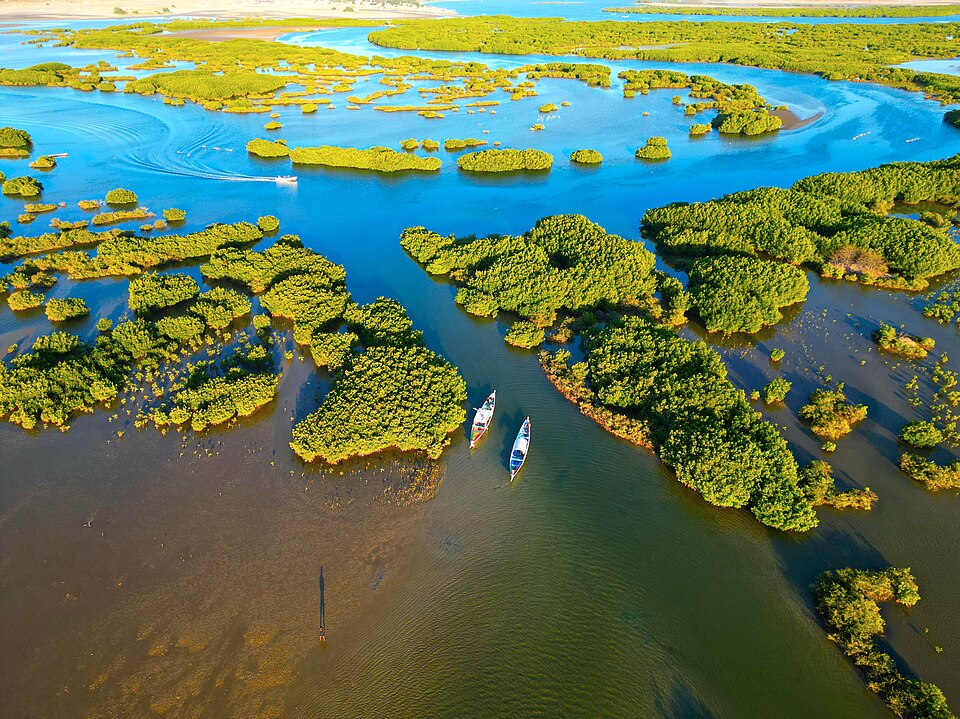
The Sine Saloum Delta is one of Senegal’s most spectacular natural wonders and among the most important wetland ecosystems in West Africa. Located around 150 km south of Dakar, the delta is formed where the Sine and Saloum rivers meet the Atlantic Ocean, creating a maze of mangrove forests, tidal creeks, sandy islands, salt flats, and tranquil lagoons. Recognized as both a UNESCO World Heritage Site and a UNESCO Biosphere Reserve, the region is celebrated for its extraordinary biodiversity and centuries-old cultural heritage.
Why Visit the Sine Saloum Delta?
Unlike Senegal’s bustling cities, the Sine Saloum Delta offers a peaceful escape into nature. Visitors can glide through narrow mangrove channels in traditional wooden pirogues, observe hundreds of bird species, visit remote fishing villages, and experience the hospitality of the local Serer and Niominka communities.
The delta covers more than 5,000 km² and includes over 200 islands and islets, making it one of Africa’s most remarkable coastal landscapes.
Top Attractions
Toubacouta serves as the main gateway to the delta and is an excellent base for boat excursions, kayaking, and wildlife tours.
Palmarin is famous for its peaceful beaches, baobab forests, and nearby salt flats. Visitors can often spot hyenas on guided evening excursions.
Mar Lodj is a charming island village where bicycles, horse carts, and walking are the primary means of transport. It offers a glimpse into traditional island life and beautiful colonial-era architecture.
Fathala Wildlife Reserve, located on the edge of the delta, protects giraffes, zebras, antelopes, rhinos, monkeys, and numerous bird species, making it an excellent addition to any itinerary.
Wildlife and Birdwatching
The Sine Saloum Delta is internationally renowned for birdwatching. More than 400 bird species have been recorded, including pelicans, flamingos, herons, kingfishers, spoonbills, ospreys, and thousands of migratory birds that winter here.
The mangrove ecosystem also supports dolphins, manatees, crocodiles, monitor lizards, monkeys, warthogs, jackals, and countless fish species that sustain local fishing communities. Bird Island hosts one of the world’s largest breeding colonies of royal terns.
History and Culture
People have lived in the delta for thousands of years. One of its most fascinating features is the presence of hundreds of ancient shell mounds, created by generations of communities harvesting shellfish. Some of these mounds contain burial sites and archaeological remains that provide valuable insight into the history of West Africa.
These remarkable cultural landscapes led to the delta’s inscription as a UNESCO World Heritage Site in 2011.
Today, fishing, oyster harvesting, salt production, and sustainable agriculture remain central to daily life. Visitors are welcomed into traditional villages where local customs, music, and crafts continue to thrive.
Best Time to Visit
The best time to visit is during the dry season from November to April, when temperatures are pleasant, wildlife is easier to observe, and boat trips are most enjoyable.
Birdwatchers should aim for November to February, when thousands of migratory birds arrive from Europe.
The rainy season, from June to October, transforms the delta into an incredibly lush landscape, although some tracks and villages may become more difficult to access.
How to Get There
The Sine Saloum Delta lies approximately 2.5 to 4 hours by road from Dakar, depending on your destination within the region.
Most visitors travel by car to Toubacouta, Ndangane, or Palmarin, where local guides organize boat excursions through the mangrove channels. Multi-day stays are highly recommended to fully appreciate the area’s wildlife, culture, and peaceful atmosphere.
Travel Tips
Bring lightweight clothing, sun protection, insect repellent, and binoculars if you enjoy wildlife photography or birdwatching. Early morning and late afternoon boat trips provide the best opportunities for observing animals and offer the most pleasant temperatures.
Hiring a local guide not only enriches the experience but also supports sustainable tourism and local communities.