
Located in the remote Aleutian Islands of Alaska, Umnak Island is one of the most fascinating and isolated destinations in the United States. Shaped by volcanoes, surrounded by the cold waters of the Bering Sea and the North Pacific Ocean, this wild island offers dramatic landscapes, rich wildlife and a glimpse into the traditional life of the Unangax̂ (Aleut) people who have called the region home for thousands of years.
With fewer than 200 permanent residents and no road connection to mainland Alaska, Umnak Island remains one of the least visited places in the state. Travellers who make the difficult journey are rewarded with untouched wilderness, active volcanoes, vast coastal scenery and some of the most remote landscapes in North America.
Umnak Island is the third-largest island in the Aleutian Islands, covering an area of around 1,800 square kilometres. It lies west of Unalaska Island and is separated from it by the narrow Umnak Pass.
The island belongs to the Aleutians West Census Area and is part of one of the most geologically active regions on Earth. The Aleutian chain itself was created by the collision of the Pacific Plate and the North American Plate, forming a long line of volcanoes known as the Aleutian Volcanic Arc.
The landscape of Umnak is dominated by rugged mountains, volcanic valleys, windswept tundra and dramatic cliffs rising from the ocean. Its isolation and harsh climate have preserved an environment that feels almost untouched by modern development.
Mount Vsevidof: The Highest Volcano on Umnak Island
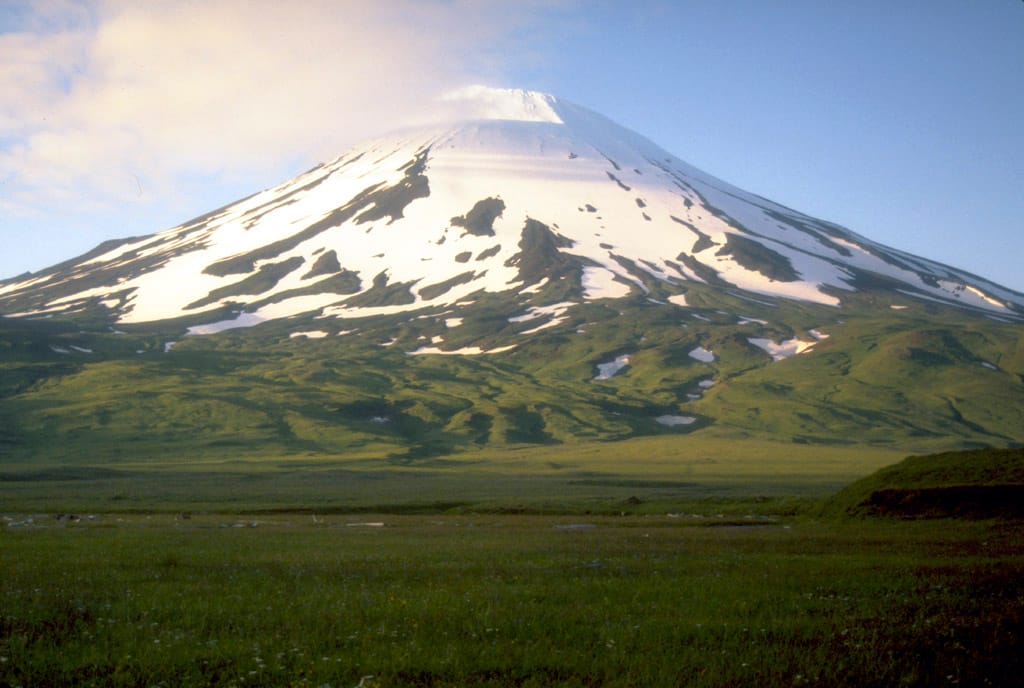
The most iconic natural feature of Umnak Island is Mount Vsevidof, a massive stratovolcano reaching 2,149 metres above sea level. It is the highest point on the island and one of the most impressive volcanoes in the Aleutians.
Although considered dormant, Mount Vsevidof has experienced eruptions in recent geological history, and its perfectly shaped volcanic cone dominates the island’s skyline.
Another important volcanic landmark is Mount Recheshnoi, which rises to 1,984 metres and is known for its geothermal activity. The island contains several hot springs, volcanic fields and steaming areas that reveal the powerful forces still shaping this remote corner of Alaska.

Wildlife of Umnak Island
The isolation of Umnak Island has created an ideal environment for wildlife. The surrounding waters are among the richest marine ecosystems in the world, while the island itself provides habitat for many Arctic and sub-Arctic species.
Visitors may encounter:
– Steller sea lions, often seen resting on rocky shores or hunting in coastal waters.
– Sea otters, which are common throughout the Aleutian Islands.
– Puffins, including horned puffins and tufted puffins, nesting on cliffs during the summer months.
– Bald eagles, frequently spotted flying above the coastline.
Caribou, introduced to some Aleutian islands, including populations on Umnak.
The surrounding ocean is also famous for whales, including humpback whales, orcas and grey whales, which pass through the nutrient-rich waters of the Aleutian region.
The Unangax̂ Heritage of Umnak Island
Long before modern settlements appeared, Umnak Island was home to the Unangax̂ people, also known as the Aleut. Their culture developed around the resources of the ocean, with fishing, hunting, and gathering forming the foundation of daily life.
Archaeological evidence shows that the island has been inhabited for more than 8,000 years. Traditional Unangax̂ settlements were often located along protected coastal areas, where communities could access marine resources and travel between islands.
During World War II, Umnak Island became strategically important because of its location near the Pacific theatre. The United States built Fort Glenn, a military airfield on the island, which played a role in defending Alaska against Japanese expansion. Today, abandoned military structures remain scattered across parts of the island, slowly being reclaimed by nature.
Exploring the Island’s Landscapes
Umnak Island is not a conventional tourist destination. There are no large hotels, developed hiking trails, or organised sightseeing infrastructure. Exploration here is about experiencing wilderness rather than following a traditional itinerary.
Some of the most remarkable sights include:
- Mount Vsevidof, for its dramatic volcanic scenery.
- The Valley of Ten Thousand Smokes-style volcanic landscapes, with ash-covered valleys and rugged terrain similar to other volcanic regions of Alaska.
- Remote beaches and coastal cliffs, where wildlife can often be observed without crowds.
- Hot springs and geothermal areas, showcasing the island’s volcanic activity.
The combination of volcanoes, ocean and tundra makes Umnak a dream destination for photographers, adventurers and travellers looking for truly remote places.
Best Time to Visit Umnak Island
The best time to visit Umnak Island is during the summer months, from June to August.
June and July offer the longest daylight hours and the best conditions for exploring outdoors. Wildlife activity is also at its peak, with seabirds nesting and marine mammals more visible.
August can be a good month for photography, although weather becomes increasingly unpredictable.
The climate remains challenging throughout the year. Even in summer, visitors should expect strong winds, rain, fog and rapidly changing conditions. Winters are extremely harsh, with storms, heavy snowfall and very limited access.
How to Get to Umnak Island
Reaching Umnak Island requires careful planning. The main settlement is Nikolski, located on the western side of the island, and home to one of the most remote communities in Alaska.
The most common route is:
Travel by air from Anchorage to Unalaska/Dutch Harbor, the main transport hub of the Aleutian Islands.
Continue by small aircraft or charter flight to Nikolski on Umnak Island.
There are no roads connecting Umnak Island with other Aleutian communities, and transport within the island is limited. Visitors should be prepared for basic conditions and possible weather-related delays.
Because of the island’s remoteness, most travellers visit with experienced guides, researchers or adventure tourism operators familiar with the Aleutian environment.