
Located in the western part of Tajikistan near the border with Uzbekistan, and also called the “Pompeii of Central Asia”, Panjakent is one of Central Asia’s most fascinating destinations for travellers interested in ancient history and fascinating mountain landscapes and Silk Road heritage. This small city offers a combination of archaeological treasures, traditional culture and access to the spectacular Fann Mountains.
Its ancient ruins, colourful bazaars and nearby natural wonders reveal a region that was once one of the most important centres of the Sogdian civilisation, a powerful culture that flourished more than 1,500 years ago along the Silk Road.
The Sogdian Civilisation and the Ancient City of Panjakent
The main attraction of Panjakent is the archaeological site of Ancient Panjakent, located a few kilometres outside the modern city. Founded around the 5th century AD, the ancient city was a major trading hub of the Sogdians, who controlled important routes connecting the Mediterranean world with Persia and China.
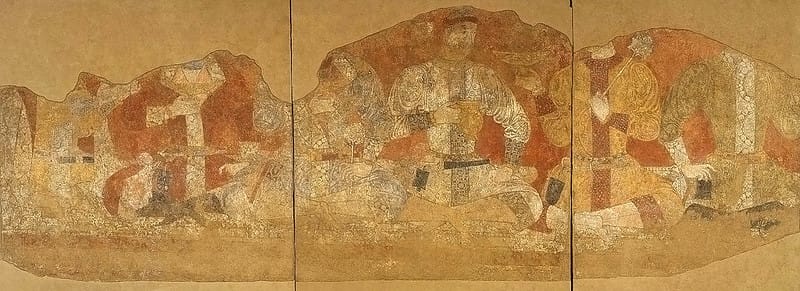
The ruins reveal a surprisingly advanced urban settlement, with temples, markets, residential buildings, fortified walls and impressive painted decorations. Archaeologists discovered very well-preserved frescoes depicting royal ceremonies, battles, religious scenes and everyday life, offering rare insight into this ancient civilisation.
The site is particularly famous for its colourful wall paintings, which are considered among the finest examples of early medieval art in Central Asia. Many original artefacts and fresco fragments are displayed at the Rudaki Museum in Panjakent, named after Abu Abdullah Rudaki, a famous 9th-century Persian poet, singer and musician born in the region.
Visiting the Rudaki Museum
The Rudaki Museum of History and Regional Studies is probably the best place to understand Panjakent’s history. The museum houses archaeological discoveries from Ancient Panjakent, including over 98,000 items from excavations conducted in the Zeravshan Valley.
The exhibits explain the importance of the Silk Road and how different cultures influenced the region over centuries. Even visitors who are not normally interested in museums will appreciate the unique artwork and historical importance of the collections.
The Seven Lakes of Tajikistan
One of the biggest reasons travellers visit Panjakent is its proximity to the breathtaking Seven Lakes, a chain of turquoise and emerald-coloured lakes hidden among the Fann Mountains.
The lakes are located inside the Hissor Range and are surrounded by steep valleys, traditional villages and snow-covered peaks. Each lake has its own character, with colours ranging from deep blue to bright green depending on the sunlight and minerals in the water:
Mižgon (Nežegon) – At 1,598 m, its name means “eyelashes”. The lake is known for turquoise, blue, and purple shades.
Soja – Located at 1,701 m, its name means “shadow”, referring to its narrow, shaded valley. Its waters range from blue to purple.
Hušër (Gušor/Izšor) – At 1,770 m, its name means “vigilance”, possibly linked to local legends about venomous snakes.
Nofin – Situated at 1,820 m, this long lake is about 2 km wide and is known for occasional reddish hues.
Churdak – At 1,870 m, its name means “small”. It is the smallest of the Seven Lakes.
Marguzor – At 2,139 m, it is the largest and most famous lake, with spectacular light-blue waters and mountain views.
Hazorchashma – The highest lake at 2,400 m, its name means “a thousand springs” due to the many streams feeding it.
The road to the lakes is an adventure itself, passing through narrow mountain valleys and remote settlements. A 4×4 vehicle is usually recommended, especially beyond the lower lakes.
The Fann Mountains: Hiking Paradise
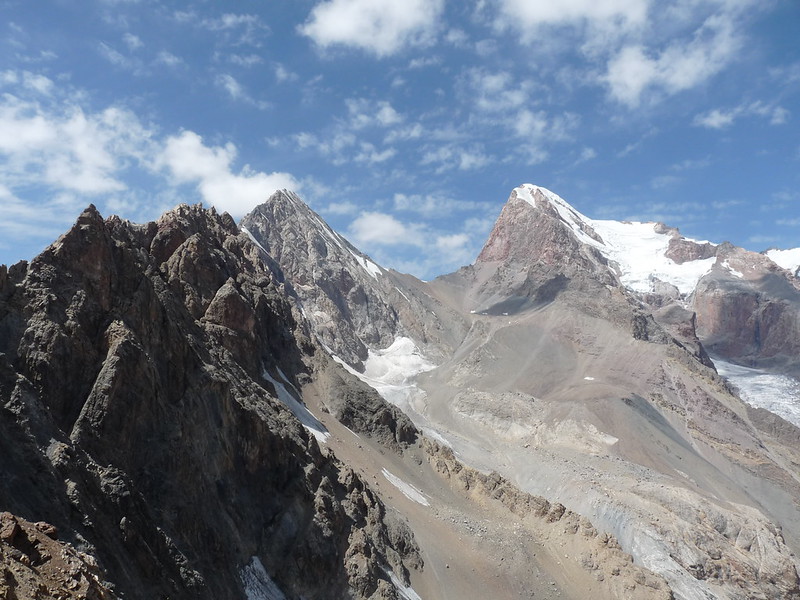
Panjakent is the best gateway to the Fann Mountains, one of the most beautiful mountain regions in Central Asia.
The area offers incredible opportunities for hiking, trekking and photography, with alpine lakes, rugged peaks and untouched valleys. Some of the most famous trekking destinations include Iskanderkul Lake, Chimtarga Peak and the valleys around Artuch.
Iskanderkul Lake is among the most visited natural attractions near Panjakent. Named after Alexander the Great (Iskander in Persian) according to local legends, the lake is around 2,200 metres of altitude and is surrounded by a stunning mountain range. Nearby, visitors can also see Fann Niagara Waterfall, not as impressive as its American cousin, yet still spectacular.
Panjakent Bazaar and Local Culture
The modern city of Panjakent is small and easy to explore on foot. The central bazaar is the heart of everyday Tajik life, with an incredible variety of spices, fresh fruit, nuts, bread and many other local products.
The region is also known for its traditional cuisine. Visitors should try plov, the famous Central Asian rice dish prepared with carrots, meat and spices, as well as local bread and dairy products.
Panjakent remains a place where ancient traditions are still visible. The surrounding villages preserve traditional architecture, farming practices and a slower way of life that contrasts strongly with the larger cities of Central Asia.
Best Time to Visit Panjakent
The best time to visit Panjakent is from May to October, when the weather is pleasant and the mountain roads are generally accessible.
Spring (May and June) is an excellent period for visiting, with green valleys, blooming flowers and comfortable temperatures for hiking. The Seven Lakes are particularly beautiful during this season.
Summer (July and August) offers the best conditions for trekking in the Fann Mountains, although temperatures in the city can become hot during the afternoon.
Autumn (September and October) is another ideal time, with cooler weather, fewer tourists and beautiful golden colours in the mountains.
Winter can be challenging because snow may make access to mountain areas difficult, although the city itself remains accessible.
How to Get to Panjakent
The closest major international airport is in Samarkand, Uzbekistan, located about 60 kilometres away. Many travellers combine a visit to Panjakent with a trip to Samarkand, crossing the border between the two countries.
From Samarkand, shared taxis or private transfers can reach Panjakent in around 1.5–2 hours, depending on border procedures.
The city is also connected by road with Dushanbe, the capital of Tajikistan. The journey takes approximately 5–6 hours and crosses spectacular mountain landscapes.
Because public transport options are limited for exploring remote attractions, many travellers choose to hire a driver or join a guided tour, especially for the Seven Lakes and the Fann Mountains.
A minimum of two days is recommended to experience Panjakent’s main highlights. One day can be dedicated to the ancient ruins and museum, while another can be spent exploring nearby natural attractions.
Travellers who enjoy hiking should consider staying three to five days to explore the Seven Lakes, Iskanderkul Lake and the surrounding mountain trails.
Panjakent is still relatively unknown compared with destinations such as Samarkand or Bukhara, making it an excellent choice for travellers looking for authentic experiences, fewer crowds and a deeper connection with Central Asia’s history.