Tucked away in the high-altitude desert of Catamarca, Argentina, the Campo de Piedra Pómez is one of the most surreal and remote landscapes in South America. Stretching across more than 75,000 hectares in the Puna de Atacama, this protected area is home to a massive field of white and pale pink pumice stone formations, sculpted by volcanic eruptions and shaped by millennia of wind erosion. What visitors find here is a silent stone labyrinth that looks more like a forgotten planet than part of our own world.
The entire area was formed over 100,000 years ago by the violent activity of nearby volcanoes, especially Volcán Blanco (also known as Robledo), whose caldera can still be visited today. The explosive eruptions created vast flows of ignimbrite — a mixture of ash, pumice and gases — which later hardened into stone and were slowly eroded by puna winds. The result is a frozen sea of rock waves, towers and natural sculptures that stretch as far as the eye can see, at altitudes ranging from 3,050 to 4,850 meters above sea level.
Although it was declared a protected natural area in 2012, the Campo de Piedra Pómez still lacks proper conservation infrastructure. Only three park rangers cover the entire region, with some stationed over 80 km from the site. In recent years, increasing tourist traffic and the threat of mining activity in surrounding dunes have placed pressure on this fragile ecosystem. Despite its protected status, the landscape remains vulnerable.
Reaching this hidden treasure is not easy. The closest village is El Peñón, located about 60 kilometers south of Antofagasta de la Sierra, the departmental capital. Both are accessible only by unpaved roads, and a high-clearance 4×4 vehicle is essential. The journey is long and remote, but offers unforgettable views of volcanic plains, salt flats and wide-open skies. From El Peñón, travelers can arrange guided excursions with local drivers who know the terrain. Some tours also include other natural highlights in the region, such as Laguna Grande or the Balcones de Laguna Purulla.
There are no hotels or tourist infrastructure in the pumice field itself, and even in El Peñón lodging is basic. A few guesthouses offer simple rooms and homemade meals, often run by families who also act as guides. For more comfort, travelers can choose to stay in Antofagasta de la Sierra, which has more services, fuel and accommodation options. Wild camping inside the protected area is discouraged, both because of conservation concerns and because of the isolation and unpredictable weather conditions.
The best time to visit is during the dry season, from April to November. During these months, the sky is usually clear and the roads are more accessible. Daytime temperatures can be warm under the sun, but nights are cold year-round, often dropping below freezing. The summer months, from December to March, bring occasional thunderstorms that can wash out roads and make travel dangerous. Regardless of the season, visitors should bring plenty of water, sun protection, warm clothing and offline maps or GPS.
Several scenic areas within the stone field have become informal circuits over time. Among the most impressive are the Gigantes de Piedra Pómez, towering formations that resemble waves of solidified air, and the La Lagunita Escondida, a small hidden lagoon nestled between rock walls. The area’s remoteness and altitude also make it a dream destination for stargazers — with no light pollution and dry, crisp air, the Milky Way is often clearly visible to the naked eye.
Visiting Campo de Piedra Pómez is not about ticking a box or taking a quick photo. It is an experience of solitude, scale and silence. It’s a destination that demands effort and respect, but rewards those who make the journey with an unforgettable encounter with nature’s raw and ancient forces. This is not a place to pass through — it’s a place to feel.
As you make your way across continents on major highways, the landscapes gradually change before your eyes. But it’s not just the view that’s evolving. With the passage of time, you too will begin to recognise new ways of seeing. For example, once whilst driving through the Emirates with a car rented from https://trinityrental.com/, I became aware of the silence I’d been missing ever since moving from the countryside to the bustling city.
In this respect, the destination was of little importance. It was the act of paying attention that mattered. In many ways, this is an example of how travel slows you down, whilst at the same time keeps you moving. It’s a weird balance. However, as you venture into pastures new, you’ll become sharper and more aware. You’ll start to see colours for what they are, learn to appreciate sounds and begin to ask yourself questions you never thought to ask previously.
By pushing you out of your day-to-day comfort zone, travel teaches you both resilience and patience. Perhaps it’s being unable to understand a road sign in another language. Or weaving your way through the desert outside Dubai. By adding up all these small daily hurdles, you’ll become more patient, as you can only figure out these steps as you go along.
Of course, some support can go a long way at this point. For example, Trinity Car Rental makes getting around easier, offering over 80 premium vehicles, many from 2024, all with low mileage, a 300km daily limit, insurance, and taxes included. It all adds up to letting you stay free to focus on learning to trust yourself and adapt to new circumstances.
Driving Across Continents – The Perspective Shift
The world has no shortage of classic drives to enjoy. From the famous Route 66 stretching across the US, to the watercolour-like scenery of Italy’s Amalfi Coast, there’s a new experience waiting for every adventurer looking to explore with their car. In the UAE and Dubai, there’s the Jebel Hafeet Mountain Road, which is glorious at sunrise, with the desert sands glowing in a radiant pink light.
During these travels, having the right vehicle does make a difference, in that you’ll experience the road differently in a luxury rent a car. Thanks to Trinity’s smooth service, which also includes your very own manager, as well as the possibility of picking the car up wherever you want and hiring a driver, you can feel the thrill of an exotic car on the open highway.
The Quiet Power of Choice
In so many of our lives, the ability to make choices is limited. Yet, one of the strongest aspects of hitting the road is that you choose where to stop, where to go, and what route to take. This leads to a newfound feeling of finally being in control. It’s both life-affirming and freeing. So it’s no surprise that services like Trinity Rental resonate so well with travellers.
It’s not just about handing over the keys and saying goodbye. They hand you freedom, uncoupled from the normal issues found with car rentals. For instance, you can rent without deposit and pay with cash, card, or crypto. In addition, the car can be delivered to your office, hotel or to the airport. By clearing away the unnecessary obstacles, not only is travel easier, but it teaches you that freedom comes with the right choices.
Personal Freedom Looks Different on the Road
Once while driving through Arizona, on a whim, I pulled over to witness a spectacular sunset. It wasn’t a planned stop. I saw the light beginning to fade and decided to stop. Thanks to that spontaneous decision, I carry a wonderful memory. As time passes, we have less time to achieve our desires. So it’s important not to become obsessed with trying to achieve everything.
Instead, concentrate on doing what feels right at the moment. In other words, stop overplanning and start listening to your inner voice. It’s like setting out for a resort in Dubai, but on the way, you decide to take a different path out to the dunes. With a full tank of fuel and a gift from Trinity, you don’t have to hesitate but can change plans on the spur of the moment.
Luxury Isn’t Just for Show
It’s easy to be lulled into the idea that luxury is only about status. However, when you’re on the road, it becomes more apparent that it’s actually about peace of mind. After all, a prestige car rental is designed for long hauls, with extra quiet interiors where you can hear yourself think. There’s also the confidence in the latest safety features. Whether you’re thinking about a premium sedan or exotic sports car, each offers an individual experience that’ll add an additional layer to your trip.
Why the Road Changes How You Think
Travelling by car, especially to new places, teaches you adaptability, awareness and, more importantly, to trust yourself and your own decisions. By nature, roads can be unpredictable. The weather is in a constant state of flux. But you learn to adjust as you go along. As time passes, your perspective on what’s important will begin to change. There’s no more panicking at new situations, as you start to go with the flow. You’ll discover beauty, freedom and patience all on the same road trip. In this respect, perhaps the road is the best teacher of all.
Tucked away in the Tennengebirge mountains near Werfen, about 40 km south of Salzburg, lies one of Austria’s most extraordinary natural wonders: the Eisriesenwelt, or “World of the Ice Giants.” Stretching more than 42 kilometres, it is the largest ice cave on the planet. Only the first kilometre is covered in shimmering ice, but this section alone feels like stepping into a frozen fairy tale of crystal palaces, frozen cascades, and immense icy sculptures.
The cave was formed over millions of years as water slowly hollowed out the limestone rock. During the cold winter months, icy winds push into the caverns, freezing the water that seeps in from the surface. The result is a constantly evolving wonderland of frost and ice, with formations that shift subtly from year to year.
It’s important to note that while the cave remains below freezing year-round, the most spectacular ice formations are seasonal. The cave is open to visitors from May to October, when the ice is stable and safely accessible. In winter, the cave remains closed due to snow, ice, and safety hazards, so visitors cannot explore it at that time.
The Journey to the Entrance
Reaching Eisriesenwelt is an adventure in itself. From the village of Werfen, famous for its medieval Hohenwerfen Castle, visitors travel up a steep mountain road before boarding Austria’s steepest cable car. The ride glides high above the valley, delivering breathtaking views of the Salzach River below. A short but scenic hike leads to the cave entrance, perched dramatically at 1,641 meters above sea level.
Once inside, guides lead groups through chambers lit by flickering carbide lamps. The silence, interrupted only by the sound of water droplets and footsteps crunching on the frozen floor, creates a hauntingly beautiful atmosphere. Highlights along the route include the Posselt Hall, the first chamber discovered in 1879, and the spectacular Ice Palace, where towering formations resemble a cathedral carved entirely from ice.
Practical Tips
When to visit: The cave is open from May to October. In winter it remains closed due to hazardous ice conditions.
What to wear: Warm clothing, sturdy shoes, and gloves are essential, even in summer, temperatures inside never rise above freezing.
Tours: Visits are only possible with a guide and take about 75 minutes. Photography is restricted inside, which helps preserve the unique atmosphere.
Getting there: Werfen is a 40-minute train or car ride from Salzburg. From the village, shuttle buses, a cable car, and a short hike complete the journey.
Why Eisriesenwelt Should Be on Your Map
The Eisriesenwelt is more than just a cave, it’s a journey into another world. Few experiences combine such raw natural power, Alpine adventure, and sheer beauty. For anyone travelling through Austria, this icy underworld is a stop that promises to stay with you long after you leave the mountains behind.
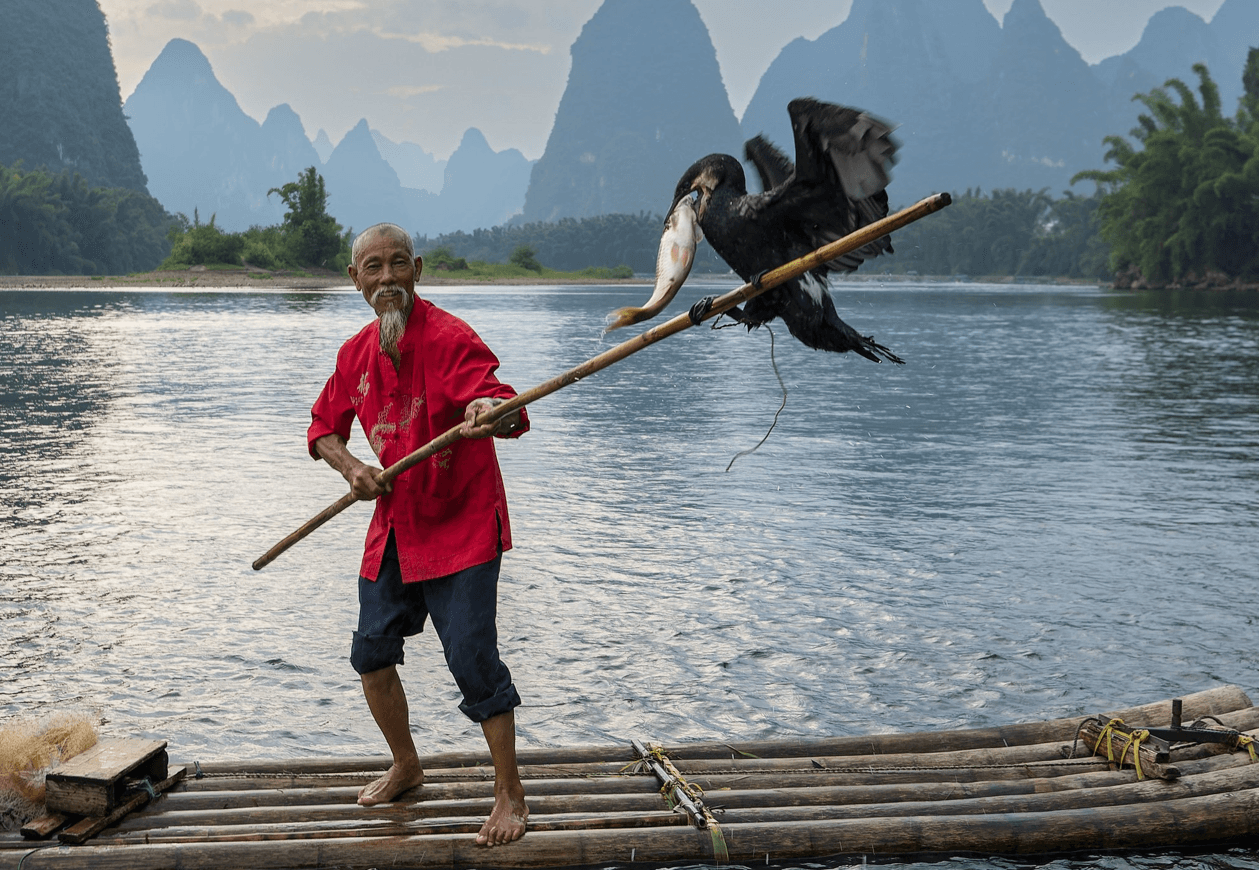
Cormorant fishing is an ancient practice that showcases the unique relationship between humans and animals in traditional ways of life. Practised for over a thousand years in East Asia, this technique involves using trained cormorants to catch fish, especially in rivers. Today, the tradition continues mainly as a cultural performance, but it remains a captivating experience for travellers and a subject of interest for wildlife enthusiasts.
Cormorant fishing is a technique in which cormorants are trained to dive into rivers and retrieve fish for their handlers. A loose ring is often tied at the base of the bird’s neck, which prevents it from swallowing larger fish. These are then collected by the fisherman. Smaller fish can be swallowed by the bird as a reward.
This form of fishing requires deep expertise and a strong bond between the bird and the handler. It is often performed at night, with fires placed at the front of the boat to attract fish and light up the water.
Cormorants belong to the family Phalacrocoracidae, which includes about 40 species found in aquatic environments around the world. The species most commonly used in fishing is the Japanese cormorant, scientifically known as Phalacrocorax capillatus. The Great Cormorant, Phalacrocorax carbo, is also used in some regions.
Cormorants are skilled divers (can dive as deep as 45 meters) with streamlined bodies, webbed feet for powerful swimming, and a hooked bill that helps grip slippery fish. Unlike most aquatic birds, cormorants do not have waterproof feathers. This makes them more effective divers, but also means they must spend time drying their wings after fishing.
Although modern fishing has replaced this technique in everyday life, cormorant fishing continues as a cultural tradition supported by tourism and local pride. The following are the best-known places where you can still witness this rare practice.
Japan – Gifu City on the Nagaragawa River Best time to visit: May 11 to October 15 Gifu is the most famous location in Japan for traditional cormorant fishing, known as Ukai. The fishermen wear traditional robes and guide long wooden boats under the glow of open flames. This practice has been protected and sponsored by the Japanese Imperial Household for centuries. Visitors can watch from specially designed viewing boats.
China – Guilin and Yangshuo in Guangxi Province Best time to visit: All year, especially from October to March Cormorant fishing is sometimes demonstrated along the Li River, particularly for tourists during sunset. These performances recreate an ancient tradition that dates back to the Tang Dynasty. While it is no longer used for subsistence, it remains a visually stunning and symbolic display.
China – Xingping Ancient Town along the Li River Best time to visit: October to April Xingping is a quieter and more authentic spot to observe cormorant fishing. The town’s old architecture and calm river atmosphere provide a perfect backdrop for the experience.
China – Erhai Lake in Yunnan Province Best time to visit: March to May In this area, the practice is still known among the Bai ethnic minority. While rarer today, it is occasionally performed in cultural events and local festivals.
Vietnam once saw cormorant fishing in the Red River Delta, though it is now nearly extinct. Some ethnic groups in rural areas may still train birds for symbolic or ceremonial purposes. In medieval Europe, cormorants were trained in England and France, more as a royal sport than a means of fishing.
Cormorant fishing is not just a way to catch fish. It represents a deeper philosophy of coexistence between people and nature. In Japan, the head fisherman, called Usho, is often seen as a guardian of the river’s spirit. In China, the practice has inspired poets, painters, and storytellers for centuries. Today, conservationists ensure that trained cormorants are treated with care. They are fed properly, given regular rest, and often live longer than their wild counterparts due to veterinary support and the absence of natural predators.
If there’s one challenge every traveller faces when planning a European trip, it’s deciding the destinations to cover to get the best possible experience. The continent has everything from culture to history and natural beauty, offering more variety than perhaps anywhere else in the world. Of course, there are the icons everyone dreams of, like the Eiffel Tower in Paris, the Colosseum in Rome, and the snow-draped Swiss Alps, but Europe’s magic also lies in its quieter corners. Picture yourself drifting along Amsterdam’s canals, exploring quaint villages tucked into Tuscany’s rolling hills, or listening to street musicians in Prague’s Old Town Square.
The best journeys are the ones that strike a balance: legendary landmarks that live up to their fame, paired with local treasures that surprise you along the way. Whether it’s wandering through ancient ruins, sailing past fjords, or indulging in pastries at a Viennese café, Europe promises experiences that linger long after your trip ends. Here’s a list of the 10 best places to explore on your Europe trip.
Paris, the City of Lights and Love
Paris needs no introduction, as it is the epitome of romance, style, and cultural allure. Stroll along the Seine, marvel at the Eiffel Tower, and immerse yourself in art at the Louvre Museum. Neighbourhoods like Montmartre add bohemian charm, while French cafés invite you to savour fresh croissants and coffee. Beyond its iconic landmarks, Paris offers a mood, a rhythm, and a passion that captivates every visitor, whether it’s your first trip or your tenth.
But Paris is not only about glamour and romance – it hides a fascinating underground world waiting to be discovered. The Catacombes de Paris stretch for kilometres beneath the city, an Indiana Jones–like experience where tunnels are lined with millions of human bones, offering both mystery and history in a chillingly unique setting.
For those who prefer something more artistic, the Musée d’Orsay showcases masterpieces of Impressionism inside a converted railway station, while the Centre Pompidou reveals Paris’s modern and contemporary spirit. If you’re looking for tranquillity, escape the crowds at Parc des Buttes-Chaumont or explore the hidden Passages Couverts, 19th-century arcades filled with boutique shops, bookstalls, and vintage charm.
Paris also rewards curiosity: from cruising the Seine at sunset, to discovering the street art of Belleville, to tasting local cheeses at an open-air market, every corner has something to surprise you.
Rome, Where History Comes Alive
Rome is a living museum where ancient history meets vibrant modern life. Walk through the Colosseum and imagine gladiatorial battles, or visit the Roman Forum to explore the heart of the old empire. The Vatican City, with its breathtaking St Peter’s Basilica and Michelangelo’s Sistine Chapel, is a spiritual masterpiece. Add to that a plate of authentic pasta, a scoop of gelato, and charming piazzas filled with lively locals, and you’ll see why Rome remains timeless.
For a deeper culinary and cultural experience, venture just outside the city to the Castelli Romani. This picturesque area, nestled in the Alban Hills, consists of a group of historic towns and villages traditionally used as summer retreats by Rome’s aristocracy and even the Popes. Today, it’s a beloved escape for Romans in search of cooler air, rustic charm, and authentic food.
The Castelli Romani are famous for their fraschette—casual taverns where you can savour hearty Roman dishes paired with local wines. Specialities include porchetta di Ariccia (succulent roasted pork with herbs), fettuccine ai funghi porcini, abacchio alla scottadito (grilled lamb chops), and of course, cacio e pepe, one of Rome’s most iconic pasta dishes. To accompany your meal, try the Frascati wine, a crisp white produced in the surrounding vineyards.
Exploring towns like Castel Gandolfo (home to the Pope’s summer residence), Ariccia, and Frascati not only adds flavour to your Roman holiday but also offers panoramic views over the Eternal City. It’s the perfect way to blend history, tradition, and gastronomy in one unforgettable experience.
Barcelona, a Fusion of Culture and Coastline
Barcelona dazzles with its unique offerings of architecture, energy, and coastal beauty. Antoni Gaudí’s creations, from the Sagrada Família to Park Güell, give the city its artistic identity. The bustling La Rambla street is perfect for shopping and people-watching, while the Gothic Quarter immerses you in history with narrow lanes and mediaeval charm. For relaxation, Barcelona’s sandy beaches provide the perfect balance to the city’s vibrancy, making it a destination with something for everyone.
Portugal, Fairytale Palaces and Coastal Beauty
Portugal charms travellers with a variety of experiences, from vibrant cities to serene coastal escapes. In Lisbon, you can wander through the historic Belém Tower and Jerónimos Monastery or ride the iconic yellow trams through hilly neighbourhoods. Porto tempts visitors with its riverside Ribeira district and world-famous port wine cellars. Down south, the Algarve coastline stuns with golden beaches, dramatic cliffs, and hidden sea caves. Then there’s Sintra, a magical town tucked into lush green hills, dotted with storybook architecture. Here you’ll find the Moorish Castle and the mystical Quinta da Regaleira, but the crown jewel is Pena Palace, a masterpiece of vibrant towers, ornate details, and sweeping coastal views. With your Pena Palace tickets, you can explore the intricately designed rooms and enchanting gardens that reveal Portugal’s romantic past. Beyond Sintra, Portugal delights with golden beaches, soulful Fado music, and warm hospitality.
Famous for dramatic cliffs, hidden coves, and sun-soaked beaches, the Algarve offers a completely different side of the country. One of its highlights is Praia do Benagil, renowned for its extraordinary sea cave, accessible only by boat or kayak, where sunlight pours through a natural dome, illuminating turquoise waters and golden sands. It’s one of Europe’s most photographed coastal wonders and a must-see for any traveller.
Do not miss a visit to the seaside town of Nazaré, which gained worldwide fame as the home of some of the planet’s biggest surfable waves (mostly in winter time).
Amsterdam, Canals, Culture, and Charm
Amsterdam is a city where history and modernity coexist harmoniously. Its iconic canals, lined with picturesque houses, are perfect for a leisurely boat ride. World-class museums such as the Van Gogh Museum and Rijksmuseum showcase Dutch artistic brilliance, while the Anne Frank House tells a moving story of resilience. The city’s cycling culture makes exploring easy and fun, and its buzzing café scene adds warmth and character. All these together make Amsterdam a small yet endlessly captivating destination.
Vienna is an elegant city where art, history, and music intertwine beautifully. Known as the City of Music, it was home to Mozart, Beethoven, and Strauss. Visitors can attend classical concerts in grand halls like the Vienna State Opera or admire Baroque architecture in landmarks such as Schönbrunn Palace. The city also offers lively coffee houses where intellectuals once debated and dreamed. With its cultural sophistication paired with a laid-back charm, Vienna stands as one of Europe’s most enchanting destinations.
Among the city’s culinary icons, nothing is more famous than the Wiener Schnitzel, a perfectly breaded and golden-fried veal cutlet. For the ultimate experience, try the legendary “elephant ear” schnitzel, so large that it overhangs the plate, served in traditional Viennese restaurants. This dish, simple yet refined, reflects the city’s comfort and elegance in every bite.
Prague, the Fairytale Capital
Prague enchants with its Gothic spires, cobblestone streets, and medieval atmosphere. Nicknamed the “City of a Hundred Spires”, it boasts stunning architecture, from Prague Castle to the Charles Bridge and the Old Town Square with its Astronomical Clock. The Vltava River adds scenic beauty, while the lively beer culture and hearty cuisine make evenings memorable. With its fairytale setting and vibrant nightlife, Prague feels like stepping into a timeless story.
Alps, Nature’s Ultimate Playground
Europe’s ultimate natural wonder, with majestic peaks, serene valleys, and adventure all year round. In winter, the Alps transform into a skier’s paradise, with world-class resorts like Zermatt and St. Moritz in Switzerland. During summer, hikers and climbers find endless trails with panoramic views, alpine lakes, and wildflower meadows. The charming Swiss villages, with their wooden chalets and cheese fondue, add cultural depth to the region’s natural splendour.
But the Alps go far beyond Switzerland. To the west, the French Alps boast Mont Blanc, Western Europe’s highest peak, surrounded by breathtaking landscapes and alpine towns like Chamonix. To the south, the Italian Alps offer the dramatic beauty of the Dolomites, a UNESCO World Heritage Site. Here, destinations such as Tre Cime di Lavaredo, Val di Fassa, and Pale di San Martino stand out for their striking rock formations, scenic trails, and cultural mix of Italian and Ladin traditions. Whether you’re skiing in winter or exploring mountain trails in summer, the Alps promise unforgettable experiences across every region.
London, a Global Metropolis
London is a city where centuries of history stand shoulder to shoulder with modern innovation. Iconic landmarks such as Big Ben, Buckingham Palace, and the Tower of London remind visitors of its royal past. The city also boasts vibrant markets, world-class shopping on Oxford Street, and cultural gems like the British Museum and Tate Modern. Its multicultural food scene is one of the best in the world, while West End shows and buzzing nightlife ensure London never sleeps.
Spain, Celebration of Culture and Grandeur
Spain is a land where tradition and modern vibrancy meet in perfect harmony. From Barcelona’s Gaudí wonders to Andalusia’s Moorish heritage, the country brims with unforgettable experiences. In Madrid, the nation’s proud capital, stands one of Europe’s most magnificent landmarks – the Royal Palace of Madrid. With its lavish interiors, grand staircases, and priceless artworks, it offers a glimpse into centuries of royal history. With Royal Palace of Madrid tickets, you can explore this architectural gem, which still serves as the official residence for state ceremonies. Beyond the palace, Spain enchants with tapas evenings, flamenco performances, and lively plazas filled with energy.
For travellers seeking something more niche, Spain also reveals hidden treasures far from the main tourist trail. In the north, Galicia charms with its wild Atlantic coastline, Celtic traditions, and fresh seafood—especially the famous Galician octopus (pulpo a la gallega). In Andalusia, thrill-seekers can walk the Caminito del Rey, a dramatic walkway suspended along cliffs above the El Chorro gorge, once known as the most dangerous path in the world. Nearby, the Valle del Genal offers a softer side of Andalusia, with chestnut forests, whitewashed villages, and autumn landscapes that turn the hillsides into a sea of golden leaves.
And of course, Spain is also a paradise for food lovers. Among its culinary jewels is the world-renowned jamón ibérico de bellota, cured ham made from acorn-fed Iberian pigs, considered the finest ham in Spain and a true delicacy. Pair it with local wines, and you’ll understand why Spanish gastronomy is as much a cultural heritage as its architecture and festivals.
No trip to Spain would be complete without visiting the Alhambra Palace in Granada, a UNESCO World Heritage Site and one of Europe’s most visited monuments. Its exquisite Islamic architecture, ornate courtyards, and panoramic views over the Sierra Nevada mountains make it a true jewel of Andalusia.
Nestled in County Down in Northern Ireland, the Mourne Mountains are a paradise for hikers, nature lovers, and adventurers. Designated as an Area of Outstanding Natural Beauty (AONB), the Mournes offer dramatic peaks, peaceful valleys, tranquil lakes, and a network of well-maintained trails. With over 30 marked hiking routes ranging from easy walks to challenging climbs, this region stands as the most prominent mountain range in Northern Ireland.
The Mourne Mountains are famed for their rugged beauty and distinctive granite peaks. Slieve Donard, at 850 metres, is the highest point in Northern Ireland and a popular summit for both seasoned climbers and enthusiastic amateurs. Other major peaks include Slieve Binnian, Slieve Bearnagh, and Slieve Meelmore, all offering panoramic views across the Irish Sea, nearby valleys, and even Scotland on a clear day.
The Mourne Wall – A Miniature Great Wall of Ireland
One of the most striking man-made features of the Mournes is the Mourne Wall, a 35-kilometre (22-mile) dry-stone wall built between 1904 and 1922. Constructed to enclose the catchment area of the Silent Valley Reservoir, the wall crosses 15 of the highest mountains in the range. It winds over peaks and across valleys with such purpose and precision that it could be likened to a miniature version of the Great Wall of China.
Many hikers choose to follow segments of the wall as a natural guide through the hills, and some even take on the full Mourne Wall Challenge Walk, a strenuous but rewarding one-day trek that covers the entire route.
The Mournes boast over 30 marked trails, offering everything from gentle family walks to intense mountain hikes. Some of the most popular routes include:
The Glen River Trail to Slieve Donard begins at Donard Park in Newcastle and ascends steadily through forest and mountain terrain.
The Binnian Loop Walk – a moderate to strenuous loop with breathtaking views over the Silent Valley and Annalong Valley.
The Trassey Track to Slieve Bearnagh – known for its dramatic tors and sweeping views.
The Ott Track to Slieve Loughshannagh and Doan – a less crowded but spectacular path through peatland and granite scenery.
The variety and quality of trails make the Mourne Mountains an ideal year-round destination for hikers of all levels.
Silent Valley and the Lakes of the Mournes
The Silent Valley Reservoir, set deep within the mountains, is one of the area’s most serene and scenic destinations. Managed by Northern Ireland Water, this reservoir not only supplies water to the region but also provides a peaceful setting for walking trails, picnics, and nature photography.
Nearby, Ben Crom Reservoir and Lough Shannagh offer additional points of interest for those seeking quiet retreats surrounded by nature.
Main Car Parks and Starting Points
Access to the Mourne Mountains is well-established, with several key car parks and trailheads scattered around the perimeter:
Donard Park (Newcastle) – ideal for accessing Slieve Donard and the Glen River Trail.
Carrick Little Car Park – starting point for the Slieve Binnian loop and access to the Silent Valley.
Ott Car Park – a quieter access point for the central Mournes, ideal for routes to Doan and Lough Shannagh.
Meelmore Lodge Car Park – provides access to Slieve Meelmore, Slieve Bearnagh, and the Trassey Track.
Silent Valley Car Park – great for families and easy walking trails around the reservoir.
Where you stay during your trip can define how you experience a place. A hostel in Vietnam feels wildly different from a countryside B&B in France or an eco-lodge in Costa Rica. That’s why choosing the right type of accommodation matters. It should match not just your budget, but how you like to travel.
In this guide, we’ll look at a range of options so you can find the right fit for your next trip.
Hostels are perfect for travellers who care more about experiences than luxury. They’re usually affordable, centrally located, and great for meeting other travellers over breakfast or in the common room.
They work best for solo adventurers, younger travellers, or anyone who doesn’t mind shared spaces. Just make sure to check reviews for cleanliness, safety, and whether the vibe suits you; some hostels are chill and quiet, others feel like 24/7 parties.
Charming Bed & Breakfasts: Comfort with a Personal Touch
B&Bs are great when you want something warmer and more personal than a hotel. They’re usually small, often run by locals, and come with thoughtful touches, like homemade breakfasts and friendly hosts.
They’re ideal if you’re after a peaceful stay with a bit more comfort. B&Bs give you a slower, more personal travel experience.
Mid-Range Hotels and Boutique Stays
Boutique hotels strike a nice balance, more character than a chain, but still affordable. They often reflect local design, offer personalised service, and feel thoughtfully put together. You’re not just booking a room, you’re choosing a vibe.
They’re perfect if you want something stylish and comfortable without going full luxury. When picking one, check photos, recent reviews, and look for places that feel in tune with the area.
Eco-lodges are all about getting off the grid and into nature. They focus on sustainability and offer a peaceful stay in forests, mountains, or near the ocean; ideally with minimal impact on the environment.
If you love quiet places, starry skies, and waking up to birds instead of traffic, this is your kind of stay. They’re great for travellers who care about the planet and want a slower, more mindful travel experience. Just know that Wi-Fi might be weak, and amenities more basic.
How to Pick the Right Accommodation for You
Choosing where to stay isn’t just about price, it’s about how you like to travel. Think about your budget, how much comfort you need, who you’re travelling with, and where you’re headed. A hostel might work great for a city stop, while a quiet B&B or eco-lodge fits better in nature.
Always read recent reviews and double-check the amenities; what looks good in photos doesn’t always match reality. And don’t be afraid to mix things up: a hostel for a few nights, then a boutique hotel to recharge. Flexibility makes the trip more fun.
Booking Made Easy with Cozycozy
Finding the right place to stay doesn’t have to mean opening ten tabs. Sites like cozycozy are helpful for comparing different styles of stays across dozens of platforms, all in one search. Whether you’re hunting for a hostel, a B&B, or a remote eco-lodge, it pulls everything into one clear view.
It saves time and helps you spot options you might’ve missed otherwise. Use filters for traveller ratings, price range, or accommodation type to quickly narrow things down. It’s a smart way to book something that really fits your trip.
This website uses cookies to improve your experience. We'll assume you're ok with this, but you can opt-out if you wish. Cookie settingsACCEPT
Privacy & Cookies Policy
Privacy Overview
This website uses cookies to improve your experience while you navigate through the website. Out of these cookies, the cookies that are categorized as necessary are stored on your browser as they are essential for the working of basic functionalities of the website. We also use third-party cookies that help us analyze and understand how you use this website. These cookies will be stored in your browser only with your consent. You also have the option to opt-out of these cookies. But opting out of some of these cookies may have an effect on your browsing experience.
Necessary cookies are absolutely essential for the website to function properly. This category only includes cookies that ensures basic functionalities and security features of the website. These cookies do not store any personal information.
Any cookies that may not be particularly necessary for the website to function and is used specifically to collect user personal data via analytics, ads, other embedded contents are termed as non-necessary cookies. It is mandatory to procure user consent prior to running these cookies on your website.