
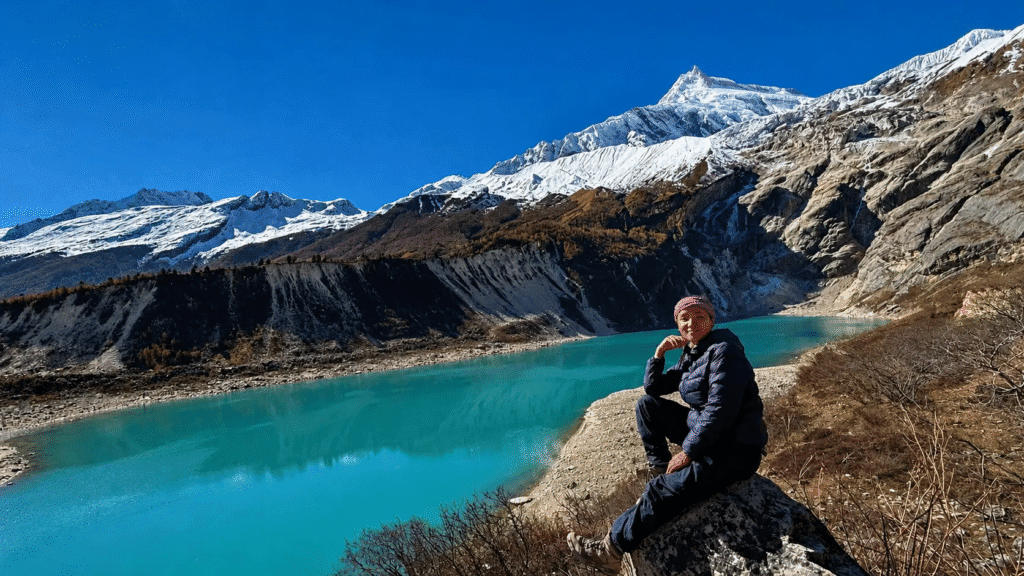
Ask around in Kathmandu’s trekking shops and you’ll hear the same line more than once: Manaslu is what Annapurna used to be. Quieter trails, fewer lodges packed with tour groups, and a landscape that still feels like it belongs to the people who live there rather than to the trekking industry. The Manaslu Circuit Trek has built that reputation fairly. But most people who do the standard circuit never see the part of the region that arguably matters most — the Tsum Valley, a side valley tucked against the Tibetan border that the main trail simply walks past.
Add it in, and you get the Manaslu Tsum Valley trek — a longer, harder, and honestly more interesting version of the same journey. You still get the river gorges, the pine forests, the slow climb toward Mount Manaslu, and the grind over Larkya La. But you also get monasteries that see maybe a handful of foreign visitors a week, villages where Tibetan Buddhist tradition never really faded, and a few extra days where the trail isn’t trying to get you anywhere fast. It’s not for everyone. It asks more of your schedule, your legs, and your patience with basic lodges. But for trekkers who want the mountains and the culture, not just one or the other, it’s worth the extra time.
In short: the Manaslu Circuit with Tsum Valley links the classic Manaslu route with a detour into the remote Tsum Valley before rejoining the main trail and crossing the Larkya La Pass into the Annapurna region.
What Makes the Manaslu Circuit with Tsum Valley Different?
The route itself tells you a lot. You start at the roadhead near Machha Khola, follow the Budhi Gandaki river through Jagat and Philim, and then instead of continuing straight up the main valley, you branch off toward Tsum. After a handful of days exploring that side valley — as far as Mu Gompa if time allows — you double back down and rejoin the standard Manaslu trail, picking up the climb through Samagaon, Samdo, and eventually the pass.
What this does, practically, is stretch the trek from a single-track mountain crossing into something with two distinct characters. The Tsum section is slow and cultural — mani walls, chortens, monasteries built into hillsides, farming villages that still run on old rhythms. The main circuit, once you’re past the Tsum junction, turns into a proper high-altitude trek with Manaslu’s ice faces looming over the trail. Combining the two means you’re not just chasing a mountain pass for two weeks; you’re getting the full range of what the Manaslu Conservation Area actually protects, both the ecology and the culture.
Tsum Valley — The Cultural Heart of the Journey
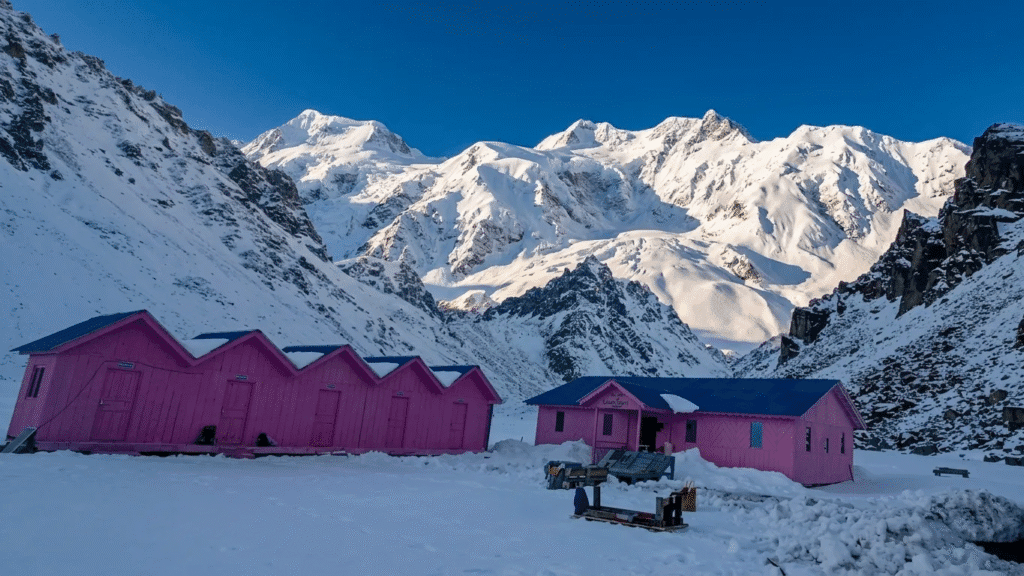
If the main Manaslu trail is about scenery, Tsum Valley is about people and place in a way that’s hard to put into words until you’re actually there. It’s a Tibetan Buddhist enclave that was closed to outsiders until fairly recently, and it still carries that sense of separateness. The villages are built from stone, the fields are terraced into impossible angles, and the monasteries — some centuries old — sit like they’ve grown out of the hillside rather than been built on it.
What Trekkers Should Expect in Tsum Valley
Don’t go expecting Annapurna-style comfort. Accommodation is basic — simple rooms, shared bathrooms in most places, and meals that stick to what’s locally available rather than a long menu. Wi-Fi is patchy at best and disappears entirely in some villages. Days are long, and there’s less of the constant lodge-to-lodge rhythm you get on busier trails; sometimes you’ll walk for hours between one settlement and the next. That’s part of the appeal, honestly. Chumling and Chhokhangparo make good stopping points on the way in, and Mu Gompa, sitting near the head of the valley, is about as far into the Himalayas as most people will ever walk. This is really where the Manaslu Tsum Valley trek earns its name — it’s the section that changes the whole feel of the trip from “trekking route” to something closer to a cultural pilgrimage.
The Manaslu Circuit: From River Valleys to High Mountains
Once you’ve looped back out of Tsum and rejoined the main trail, the trek shifts gears completely. The lower stretches near Jagat and Philim run through dense forest and steep river gorges, with suspension bridges that sway more than you’d like and villages that still show heavy Tibetan influence in their architecture and dress. As you climb, the forest thins, the air gets noticeably thinner, and Mount Manaslu — at 8,163 meters, the eighth-highest peak on earth — starts dominating the skyline rather than just peeking through gaps in the ridgeline.
The High-Altitude Section
Samagaon is where the trek starts to feel serious. It’s the main acclimatization stop, and most itineraries build in a full rest day here before pushing on to Samdo and then the high camps below Larkya La. This last stretch is no joke — long summit-day-style walking, cold starts, and weather that can flip from clear skies to whiteout conditions faster than you’d expect. Don’t underestimate the pass. Start early, keep a steady pace rather than rushing, and lean on your guide’s judgment if the weather turns. Speed matters far less here than simply getting the timing and the pacing right.
Acclimatization and Altitude: Where Good Planning Matters
Altitude starts becoming a real factor from Samagaon upward, and this is genuinely where treks go wrong if people rush it. Rest days aren’t wasted days — they’re part of the itinerary, not an optional extra you skip if you’re feeling strong. Walk slower than feels natural once you’re above 3,500 meters or so. Drink more water than you think you need, eat properly even when appetite drops, and pay attention to how you’re actually feeling rather than how far you’d like to get that day.
It’s worth knowing the difference between normal trekking tiredness and the early signs of acute mountain sickness — persistent headache, nausea, or unusual breathlessness at rest are not things to push through. A slower trekking day is far better than turning a manageable altitude problem into an evacuation.
Permits, Guide Requirements and Route Planning
This isn’t a route where you can just show up and start walking. Manaslu is a restricted area, which means you’ll need a Manaslu restricted area permit alongside the Manaslu Conservation Area Permit (MCAP), and if you’re adding the valley detour, a separate Tsum Valley permit as well. Rules around group size, guide requirements, and permit costs shift from time to time, so it’s worth double-checking the current requirements close to your departure date rather than relying on older information floating around online.
This also isn’t the kind of trail where an independent, no-guide setup works the way it might on more open routes like Annapurna. If you’re trying to figure out current permit rules or how to put together a sensible route and guide arrangement, talking to a locally based operator like Nepal Independent Guide can save a fair bit of confusion before you even land in Kathmandu.
How Difficult Is the Manaslu Tsum Valley Trek?
Honestly? It’s demanding. Not technically difficult in a mountaineering sense, but long — you’re looking at consecutive days of walking, steep ascents and descents through the lower gorges, then sustained altitude exposure heading into the pass. Add remote terrain, basic accommodation, and unpredictable mountain weather, and it adds up to a serious trek rather than a casual walk.
Who Is It Suitable For?
Experienced hikers will find it manageable without much extra prep. Fit first-timers can handle it too, provided they take the acclimatization schedule seriously and don’t try to compress the itinerary. It suits people who don’t mind walking several days in a row and who care as much about the villages and monasteries as the mountain views. It’s a poor fit for anyone expecting hot showers and reliable Wi-Fi throughout, or unwilling to slow down when altitude demands it.
Best Time to Walk This Route
Autumn (roughly September through November) tends to bring the most stable weather and the clearest mountain views, which is why it’s the busiest season on the trail. Spring (March to May) runs a close second — milder temperatures at lower elevations and decent visibility higher up, sometimes with rhododendrons in bloom on the lower sections. Winter is possible but tough; Larkya La can become genuinely difficult in heavy snow, and some teahouses scale back services. Monsoon season, June through August, is generally best avoided — rain, mud, and landslide risk make the lower valley sections miserable and the higher trail conditions unreliable. For most trekkers, spring and autumn remain the easiest windows to plan around, though it’s always worth checking conditions closer to departure.
Accommodation, Food and Daily Trail Life
Teahouses along the route are simple — basic rooms, shared bathrooms in many places, and menus built around dal bhat, noodle soups, rice dishes, and whatever vegetables are available locally. Choices narrow the higher you climb, and prices creep up too, since everything has to be carried in. Carry some extra snacks for the longer or more remote days, particularly if you’ve got dietary restrictions the local menus won’t cover. Charging points, mobile signal, and hot showers exist in places, but don’t count on them everywhere — especially once you’re deep into Tsum Valley or above Samagaon.
A Practical Route Strategy
Rather than locking into a rigid day-by-day plan, it’s more useful to think of the trek in blocks: Kathmandu to the roadhead, the lower Budhi Gandaki approach, the Tsum Valley detour, the return to the main trail, the climb through Samagaon and Samdo, the Larkya La crossing, and the descent into Dharapani. How many days each block takes depends on your fitness, how much time you want in Tsum, acclimatization needs, and road conditions on the approach — which can vary more than you’d expect on this route.
What to Pack for the Manaslu Tsum Valley Route
Keep it practical: broken-in trekking boots, warm layers for cold nights, a decent waterproof shell, a sleeping bag rated for genuinely cold conditions, a headlamp, a reliable water bottle or hydration system with a purification method, sun protection, basic first aid and any personal medication, trekking poles, a power bank, snacks, and your permit documents kept somewhere dry and accessible. Pack for changing conditions rather than for how warm it feels in Kathmandu — the temperature swing between the lowlands and the pass is bigger than most first-timers expect.
Responsible Trekking in the Manaslu Region
This region holds onto its character partly because it hasn’t been overrun, and that’s worth protecting. Ask before photographing people, respect monastery rules and quiet hours, and avoid leaving plastic waste in villages that have no real way to deal with it. Stick to established trails, refill water rather than buying bottled where possible, and support the local teahouses rather than treating remote villages as scenery. None of this is complicated, but it makes a real difference to the places you’re passing through.
Final Thought — More Than a Mountain Circuit
The Manaslu Circuit Trek gives you the physical challenge — the long climb, the thin air, the crossing of one of Nepal’s major Himalayan passes. Tsum Valley gives you something quieter: monasteries built into hillsides, village life that hasn’t changed much in generations, and a few days away from the busier trekking corridors. Together, they make a trek that’s less about ticking off a summit and more about the whole journey getting there.
If this is the kind of trek you’re considering, don’t plan it around a checklist alone. Build in enough days for acclimatization, understand the current permit requirements, prepare for basic mountain conditions, and work with an experienced local trekking professional who actually knows the route. That kind of preparation is what turns a difficult Himalayan journey into a genuinely rewarding one.
Frequently Asked Questions About the Manaslu Tsum Valley Trek
1. How long does the Manaslu Circuit with Tsum Valley take?
It depends on your itinerary and acclimatization schedule, but combining both sections generally takes noticeably longer than the standard Manaslu Circuit alone.
2. Is the Manaslu Tsum Valley trek difficult?
Yes. Long walking days, remote terrain, altitude, and the Larkya La crossing all add up to a genuinely demanding Himalayan trek.
3. Do I need a guide for the Manaslu Circuit?
Manaslu is a restricted area, so check current regulations before departure — guide arrangements and permits typically need to be organized in advance.
4. What is the highest point of the trek?
Larkya La Pass, at around 5,106 meters (16,752 feet), is the highest point on the standard Manaslu Circuit route.
5. Is Tsum Valley worth adding to the Manaslu Circuit?
For anyone drawn to culture, quieter villages, and a longer Himalayan experience — yes. It adds a dimension the standard circuit simply doesn’t have.
6. What is the best season for the trek?
Spring and autumn are generally the most favorable, though high-pass weather conditions should always be checked close to your departure date.
-sponsored-