
Most dinosaur skeletons on display in museums are reconstructions: a handful of original bones surrounded by plaster casts and educated guesswork. A genuinely complete specimen is rare enough that palaeontologists give it a nickname the moment it comes out of the ground. A handful of these fossils are so well preserved that they have rewritten what science knows about how dinosaurs lived, aged, fought and died, and a few even preserved skin, organs or feathers alongside the bone.
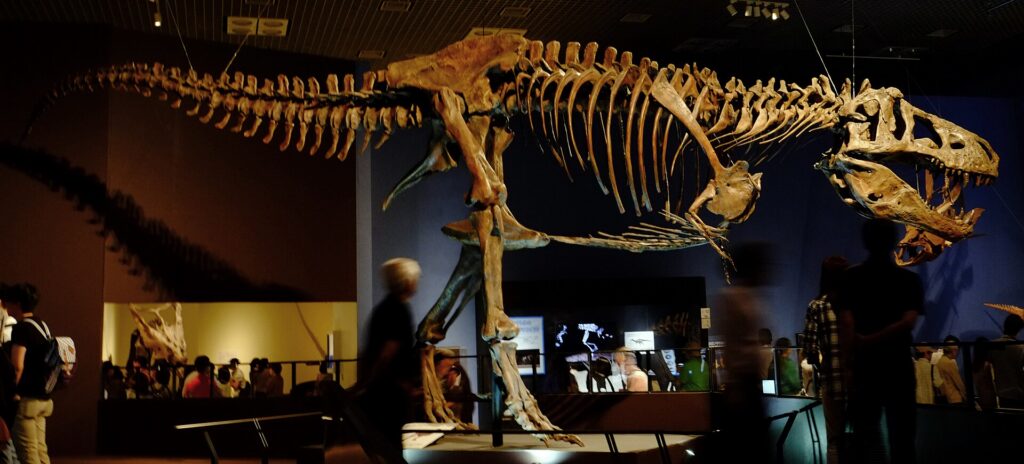
Nowhere is this more true than for Tyrannosaurus rex. Several specimens in particular, Sue, Stan, Trix, Scotty and Wankel are considered among the most complete predatory dinosaur skeletons ever unearthed, and all five still draw the numbers scientists use to judge every new fossil discovery.
Sue, Stan, Trix, Scotty and Wankel: the Most Complete T. Rex Fossils
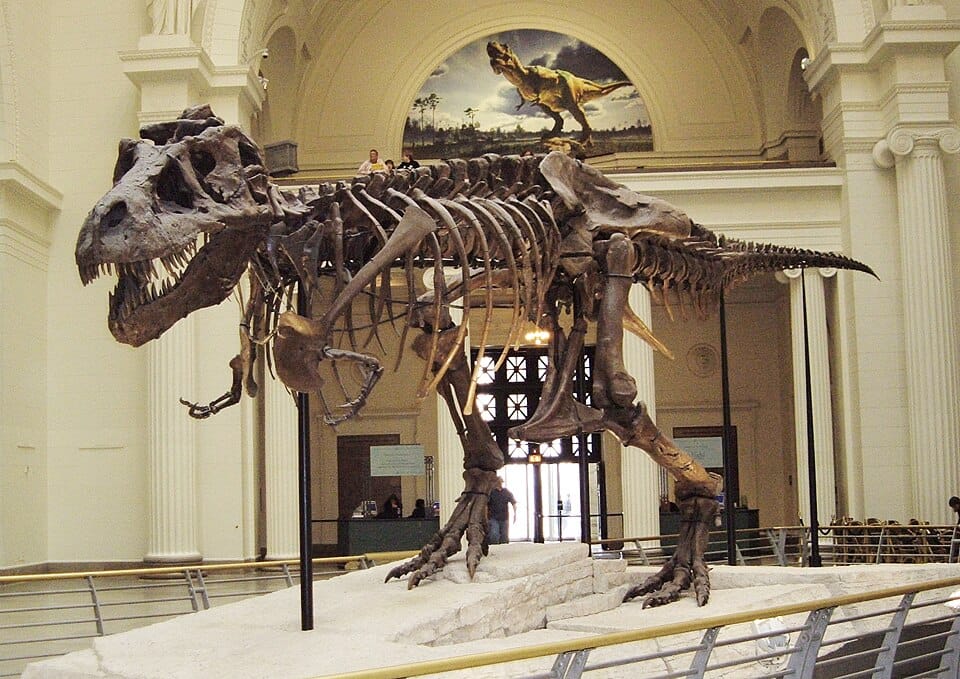
Sue is the benchmark against which every other Tyrannosaurus rex is measured. Discovered in 1990 by fossil hunter Sue Hendrickson near Faith, in the Hell Creek Formation of South Dakota, the skeleton is roughly 90 percent complete, with 250 of the animal’s estimated 380 bones recovered. Sue lived around 67 million years ago and died at about 28, an old age for a T. rex, and analysis of her bones even revealed an adolescent growth spurt of up to 4.5 pounds a day. She has been on permanent display at the Field Museum in Chicago since 2000, now housed in the museum’s Griffin Halls. Sue herself was sold at a Sotheby’s auction in 1997 for $8,362,500, a record at the time, to a consortium led by the Field Museum and backed by Disney and McDonald’s. Sue, and several other landmark fossils on this list, were all found in the same corner of South Dakota.

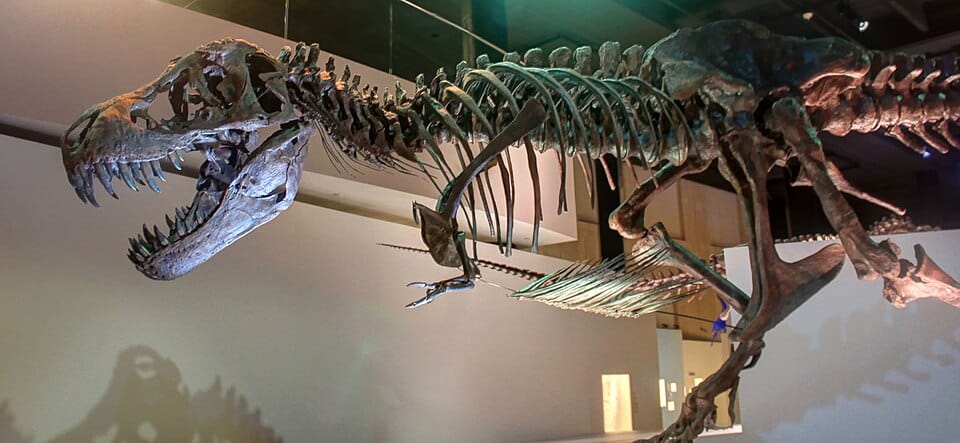
Stan is Sue’s closest rival, and arguably her more dramatic counterpart. Found in 1987 by amateur palaeontologist Stan Sacrison and excavated by the Black Hills Institute from the same Hell Creek Formation in South Dakota, the skeleton is about 65 percent original bone, according to the institute that prepared it. Stan’s skull and vertebrae show a striking record of violence: healed bite marks, a punctured skull and a broken, fused neck bone, evidence of confrontations with other tyrannosaurs. In 2020, Stan sold at auction for $31.8 million, the highest price ever paid for a fossil, and after two years in storage he became the centrepiece of the Natural History Museum Abu Dhabi, which opened on Saadiyat Island in 2025.

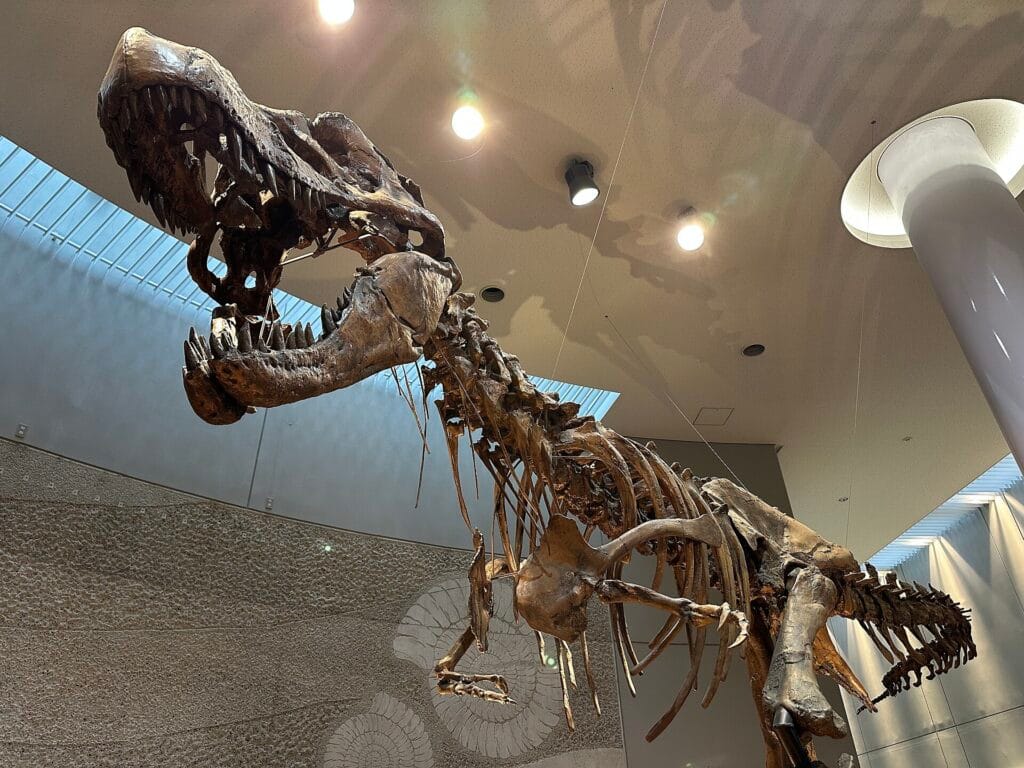
Wankel Rex, better known today as the Nation’s T. rex, is one of the most complete tyrannosaur skeletons ever found: roughly 80 to 85 percent of the skeleton was recovered, skull included. It was discovered in 1988 by rancher Kathy Wankel on federal land near the Fort Peck Reservoir in eastern Montana, then excavated in 1989-90 by a team led by palaeontologist Jack Horner. Because it turned up on land managed by the U.S. Army Corps of Engineers, the fossil is technically government property rather than a museum’s own specimen; it spent over two decades on display at the Museum of the Rockies in Bozeman before the Smithsonian secured a 50-year loan and made it the centrepiece of its fossil hall in Washington, D.C., where it has been on display since 2019. It also holds a research distinction: it was the first T. rex skeleton found with a complete forelimb, giving scientists their clearest look yet at just how small the animal’s arms really were. Today it anchors the Smithsonian’s Dinosaurs and Fossils hall.

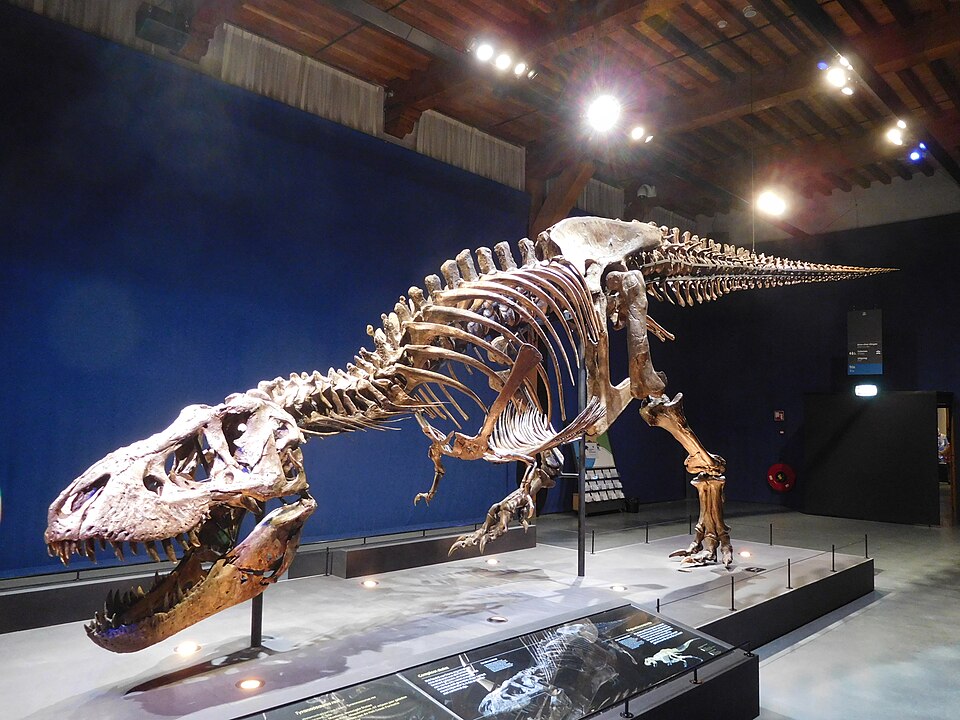
A fourthT. rex, Trix, deserves a mention alongside them. Unearthed in 2013 in Montana and roughly 78 to 80 percent complete by bone volume, Trix is the fourth most complete T. rex skeleton known and, at over 30 years old at death, possibly the oldest. Her bones tell a story of a hard life, including healed rib fractures and jaw infections. Trix now lives permanently at the Naturalis Biodiversity Center in Leiden, Netherlands.

Scotty, found in 1991 in Saskatchewan but not fully excavated and studied for over two decades, is roughly 65 percent complete and holds a different record: at an estimated 19,500 pounds, he is the heaviest T. rex ever weighed, edging out Sue by around 900 pounds. Scotty lived some 66 to 68 million years ago and is now the star attraction of the Royal Saskatchewan Museum in Regina, Canada.

Sophie, Big John and the Dueling Dinosaurs
Tyrannosaurus rex is not the only dinosaur with a near-complete skeleton to its name.
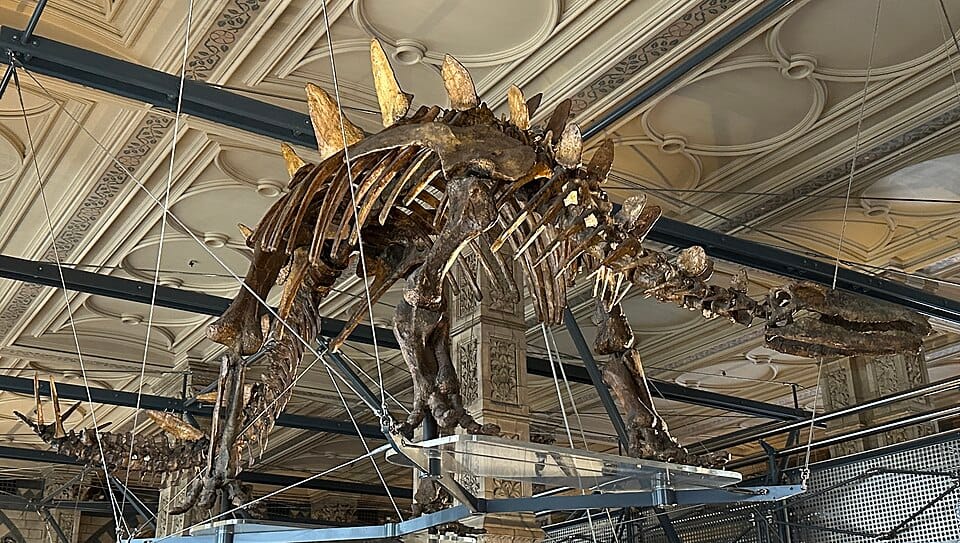
Sophie, a Stegosaurus unveiled at London’s Natural History Museum in 2014, is described by the museum itself as the world’s most complete stegosaur: virtually the entire animal survived, missing only one forelimb and the tip of the tail, from more than 300 bones. She lived around 150 million years ago, in the Jurassic, and was found on a Wyoming ranch in 2003. The purchase price was never disclosed publicly, funded by a private donation that let the museum acquire her in 2013.

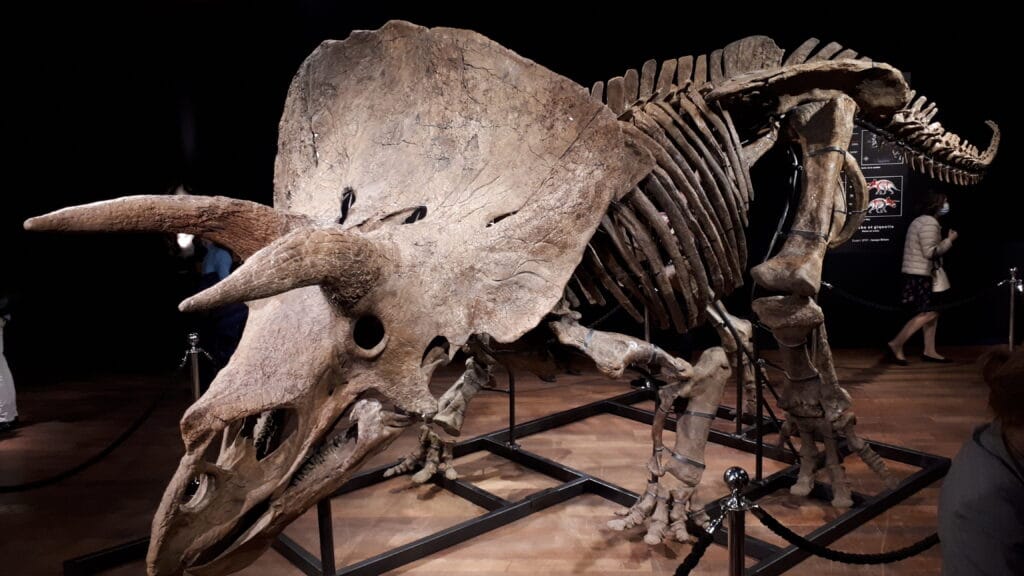
Big John, a Triceratops horridus unearthed in South Dakota in 2014, is the largest Triceratops skeleton ever found, with a body around 60 percent complete and a skull that is 75 percent complete. After selling for $7.7 million at a Paris auction in 2021, Big John went on public display in 2023 at the Glazer Children’s Museum in Tampa, Florida, where he remains on loan.

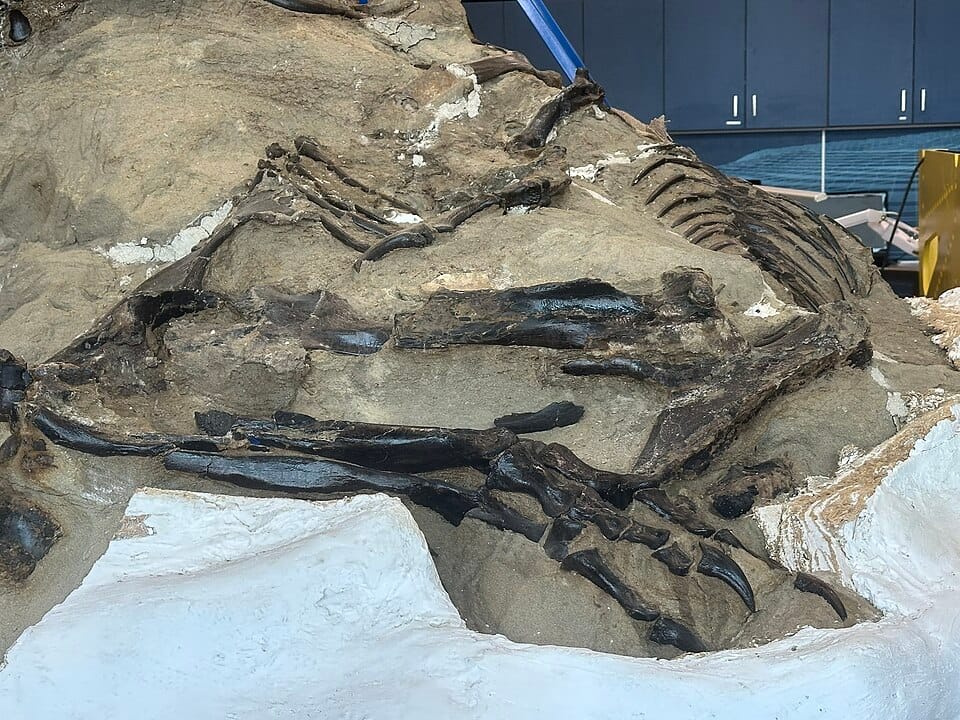
The most scientifically dramatic case may be the so-called Dueling Dinosaurs, two animals found locked together in Montana in 2006: a Triceratops (named Murphy), among the best preserved of its kind, and a small tyrannosaur (named Manteo) long assumed to be a juvenile T. rex. In 2025, researchers reclassified the predator as a fully grown Nanotyrannus lancensis, a distinct, smaller species, with a skeleton close to 100 percent complete, skin impressions included. The fossils failed to sell at a 2013 auction, where bidding stalled at $5.5 million against a $9 million estimate, before a non-profit support group bought them privately in 2020, for an undisclosed sum, and donated them to the museum. Both animals went on public display in 2024 at the North Carolina Museum of Natural Sciences in Raleigh.

Fossils Preserved With Skin and Feathers
A handful of fossils go further than complete bones, preserving traces of the animal’s actual body.
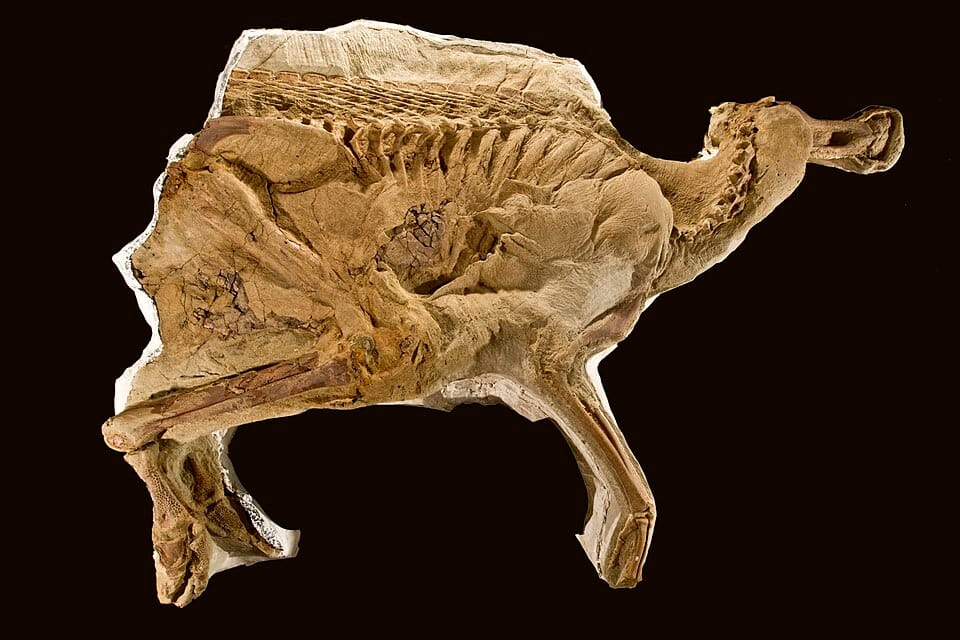
Leonardo, a Brachylophosaurus discovered in Phillips County, Montana, in 2000, is often called a dinosaur “mummy”: over 90 percent of its body is covered in fossilised skin impressions, along with traces of its final meal and internal organs. It is one of the best-preserved dinosaurs ever found, of any species. The original fossil is currently on loan to the Fukui Prefectural Dinosaur Museum in Japan, while a full-scale replica remains at the Great Plains Dinosaur Museum in Malta, Montana.

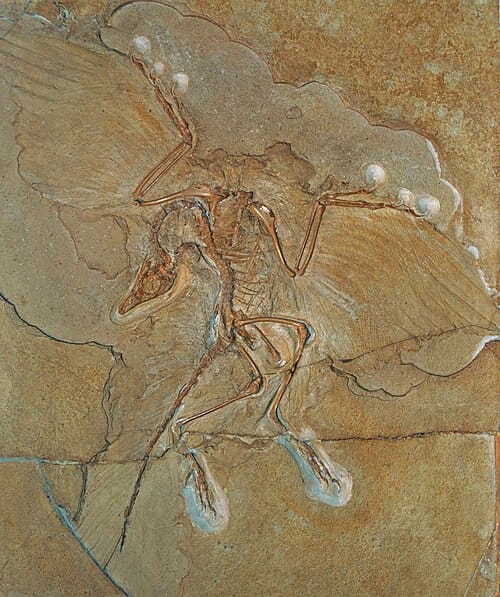
The Berlin specimen of Archaeopteryx, arguably the single most famous fossil in the world, shows something even rarer: clear impressions of feathers surrounding a skeleton that links reptiles to birds. Discovered in Bavaria and dated to around 150 million years ago, it is the most complete of the dozen or so Archaeopteryx fossils known and has been on display at the Museum für Naturkunde in Berlin, Germany, since the late 19th century.

More Record-Breaking Skeletons
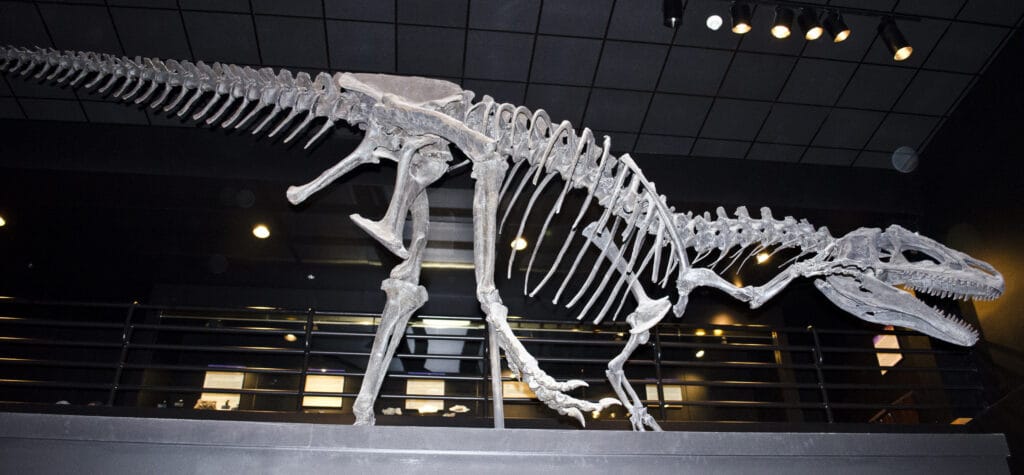
Big Al, an Allosaurus found near Shell, Wyoming, in 1991, is about 95 percent complete, making it one of the most complete large theropod skeletons ever recovered anywhere. Around 152 million years old, Big Al’s bones show numerous healed injuries, suggesting a hard life rather than a peaceful one. The original fossil belongs to the Museum of the Rockies in Bozeman, Montana.

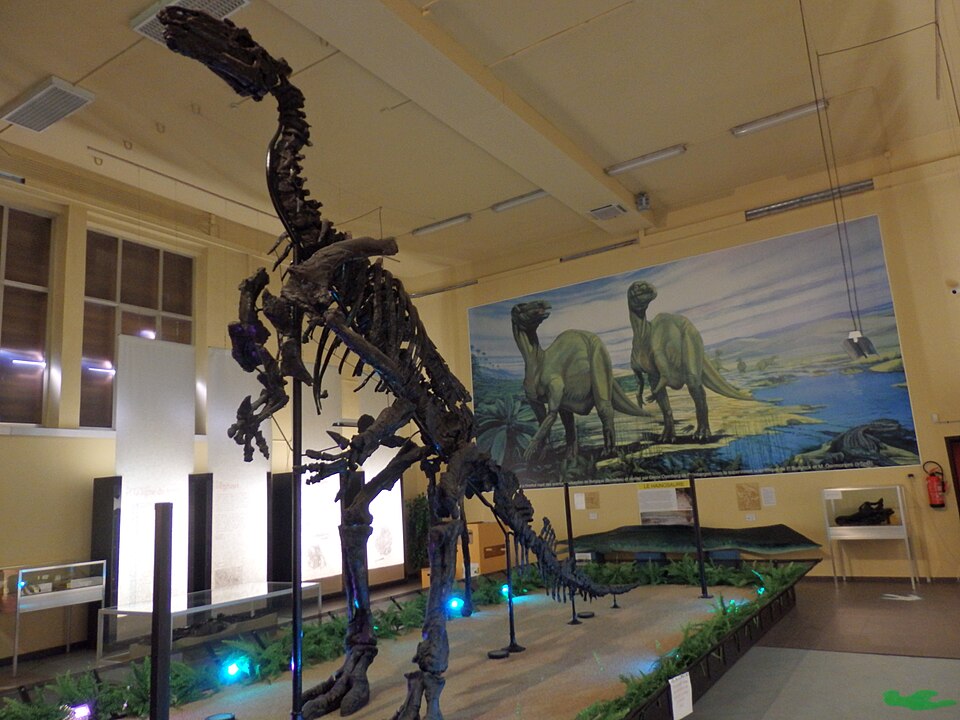
Long before any of these individual celebrity skeletons, the Bernissart Iguanodons set the standard for what a complete dinosaur fossil could look like. In 1878, coal miners in Bernissart, Belgium, struck an extraordinary deposit some 322 metres underground: around 30 relatively complete Iguanodon skeletons, many found still articulated in their original positions. Nine of them, mounted upright exactly as they were discovered, have been on display at the Institute of Natural Sciences in Brussels since 1882.
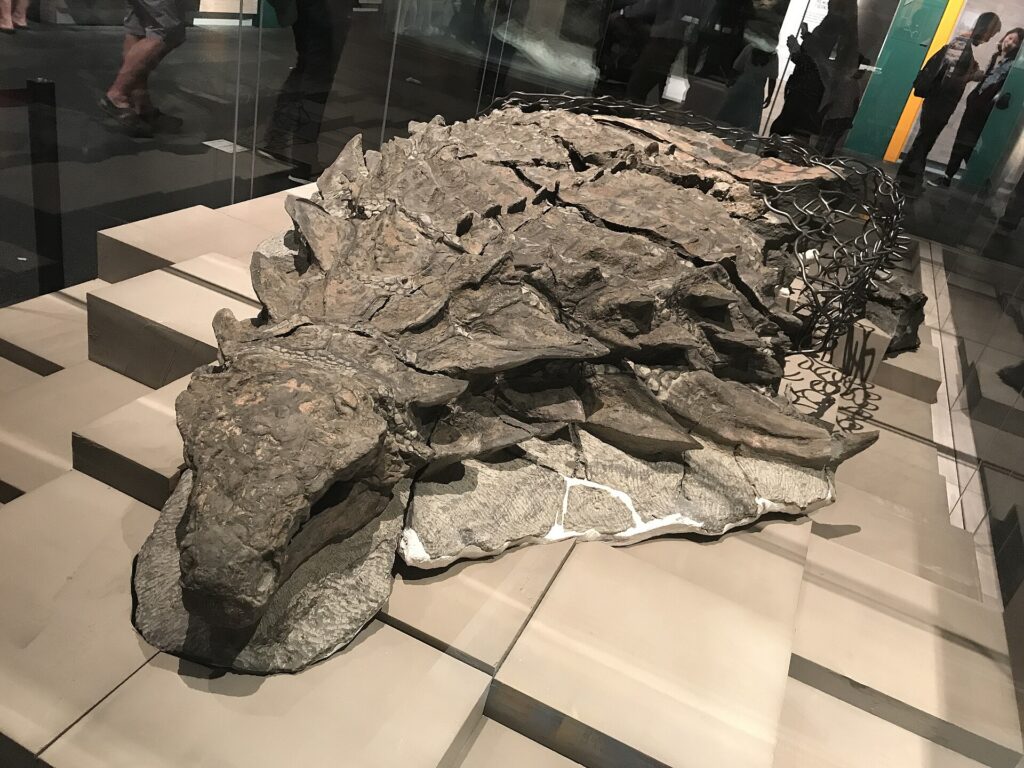
Often called the world’s best-preserved armoured dinosaur, the Nodosaur, formally named Borealopelta markmitchelli, looks less like a fossil than a petrified animal. It was uncovered by chance in 2011 by a heavy-equipment operator at an oil sands mine north of Fort McMurray, in Alberta, Canada, and dates to around 110 million years ago. What sets it apart is not completeness of the skeleton but the survival of its actual body: fossilised skin, intact armour plates and even traces of the reddish-brown pigment pheomelanin, which let scientists reconstruct the animal’s camouflage pattern almost 110 million years after it died. A technician spent over 7,000 hours across nearly six years freeing it from rock, work that alone earned the specimen part of its name. It has been on permanent display at the Royal Tyrrell Museum in Drumheller, Alberta, since 2017.

Seeing Them for Yourself
Unlike a natural wonder tied to a season, these fossils can be visited year-round, since each is the anchor exhibit of its museum. Sue draws crowds at the Field Museum in Chicago, Stan can now be seen at the Natural History Museum Abu Dhabi, Trix has a permanent home at Naturalis in Leiden, and Scotty holds court at the Royal Saskatchewan Museum in Regina. Sophie greets visitors at London’s Natural History Museum, Big John is on loan to the Glazer Children’s Museum in Tampa, and the Dueling Dinosaurs can be watched still being prepared, bone by bone, at the North Carolina Museum of Natural Sciences in Raleigh. Leonardo’s replica is at the Great Plains Dinosaur Museum in Malta, Big Al belongs to the Museum of the Rockies in Bozeman, the Berlin Archaeopteryx is at the Museum für Naturkunde, and the Bernissart Iguanodons still stand exactly as they were mounted in 1882 at the Institute of Natural Sciences in Brussels.
Each of these skeletons is a rare case where the fossil record kept far more than the usual scattering of bones, enough for scientists, and visitors, to look a dinosaur almost completely in the eye.