
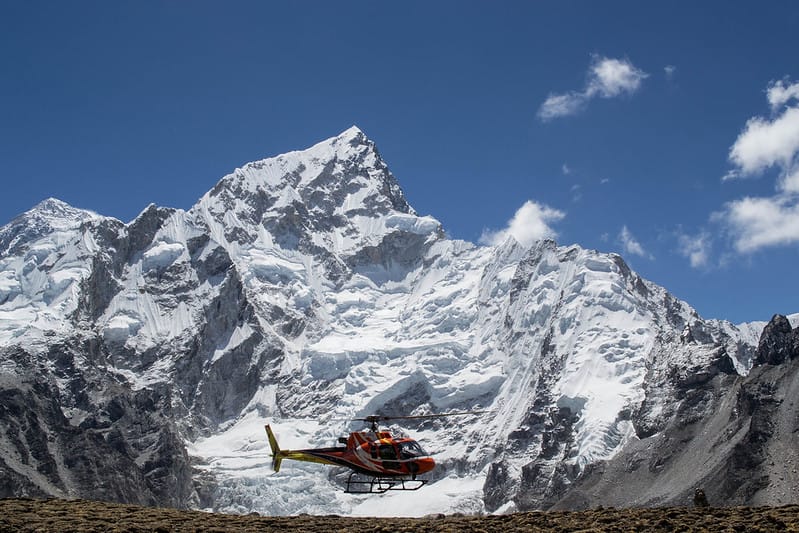
Not everyone has two weeks to spare for a trek in the Khumbu. Some people have knees that complain on stairs, some have a tight Nepal itinerary, and some just want to see the world’s highest mountain without a fortnight of hiking. An Everest helicopter tour is the obvious answer. It’s also one of the most misunderstood things you can book in Nepal.
The brochure version is simple: fly up, see Everest, land somewhere spectacular, fly back. The real version has more moving parts. Weather decides a lot of it, landing spots can change, and what you’re promised on paper isn’t always what happens on the day. Here’s what to expect, so you know what you’re paying for.
What the Day Actually Looks Like
Most flights leave Kathmandu early, often around sunrise. There’s a practical reason: Himalayan mornings tend to be clearer, while clouds build as the day warms up. Tend to be, not always. Plenty of mornings are still hazy or cloudy.
From Kathmandu you head northeast, and the landscape changes fast. The city sprawl gives way to terraced hills, then deeper valleys, then snow peaks that seem to stack up on the horizon. Depending on the operator and the day’s conditions, the route can include a stop at Lukla, the mountain airstrip most trekkers use to enter the Everest region. Don’t assume it’s a straight line there and back. Aircraft type, air traffic and weather all influence the route.
Once you’re in the Khumbu, the scenery gets almost absurd. You’ll see the Sagarmatha region’s glacial valleys, and depending on the route, Namche Bazaar, the trail toward Pheriche, and the ridge of Kala Patthar. Everest itself is not always the dominant peak from the air. Nuptse and Lhotse crowd the view, and the summit can look surprisingly modest until someone points it out. Ask your pilot or guide to identify what’s what.
Where Does the Helicopter Land?
This is the question most people ask, and the honest answer is that it depends.
There’s a big difference between flying past Everest Base Camp and landing at it. The camp itself sits on the Khumbu Glacier, and from the air you can often spot the tents in the climbing season. Landing there is a separate matter. Rules, permissions, ground conditions and safety considerations all play a part, and they’ve shifted over the years. Many tours use a nearby high-altitude landing point instead. Kala Patthar and the Gorak Shep area are the ones most often mentioned, and some itineraries include a stop at a viewpoint near Syangboche and the Everest View Hotel.
So a tour marketed as “Everest Base Camp helicopter landing” may not literally put you on the base camp ground. Before you pay, ask exactly where the helicopter is planned to land, how long you’ll get on the ground, and what happens if that spot isn’t usable that day.
Wind, cloud, poor visibility, snow on the ground and pilot judgment can all change the plan. A good operator explains this upfront. A less careful one promises the same perfect experience every day, which no one in the Himalayas can honestly do.
Everest Helicopter Tour Cost
There’s no single price, and any article quoting one number as universal is guessing. What you pay depends on a handful of things.
The biggest is whether you’re in a shared or private flight. In a shared flight, the aircraft cost is split between passengers, so it’s cheaper per person, but you fit around the group’s schedule and other people’s photo habits. A private charter costs more in total but gives you a small group, more flexibility and a more personal itinerary. If you’re a family of four or five, the price gap per person might be smaller than you think, so ask for both quotes.
Season matters too. Peak trekking months are busier, and aircraft and slots are in higher demand. The landing plan can also affect the quote, since a longer or more involved route costs more to operate. Then there are the extras. Some quotes include hotel pickup, permits, breakfast or a return transfer, and others leave them out. Two prices that look far apart may not be covering the same trip.
The practical advice is to ask for a written breakdown: what’s included, what isn’t, and what happens to your money if the flight doesn’t go ahead.
Weather: The Part Nobody Can Promise You
Mountain weather is the wild card. Helicopters in the Himalayas are sensitive to cloud, wind and visibility, and conditions can change within an hour. A sunny Kathmandu morning doesn’t guarantee a clear Khumbu.
If conditions aren’t right, several things can happen. The flight might be delayed to wait for a window. The route might be changed. The landing point might shift somewhere lower or more sheltered. Or it may be postponed or cancelled if the pilot decides it isn’t safe. That last one is frustrating, but it’s the right call, and you’d want a pilot who makes it.
What matters is what your operator offers in that situation. Some will rebook you for another morning, some will refund part or all of the payment, and some have stricter terms. Ask before you book, not after you’re standing at the airport at 5:30 a.m. And if your schedule in Nepal is very tight, leave a spare day. A single-morning window with a flight home right after is asking for trouble.
What the Flight Feels Like
It’s louder than people expect. Helicopter cabins are noisy, and you’ll likely wear headsets to hear the crew. The views are big, wide and hard to photograph well through a window, so don’t spend the entire flight staring at your phone screen. Look with your eyes first.
Time on the ground at a high-altitude landing point is usually short, often a few minutes to a bit longer. It can feel cold and thin in the air even if Kathmandu was warm. Move slowly, drink water, and listen to the crew. You haven’t acclimatized the way a trekker would after several days of walking up, so some people feel lightheaded, especially if they rush around taking photos.
That’s actually one of the biggest differences between flying and trekking, and it leads to the next question.
Helicopter Tour vs. the Everest Base Camp Trek
These two aren’t really competing. They’re different experiences that happen to share a mountain.
| Helicopter tour | Everest Base Camp Trek | |
| Time | Roughly a morning or half-day | Many days on the trail |
| Effort | Minimal walking | Long, physical days at altitude |
| Perspective | Aerial and panoramic | Ground-level, village to village |
| Weather risk | High, can affect the flight | Also present, but you have more days to adapt |
| Best for | Short schedules, limited mobility | People who want the full journey |
The Everest Base Camp Trek gives you the villages, the tea houses, the yak trains, and the slow buildup as the mountains get closer each day. You earn the views. A helicopter gives you the scale in one dramatic hit, and that’s a legitimate reason to choose it. Time, fitness, budget and what you want out of the trip should decide it, not pride.
And the Everest 3 High Pass Trek?
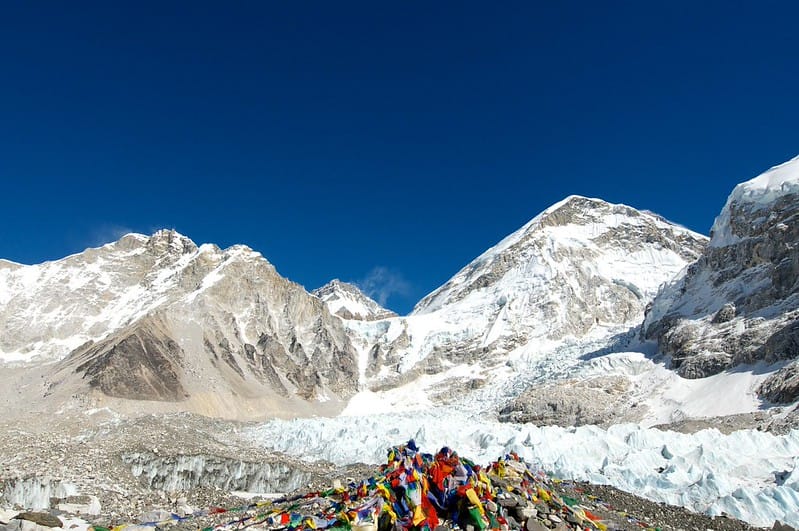
If the Base Camp trek sounds like a lot, the Everest 3 High Pass Trek is a step above. It crosses three high mountain passes in the Khumbu, loops through remote valleys, and usually takes longer than the standard Base Camp route. You’re dealing with steep climbs, cold, altitude and long walking days, plus rest days for acclimatization.
It has almost nothing in common with a helicopter flight, which is the point. One gives you a taste of the region in the morning. The other asks for a couple of weeks, decent fitness and serious preparation, and gives you a much deeper look at the Khumbu in return. Some travelers do both in different trips, and they don’t feel like the same place.
Choosing an Operator
Since the flight itself is out of your hands, the operator is what you can control. Ask direct questions and expect clear answers:
- What aircraft will be used, and how many passengers does it carry?
- Where exactly is the planned landing, and what’s the backup?
- What’s the weather cancellation and refund policy?
- What’s included in the price, and what isn’t?
- What are the emergency procedures, and is oxygen carried?
- Is insurance required or recommended?
Travelers researching Himalayan flights and treks will run into a range of Nepali companies, and Adventure Great Himalaya is one name you may come across. Whoever you compare, judge them on how clearly and honestly they answer those questions, not on how polished the website is.
What to Bring
Keep it simple. A warm layer is the big one, since it’s noticeably colder at a high-altitude landing point than in Kathmandu. Add sunglasses, sunscreen, water, your phone or camera, any personal medication, and your passport or ID if the operator asks for it. Comfortable shoes with decent grip help if you’re stepping onto uneven or icy ground. That’s about it.
Before You Book
An Everest helicopter tour isn’t just a photo of a mountain. It’s a weather-dependent flight with a landing plan that can change, a price that hides variables, and an experience that’s genuinely different from walking the trail. If you’re short on time, it’s a great way to see the Himalayas. If you want the slow, physical version, the Everest Base Camp Trek or the Everest 3 High Pass Trek is a different kind of trip altogether.
Whatever you choose, get the itinerary, landing location, total cost, weather policy and backup plan confirmed in writing first.
Quick Answers to Common Questions
Can a helicopter land at Everest Base Camp?
Not always. Flying over or near it is common, but landing at the camp itself depends on rules, conditions and operator plans. Many tours land at a nearby viewpoint like Kala Patthar instead.
How long does an Everest helicopter tour take?
It varies with the route, any stops, and waiting time. Ask your operator for the full timeline rather than trusting a single number.
What if the flight is cancelled for weather?
That comes down to the operator’s policy. Get the rebooking and refund terms in writing before you pay.
Is it safe for first-timers?
You don’t need trekking experience, but you do need a properly run commercial service and a willingness to follow crew instructions. Safety comes down to aviation operations and conditions, not your fitness.
Is it better than trekking to Base Camp?
Neither is better. One is a short aerial view, the other a multi-day journey.