The Buzău Mud Volcanoes are one of the strangest natural attractions in Romania, where bubbling mud, gas emissions and dry, cracked earth create a landscape that looks more like another planet than southeastern Europe. Located near Berca in Buzău County, the volcanoes form part of the Buzău Land UNESCO Global Geopark and are among Romania’s most unusual geological sights.
Unlike conventional volcanoes, these formations do not erupt molten rock. Instead, underground gases force water, clay and mineral-rich mud towards the surface, where it accumulates around small vents and gradually creates cone-shaped formations. The mud is cold rather than hot, making the experience particularly unusual for anyone expecting a traditional volcanic landscape.
The two main areas are Pâclele Mari and Pâclele Mici. They are close to each other but have noticeably different landscapes, and visiting both gives you a much better impression of this unusual geological phenomenon.
A Strange Landscape Created by Gas and Mud
The Buzău Mud Volcanoes are not volcanoes in the traditional sense. Deep below the surface, geological formations contain water, clay, salt and hydrocarbons. Natural gas under pressure moves upwards through faults and fractures in the Earth’s crust, carrying water and fine sediment with it.
When this mixture reaches the surface, the mud spreads around the gas vent. Repeated eruptions gradually build small cones, while other vents produce pools where gas bubbles continuously rise through the mud. The process is still active today, which means that the appearance of the landscape can change over time.
The result is a remarkably barren environment. Dry mud forms deep polygonal cracks across the ground, while channels develop where mud has flowed downhill. Some vents remain active and bubble continuously, while others have dried out and become small cones.
The almost complete absence of vegetation makes the landscape even more striking. Combined with the grey and brown colours of the mud, the cracked ground and hundreds of small cones, the area has an almost lunar appearance.
Pâclele Mari, meaning “Big Pâclele”, is one of the two principal mud-volcano areas and is particularly easy to visit by car. The site consists of an exposed plateau covered with mud cones, craters and channels. Some formations are active, while others have dried and developed the characteristic cracked surface.
The official Buzău Land UNESCO Global Geopark describes the area as containing the largest mud volcano in Europe, a broad shield-like formation on which smaller cones have developed.
A short thematic trail allows visitors to explore the formations and learn about the geological processes responsible for them.
Despite its name, Pâclele Mici, or “Small Pâclele”, can be just as impressive. This area contains an extensive field of mud volcanoes spread across a broad plateau, with numerous cones, craters and bubbling pools. From higher ground, the scale of the landscape becomes particularly apparent.
The two sites are close enough to combine in one visit, and if you have time, it is definitely worth seeing both.
Visiting the Buzău Mud Volcanoes
The best time to visit the Buzău Mud Volcanoes is from late spring to early autumn. May, June and September generally offer comfortable temperatures, while July and August tend to be hotter and provide the driest conditions.
Summer can be very hot because there is little shade on the exposed plateaus, so visiting early in the morning or later in the afternoon is more comfortable.
Rain is more important than temperature when planning a visit. Heavy rainfall can make the terrain extremely muddy and slippery, and some areas may become difficult to access. After dry weather, on the other hand, the ground becomes much harder and the characteristic cracks in the mud are particularly visible.
Wear comfortable shoes with good grip and bring water, sunscreen and a hat during the warmer months. There is little shade around the main volcanic areas.
Allow around 2–3 hours to explore the principal sites at a relaxed pace. If you want to walk between Pâclele Mari and Pâclele Mici, allow around half a day. The official route between the two areas is approximately 6.2 km and takes about three hours, including the surrounding trail.
How to Get There
The easiest way to reach the Buzău Mud Volcanoes is by car. The sites are located near Berca, around 30 km from Buzău.
From Buzău, follow the signs towards Berca and then towards the Vulcanii Noroioși, the Romanian name for the mud volcanoes. Local roads lead towards both Pâclele Mari and Pâclele Mici, with parking areas close to the attractions.
If travelling from Bucharest, the journey generally takes around two to three hours, depending on traffic. A rental car is the most convenient option, particularly if you want to visit both volcanic areas and other attractions around Buzău Land.
Public transport is possible for reaching Berca, but getting from the town to the volcanic sites is considerably less convenient. For independent travellers, driving is therefore the best option.
Exploring Buzău Land
The mud volcanoes are only one of the geological attractions found in the wider Buzău Land UNESCO Global Geopark. The region contains unusual rock formations, caves, fossils, mountains and other geological features, making it an excellent destination for travellers interested in natural landscapes.
Nearby, the Fierbătorile de la Beciu are another interesting geological phenomenon, where gases bubble through liquid mud and water, creating pools that appear to be boiling.
Combining the mud volcanoes with other attractions in Buzău Land makes for a much more rewarding trip than visiting the volcanoes as a quick stop from Buzău. The region remains considerably less visited than Romania’s famous castles and Carpathian destinations, which is part of its appeal.
The Buzău Mud Volcanoes are particularly memorable because they offer something that is difficult to find elsewhere in Romania: an active geological landscape of bubbling mud, barren hills and constantly changing formations.
For travellers exploring southeastern Romania, Pâclele Mari and Pâclele Mici are well worth adding to the itinerary, especially for anyone interested in geology, unusual landscapes and places that feel completely different from the country’s better-known attractions.
For many people in towns such as Warrington, everyday travel is rarely about one single journey.
It is the trip from home to the station. The ride from a residential area into the town centre. The short journey to work, college, the shops or a local appointment. It is also the practical question of where to store a bike, how to keep it secure and whether cycling can fit around a busy working day.
That is why folding electric bikes are becoming more relevant.
They are not designed to replace every car journey, every bus ride or every full-size bicycle. Their value lies in flexibility. A folding electric bike can help people make shorter journeys more easily, combine cycling with public transport and solve one of the biggest barriers to everyday bike use: storage.
In a place like Warrington, where local travel often sits between car, bus, train, walking and cycling, compact electric mobility can be especially useful.
Why Folding Electric Bikes Fit Modern Local Travel
A full-size bike works well for many people, but it is not always easy to live with.
Some homes have limited storage. Some workplaces do not offer secure cycle parking. Some riders need to combine cycling with a train, bus or car journey. Others may want a bike for short local trips but do not want a large vehicle taking up space in a hallway, flat, garage or office.
This is where a folding electric bike becomes practical.
For residents who need a bike that can fit into a flat, office, car boot or mixed commute, afolding electric bike can make everyday cycling easier to start and easier to keep using.
The folding function is not just a novelty. It changes where the bike can go and how it can be used. A compact e-bike can be stored indoors more easily, taken on certain journeys more conveniently and kept closer to the rider, reducing reliance on outdoor parking.
For many people, that difference is important. A bike that is easy to store is more likely to be used. A bike that feels difficult to manage may stay at home.
The Short Journey Problem
Many local car journeys are short.
People drive to the shops, the station, the office, the gym, a café, a friend’s house or a town-centre appointment. These journeys are understandable. A car is familiar, weatherproof and convenient. But for short local trips, it can also mean parking pressure, traffic delays, fuel costs and unnecessary congestion.
Cycling can solve some of these problems, but ordinary cycling is not always realistic for everyone. Distance, tiredness, hills, headwind, work clothes and time pressure can all make the bike feel less attractive.
Electric assistance lowers that barrier.
A folding electric bike adds another benefit: compactness. It supports the short journey itself and also makes storage easier at either end. This makes it useful not only as a transport choice, but as a daily habit.
For local travel, convenience often matters more than maximum speed or long-distance performance. If a bike makes the first mile and last mile easier, it can change how people move around town.
Commuting Without Needing a Large Bike
Commuting is one of the strongest use cases for a folding electric bike.
Not every commuter rides long distances. Many people only need to cover a few miles between home, work, station, bus stop or town centre. For that kind of journey, a compact electric bike can be more practical than a larger e-bike.
The rider gets assistance when setting off, climbing small inclines or dealing with wind. At the same time, the bike can be folded or stored more easily when space is limited.
This matters for people who live in flats, terraced houses or shared accommodation. It also matters for workers who cannot leave a full-size bike outside all day. If the bike can be brought indoors or placed in a more secure space, the whole commuting routine becomes less stressful.
A folding electric bike also works well for mixed commuting. A rider may drive part of the way, park outside a busy area and use the bike for the final section. Another rider may combine the bike with rail or bus travel where rules and space allow. A third rider may keep the bike at work for short journeys during the day.
The main point is flexibility. The bike does not need to dominate the journey. It can simply make part of the journey easier.
Folding Electric Bike vs Full-Size Electric Bike
A full-size electric bike has clear advantages.
It may feel more stable on longer rides, offer larger wheels, carry more accessories and provide greater comfort over distance. For riders who commute many miles each day or use their bike as a primary vehicle, a full-size electric bike may be the better choice.
A folding electric bike solves a different problem.
It is designed for people who need compact storage, easier transport and more flexible daily use. The trade-off is that smaller wheels and folding frames can feel different from a standard bicycle. Some riders may notice a more compact riding position or a slightly different handling feel.
That does not make one category better than the other. It means the right choice depends on the journey.
For a long open-road commute, a full-size model may be ideal. For shorter urban routes, limited storage and mixed transport, a folding electric bike can be more practical.
Folding Mechanism: Convenience Must Meet Safety
The folding mechanism is one of the most important engineering parts of the bike.
A good folding system should be easy to use, but it must also be secure. The hinge, locking system and frame design need to hold firmly during riding. A folding bike that is quick to collapse but feels unstable on the road is not a good solution.
Riders should look for a mechanism that feels solid and intuitive. It should not require excessive force, and it should not create uncertainty about whether the frame is locked correctly.
The folding process also needs to match real life. If folding takes too long or feels awkward, the rider may stop using that feature. The best folding electric bike is not necessarily the one that folds into the smallest possible shape. It is the one that folds reliably, stores conveniently and still feels safe and stable when ridden.
For daily commuting, that reliability matters more than impressive marketing claims.
Weight Still Matters
A folding electric bike is compact, but it is still an electric bike.
That means it includes a motor, battery, wiring and stronger components than a normal folding bicycle. As a result, weight remains an important factor.
A bike may fold neatly, but if it is too heavy to lift, carry or place in a car boot, the benefit is reduced. Riders should think honestly about how they will use it. Will they need to carry it upstairs? Lift it into a train? Move it through a hallway? Store it under a desk? Put it in the back of a car?
A few kilograms can make a noticeable difference in daily use.
At the same time, lighter is not always automatically better. A bike still needs a strong frame, reliable brakes, a safe battery system and enough range for the intended route. The goal is not simply to find the lightest folding e-bike. The goal is to find the best balance between weight, strength, comfort and everyday usability.
Battery, Range and Charging
Range is another factor that should be matched to real use.
Many folding electric bikes are used for short and medium local journeys. That means they may not need the largest possible battery. A rider travelling a few miles each way may care more about easy charging, battery reliability and manageable weight than extreme range.
However, a useful range buffer is still important. Weather, rider weight, assistance level, road conditions and tyre pressure can all affect how far an e-bike travels on one charge. A bike that looks sufficient on paper may feel less practical if the rider always worries about running out of power.
Charging convenience also matters. A removable battery can be useful for people who cannot bring the whole bike near a power socket. For flat dwellers or workers who store the bike away from home, this can be a major advantage.
Battery management should be simple. A clear display, predictable range and easy charging routine make the bike easier to live with.
Brakes, Tyres and Everyday Road Conditions
Local roads are not always smooth.
Town-centre streets, side roads, potholes, wet surfaces, kerbs, cycle lanes and shared paths all place demands on a bike. A folding electric bike must be compact, but it still needs to feel safe in real riding conditions.
Brakes are especially important. An e-bike is often heavier and faster than a normal bicycle, so predictable stopping power is essential. Riders should feel confident when slowing down at junctions, in traffic and around pedestrians.
Tyres also matter. Smaller wheels can be responsive, but tyre quality, pressure and width affect comfort and grip. Good tyres help the bike feel more stable on uneven surfaces and in wet weather.
Lighting should not be overlooked. Many commuters ride early in the morning, in the evening or during darker winter months. Built-in or reliable add-on lights are essential for visibility.
A folding electric bike should be judged not only by how compact it becomes when folded, but also by how safe and controlled it feels when unfolded and ridden.
Security and Storage
One of the biggest advantages of a folding electric bike is that it may be easier to store securely.
Bike theft is a real concern for many riders. A full-size e-bike left outside for long periods can feel risky. A folding model gives more options. It may be possible to bring the bike into a workplace, hallway, flat, storage room or other protected space.
That does not mean security can be ignored.
A strong lock, sensible parking habits and awareness of where the bike is left are still important. If the battery is removable, taking it indoors can also reduce risk and protect battery condition.
Storage is not just about theft. It also affects weather protection and maintenance. A bike stored indoors or under cover is less exposed to rain and temperature changes. That can help preserve components and make the bike more pleasant to use.
For many people, secure storage is the difference between occasionally cycling and cycling regularly.
Choosing the Right Electric Bike for the Journey
Choosing anelectric bike should start with the real journey: distance, storage, road conditions, charging, security and whether the bike needs to work alongside public transport.
A rider with a garage and a long daily commute may prefer a full-size commuter e-bike. A rider with children or heavy loads may need a cargo e-bike. A rider who wants recreational comfort may choose a touring-style model.
But a rider who needs compact storage, short local mobility and flexible commuting may find a folding electric bike more suitable.
The key is to avoid choosing by one feature alone. A large battery is useful only if the rider needs it. A very small folded size is useful only if the bike remains comfortable and stable. A low price is attractive only if the bike remains reliable.
The best e-bike is the one that fits the actual routine.
Fiido X, D11 and D3 Pro as Compact Mobility Examples
Different folding and compact e-bikes suit different needs.
Fiido X represents a more refined folding urban concept. It is designed for riders who want compact storage, a clean design and a more advanced everyday commuting feel. This kind of bike may appeal to users who want a folding e-bike that still feels modern and polished.
Fiido D11 sits closer to practical compact commuting. It is suitable for riders who want a lightweight-feeling electric bike for short daily travel, storage convenience and urban routes.
Fiido D3 Pro is more minimal and compact. It fits the idea of simple local mobility, where the main priorities are easy handling, short trips and a small footprint.
These models show that folding electric bikes are not all the same. Some are more design-focused, some are more practical, and some are built around simplicity. The right option depends on where the rider lives, how far they travel and how often they need to fold or store the bike.
When a Folding Electric Bike May Not Be the Best Option
A folding electric bike is useful, but it is not perfect for everyone.
For long-distance riders, a full-size e-bike may offer more comfort. For heavy cargo, a cargo bike is more suitable. For rough trails or fast recreational riding, a specialist bike will be a better choice.
Some riders may also prefer the feel of larger wheels. Folding bikes can feel more compact and responsive, which is useful in town but different from a standard frame.
Storage should also be considered honestly. If a rider never needs to fold the bike and has plenty of secure space, a full-size model may offer better value and comfort.
The folding feature is most valuable when it solves a real problem: limited space, mixed commuting, indoor storage or car-boot transport.
Folding E-Bikes and the Future of Town Mobility
Towns such as Warrington need a mix of transport options.
Cars will continue to play an important role, especially for longer journeys, family trips and situations where carrying capacity is necessary. Public transport will remain important for moving larger numbers of people. Walking will always be the simplest choice for very short distances.
Cycling and e-bikes sit between these options.
They are faster than walking, lighter than cars and more flexible than fixed-route public transport. Folding electric bikes add another layer by making the vehicle easier to store, carry and combine with other modes of travel.
This is why they fit the direction of modern local mobility. The future is not about one transport solution replacing all others. It is about giving people more practical choices for different journeys.
For many short local trips, a compact electric bike can be enough.
Conclusion: Compact, Flexible and Practical
A folding electric bike is not just a smaller version of a standard e-bike.
It is a practical mobility tool designed around real everyday problems: limited storage, mixed commuting, short local journeys, security and flexible movement around town.
For Warrington residents, it can make cycling easier to fit into daily life. It can help with the journey to work, the station, the shops, the town centre or a nearby appointment. It can reduce dependence on short car trips without asking people to give up convenience.
The best folding electric bike is not necessarily the one with the biggest battery or the smallest folded size. It is the one that fits the rider’s route, storage space, handling needs and daily routine.
When those elements come together, compact electric mobility becomes more than a trend.
If you are planning a road trip in the UK and Ireland, you have plenty of routes to choose from. The rugged Scottish coastline, lush rolling green hills of Ireland, quaint English villages and historic Welsh castles will all captivate you.
For this reason, it pays to be prepared. That’s why we’ve put together this guide covering the best driving routes across the British Isles. In it, you’ll find suggested stops, trip lengths, and car hire tips. We’ve also included advice on maps, ferries, and local driving rules. Hopefully, it will make your road-tripping experience that little bit smoother.
What Should You Know Before Hiring a Car?
The great thing about hiring a car is that it gives you the freedom to visit places such as remote beaches, walking trails, and small villages that may otherwise be difficult to reach. However, before you book one, it’s worth carefully considering the size of the vehicle you need.
A smaller car, for instance, is usually easier to drive along narrow country lanes. But you still need to ensure there is enough room for passengers and luggage. You also need to be careful if you intend to go off-roading.
Equally important is to check the insurance terms before you reach the rental desk. That’s because, while most hire cars include a basic damage waiver, you may still be responsible for a large excess if the vehicle is damaged or stolen. Ideally, before collecting your car, you should compare standalone car hire excess cover with the waivers offered by the rental company. Be sure to review the cost, exclusions, and claims process, and note whether tyres, windscreens, towing, and lost keys are covered.
Additionally, check the fuel and mileage conditions imposed by the rental company. You may well be best off with a full-to-full fuel policy, which will allow you to collect the car with a full tank and return it in the same condition. It is also a good idea to tell them if you plan to cross a border or take the car on a ferry, as you may need written permission or to pay an extra fee.
How Should You Plan a UK and Ireland Road Trip?
The best place to start when planning a road trip around the UK and Ireland is by choosing a route that suits the number of days you have available. When doing this, pay particular attention to driving times because even short distances on a map can be misleading, especially when they take you down winding, narrow or rural roads.
While internet coverage is generally good across the UK, you might find connections unreliable in the Scottish Highlands, rural Wales and parts of western Ireland. Therefore, consider downloading an offline map before setting off. It is also a good idea to mark your accommodation and nearby fuel stations so you can still find them if you can’t get coverage.
Best Road Trip Destinations
Half the fun of planning a road trip is working out where you can go. Here are five routes you’d be well advised to take.
1. The North Coast 500, Scotland
The North Coast 500 is one of Scotland’s best-known road trips. It starts and finishes in Inverness and forms a loop of about 830 kilometres around the northern Highlands.
The route passes mountains, white-sand beaches, fishing villages and historic castles. Along the way you can stop off at places like Applecross, Ullapool, Durness, John o’ Groats and Dunrobin Castle.
Although it is possible to complete the loop in five days, seven days will feel much more comfortable. Particularly as many sections use narrow single-track roads with passing places. You can trace the route on this a map of Scotland.
2. The Wild Atlantic Way, Ireland
The Wild Atlantic Way follows Ireland’s western coastline from County Donegal in the north to County Cork in the south. At around 2,500 kilometres, it is one of the world’s longest marked coastal driving routes.
Some of its major highlights include Slieve League, Connemara, the Cliffs of Moher, the Dingle Peninsula and the Ring of Kerry. There’s plenty of colourful towns, quiet beaches and dramatic ocean views that will lift your soul.
Allow for at least two weeks if you want to cover most of the route. However, if you have less time, we recommend choosing a single region over four to seven days, such as Donegal, Galway, Kerry or Cork.
4. The Lake District and Yorkshire Dales, England
A road trip through the Lake District and Yorkshire Dales brings together a patchwork quilt of lakes, mountain scenery, stone-built villages and traditional market towns.
Kendal is as good a starting point as any, as it’s one of the biggest towns in the region. From there, you could travel to Windermere, Keswick and Ullswater before continuing east towards Hawes and Grassington over a period of about four or five days. This gives you enough time to stop for short walks or boat trips rather than simply driving between towns.
If you head to Hardknott or Wrynose Pass, be mindful that they are extremely steep and narrow. In fact, if you are not comfortable with difficult roads, then you might be better off choosing one of the easier routes around the central fells.
5. The Wales Coastal Road Trip
A coastal journey through Wales is a wonderful experience that can take you to sandy beaches, medieval castles, harbour towns and mountain landscapes.
One possible route you can take starts in Cardiff, then heads west to the Gower Peninsula and Pembrokeshire. From there, continue north through Cardigan Bay towards Eryri and the historic town of Conwy.
Allow at least seven days to do this trip justice. If you have ten days available, it will give you more time to visit Tenby, St Davids, Portmeirion and sections of the Wales Coast Path.
Something to be aware of is that many roads in rural Wales pass through villages or farming areas. Therefore, the speed limits are lower than you might anticipate.
6. The Atlantic Highway, South West England
The A39 between Barnstaple and Newquay is often called the Atlantic Highway. Passing through Devon and Cornwall, it offers easy detours to beaches, fishing towns and clifftop walks.
Some of the most popular places you can visit here include Clovelly, Bude, Tintagel and Padstow. If time permits, you can also continue farther into Cornwall.
Generally speaking, three or four days is a suitable amount of time to complete the main route. However, summer traffic can be heavy, and parking spaces fill early in well-known coastal towns. Therefore, it’s best to start your day before the crowds hit the road.
Few places in Antarctica look quite as strange as Blood Falls. At the end of Taylor Glacier, a rusty-red stream appears to spill from the ice, staining the otherwise brilliant white landscape. From a distance, it looks remarkably like blood flowing from the glacier.
There is, of course, nothing supernatural about it. The unusual colour comes from iron-rich, extremely salty water that has been trapped beneath the glacier. When this ancient brine reaches the surface and comes into contact with oxygen, the iron oxidises and turns a deep reddish-orange colour.
But the colour is only the beginning of the story. Beneath Taylor Glacier lies a hidden environment that has survived in darkness, extreme cold and intense salinity for an extraordinary length of time.
The first thing that makes Blood Falls so memorable is its appearance. The red water slowly emerges from a crack at the end of Taylor Glacier before spreading across the ice and snow. The contrast is extraordinary: rusty-red water against a landscape of white ice, dark rock and the pale blue surface of nearby Lake Bonney.
Despite its name, the colour has nothing to do with blood. It is caused by iron.
The water beneath the glacier contains large quantities of dissolved iron. When the brine reaches the surface and encounters oxygen in the atmosphere, the iron reacts and produces iron oxides, creating the familiar red and orange colour.
The effect is particularly dramatic because the surrounding McMurdo Dry Valleys are so barren. There are no forests, grasslands or vegetation to soften the landscape. Instead, there are enormous mountains, exposed rock, glaciers and frozen lakes, making the vivid red stain look even more extraordinary.
An Ancient Ocean Beneath the Glacier
The really fascinating part of Blood Falls is what lies underneath it.
Scientists believe the salty water originated from seawater that entered the McMurdo Dry Valleys millions of years ago, when Antarctica’s climate was very different from today.
As the landscape became colder and glaciers expanded, some of this water became trapped beneath the ice. Over enormous periods of time, freezing concentrated the salts in the remaining liquid, creating a brine far saltier than ordinary seawater.
This helps explain how liquid water can exist beneath a glacier in one of the coldest environments on Earth. Extremely salty water has a much lower freezing point than freshwater, allowing the brine to remain liquid even when temperatures are exceptionally low.
The water is not simply sitting in a small underground pool either. Research has revealed a more extensive hydrological system beneath and within Taylor Glacier, through which the brine can eventually find its way towards the glacier’s edge.
What appears from the outside to be a small red waterfall is therefore the visible end of a much older and more complex underground system.
Life in One of Earth’s Harshest Environments
Perhaps the most surprising thing about Blood Falls is that there is life there.
Microorganisms have been found living in and around the ancient brine. They survive without sunlight, meaning they cannot rely on photosynthesis in the way plants and algae do.
Instead, some of these microorganisms obtain energy from chemical reactions involving substances such as iron and sulfur. Their ability to survive in darkness, extreme cold and highly salty water makes Blood Falls an extraordinary natural laboratory for studying life in extreme environments.
The surrounding McMurdo Dry Valleys are already considered one of the closest terrestrial analogues to some of the harsh conditions found on Mars. Scientists can study how microorganisms survive here to better understand where life might potentially exist in similarly hostile environments elsewhere.
Blood Falls has also continued to produce new scientific discoveries. Research published in 2026 identified molecular evidence of a distinct community of marine-derived microscopic organisms associated with the Blood Falls environment. The findings provide further clues about the area’s ancient marine history and the unusual ecosystem that has developed around the brine.
A Strange Antarctic Discovery
Blood Falls was first documented in 1911, during the era of the great Antarctic expeditions. At the time, scientists had no clear explanation for the mysterious red colour and one early theory suggested that red algae might be responsible.
Modern research has shown that iron-rich brine is responsible instead.
The feature was documented during the expedition associated with Robert Falcon Scott, when Antarctica was still largely unexplored by Europeans. More than a century later, Blood Falls remains one of the most unusual sights on the continent.
The name has proved remarkably appropriate. Even knowing the scientific explanation, seeing a red stream emerge from a glacier in the middle of the Antarctic wilderness is difficult to forget.
Visiting Blood Falls
Blood Falls is not a conventional tourist attraction, and reaching it is considerably more difficult than visiting many of Antarctica’s better-known landmarks.
There are no roads, visitor centres or regular tourist excursions to the site. It is located deep within the remote McMurdo Dry Valleys and is primarily accessed by scientific teams.
The nearest major research base is McMurdo Station, from where authorised expeditions can travel into the Dry Valleys using aircraft, helicopters and specialised ground transport.
For ordinary travellers, an expedition cruise is the most realistic way to experience Antarctica, although most cruises concentrate on the Antarctic Peninsula and coastal areas rather than the remote McMurdo Dry Valleys. Seeing Blood Falls in person therefore requires specialist logistical arrangements and access that is generally associated with scientific research.
The Antarctic summer, roughly November to March, is the best period for travel to the continent. Longer daylight hours and relatively milder conditions make it possible for expedition ships and research teams to reach areas that become inaccessible during the long polar winter.
Flight booking apps have become an important part of travel planning in the Middle East, where travellers regularly move between domestic, regional and long-haul destinations.
The most useful apps increasingly combine flight search with features that reflect how people in the region actually plan and manage travel.
Air travel continues to grow across the region. According to passenger traffic statistics by IATA, demand for Middle Eastern carriers rose another 7.2% year over year in January 2026.
Why Flight Booking Apps Are Booming in the Middle East
The appeal of travel apps goes beyond convenience. Travellers can increasingly search, pay for and manage parts of a trip from a smartphone, making mobile booking particularly useful when plans change or when travel arrangements involve several services.
According to the IATA 2025 Global Passenger Survey, 78% of passengers want a smartphone that combines travel functions such as digital payment, digital identity and loyalty information.
That shift makes an app more valuable when it can support the journey after the initial flight search, rather than simply acting as a digital ticket counter.
What Makes a Flight Booking App Popular?
Popularity is influenced by downloads and visibility, but long-term usefulness comes from how well an app fits its users’ everyday needs.
Wide global inventory: Access to an extensive inventory of airlines for domestic and international travel gives users a broader range of routes and fares to compare.
Language accessibility: Arabic and English options can make searching, reviewing fare information and managing bookings easier for travellers across the region.
Regional web and app experiences: A booking service designed with local users in mind can provide more relevant language, pricing and support.
Local pricing & Regional payment options: Displaying fares in the traveller’s familiar currency makes the actual cost easier to understand. Familiar local payment methods can make checkout more convenient. In Saudi Arabia, for example, the mada system supports e-commerce payments, according to SAMA.
Accessible human customer support: Real customer-service representatives remain valuable when a cancellation, refund or disruption requires more than an automated answer. Customers can speak directly with a travel adviser, while the support service offers assistance in both Arabic and English.
Seamless digital experience: A well-designed app should make it easy to search, pay for and manage a booking without unnecessary steps.
Personalised Discovery: AI-powered recommendations can help surface travel options based on the user’s needs and preferences, making a larger inventory easy to navigate.
Among multiple booking platforms in the Middle East, Almosafer is an OTA with over 40 years of operational competence across KSA and Middle East.
Hence, it brings these regional considerations together in one travel platform, combining extensive flight and accommodation inventory of 450+ airlines and 1.5M+ properties worldwide with local payment options, regional pricing along with on-ground and live chat human support.
What Middle East Travellers Look for Specifically
Regional relevance can continue beyond the booking screen.
For accommodation, travellers may want more than conventional city hotels. Depending on the destination, useful inventory can include resorts, chalets and private rest-house properties such as istiraha, which are popular options for some Gulf family and group trips.
Depending on the trip, travellers may also value access to practical extras such as airport transfers, car rental, holiday packages or mobile connectivity, particularly when these services can be arranged alongside the main booking.
Religious travel is another important consideration. For people travelling for Umrah, having flight, accommodation and local transport planning available within one travel journey can reduce the complexity of arranging a pilgrimage. According to GASTAT, Saudi Arabia recorded 15,222,497 Umrah performers in Q1 2025, including 6,523,630 international performers.
For travellers planning complete trips, Almosafer brings multiple travel needs together, allowing users to book flights and hotels while also arranging car rentals, visa assistance, holiday packages, airport transfers, and activities all on a single platform.
This integrated approach can simply trip planning by keeping key bookings and services accessible through a single platform.
How to Compare Flight Booking Apps Before You Download
Instead of choosing an app based purely on its position in an app store, compare it against a few practical questions:
What to Check
Why It Matters
Airline and stay inventory
More choice can mean better routes, timings and prices
Language Accessibility
Makes the booking process easier for regional users
Regional Currency
Lets you understand the actual cost more easily
Local Payment Options
Reduces friction during checkout
Flight Filters
Helps compare stops, timings, duration and fares
Accomodation Variety
Useful for hotels as well as regional stay types
Travel Add–ons
Keeps transfers, car rentals and other services in one place
Customer Support
Important when changes or disruptions occur
Booking Management and Handle
Makes changes, cancellations and trip details easier to handle
Also check whether baggage, cancellation, refund and change policies are presented clearly.
The Bottom Line
The question of which flight booking app is most popular in the Middle East is best considered alongside what makes an app genuinely useful to people in the region.
A strong travel app should combine broad flight choice with Arabic and English accessibility, local pricing and payment options, clear policies and dependable customer care. Beyond flights, regional accommodation, transfers, car hire, holiday services, eSIM options and pilgrimage-related planning can add practical value when travellers need to organise more of the journey in one place.
In a diverse travel market, relevance can matter just as much as reach. And leading travel platforms, like Almosafer, combine all these reliable features under a single platform to make the traveler’s journey seamless from start to finish.
FAQs
What should I look for in a flight booking app in the Middle East?
Look for wide airline choice, Arabic and English support, regional currency, local payment options, transparent fares and reliable customer service.
Why is Arabic support important in a flight booking app?
Arabic-language interfaces can make searching, reviewing policies, completing payments and managing bookings more accessible for customers across the region.
Can I book accommodation and other travel services through a flight booking app?
Yes. Many travel apps now bring together flights with accommodation and services such as transfers, car rental, holiday planning and travel connectivity.
Are local payment methods important when booking flights?
Yes. Payment methods familiar to customers can reduce friction at checkout. In Saudi Arabia, electronic payments accounted for 85% of retail payments in 2025, according to SAMA.ra
Disclaimer: Data validated in August 2026. All values are subject to real-time changes.
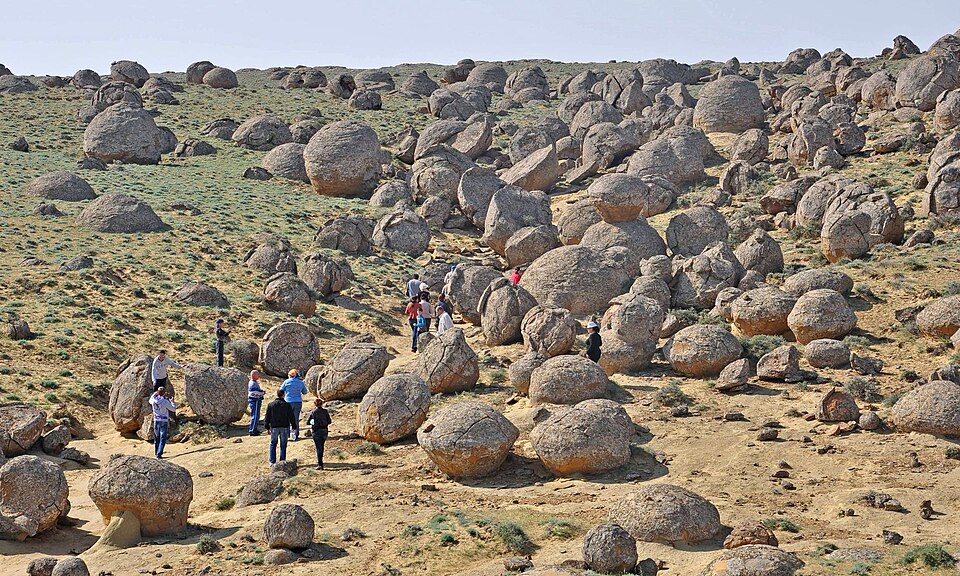
In the remote Mangystau Region of western Kazakhstan, the landscape changes from ordinary desert into something that seems almost impossible. Across a vast stretch of open steppe, hundreds of strangely rounded rocks lie scattered across the ground, ranging from small stones to enormous spheres several metres in diameter.
This is Torysh Valley, better known as the Valley of Balls, one of the most unusual geological landscapes in Kazakhstan. The formations are so remarkably round that, at first sight, they can look artificial. Yet they are entirely natural, created by geological processes that took place millions of years ago.
The surrounding landscape makes the experience even more remarkable. There are no forests, towns or developed tourist facilities here. Instead, the stone spheres sit among the dry plains and low hills of Mangystau, creating an extraordinary scene that feels more like another planet than western Kazakhstan.
The Valley of Balls
The most striking feature of Torysh Valley is the enormous collection of spherical rock formations scattered across the desert.
The stones vary considerably in size. Many are relatively small, while some reach around four metres in diameter. They are not all perfectly spherical either. Some are oval, irregular or partly eroded, while others have broken open to reveal their internal layers.
The formations often occur in groups, with dozens of spheres visible across the same stretch of terrain. Walking between them gives a much better impression of their scale than photographs can convey.
Their unusual appearance has made Torysh one of the signature natural attractions of Mangystau. The official tourism material of Kazakhstan describes the Valley of Balls as one of the region’s most mysterious landscapes, while modern geological descriptions generally classify the formations as concretions.
The stone spheres are generally interpreted as concretions, geological structures formed when mineral material accumulates around a central nucleus within sedimentary deposits.
Over very long periods, minerals can cement material around a small central particle, producing a harder mass inside softer surrounding sediments. Erosion then gradually removes the softer material, leaving the more resistant concretion exposed.
The precise geological history of the Torysh formations is more complicated, and different sources have proposed different ages and mechanisms. Some accounts associate the formations with ancient marine sediments and the former Tethys Ocean, while other hypotheses have involved tectonic activity.
This uncertainty is part of what makes Torysh so interesting. The formations are clearly natural geological structures, but their precise origin and development remain a subject of scientific discussion.
The broader Mangystau landscape has a remarkable geological history. Much of the region was once associated with ancient marine environments, and fossils from former marine life can be found in parts of the area. Today, erosion has exposed the ancient sediments as deserts, cliffs, plateaus and unusual rock formations.
The Landscape of Mangystau
Torysh is not an isolated curiosity surrounded by an otherwise ordinary landscape. It belongs to one of the most geologically fascinating regions of Central Asia.
Mangystau occupies the far west of Kazakhstan, beside the Caspian Sea. The region is characterised by vast deserts, chalk cliffs, canyons, isolated mountains and enormous open spaces.
Among its best-known landscapes are Bozzhyra, with its spectacular white cliffs and rock towers, Sherkala Mountain, the castle-like formations of Airakty, and the underground mosques scattered across the region.
Torysh provides a completely different experience. Instead of dramatic cliffs rising hundreds of metres above the desert, the attraction is spread across the ground itself. The stone spheres are surrounded by a seemingly endless steppe, making the landscape feel unusually spacious and remote.
Local Legends
The strange appearance of the formations has naturally inspired legends.
One traditional story tells of an invading army that entered the region. According to the legend, the local people prayed for protection, after which a powerful storm arrived. Lightning struck the invading forces and turned them to stone, leaving the countless stone figures that can still be seen across the valley.
The story is folklore rather than a scientific explanation, but it reflects how extraordinary geological formations have inspired stories throughout human history.
The nickname Valley of Balls is therefore much more straightforward than the legends surrounding the site. It simply describes exactly what visitors encounter: a vast valley covered with rounded stone formations.
Exploring the Stone Spheres
There is no single viewpoint that defines Torysh Valley. The best way to experience it is to get out of the vehicle and walk among the formations.
Some of the most interesting spheres are those that have cracked apart. Their broken surfaces reveal concentric layers and textures that are not visible from the outside.
The different stages of erosion can also be seen throughout the valley. Some formations remain relatively intact, while others are heavily weathered and gradually disappearing into the surrounding sediment.
The landscape is particularly impressive from a distance, where individual spheres appear as isolated dots across the desert. From closer up, their texture, cracks and unusual shapes become the main attraction.
Photography is another major reason to visit. The low sun around sunrise and sunset creates long shadows around the formations and emphasises their three-dimensional shapes. During the middle of the day, the strong overhead light can make the landscape appear flatter.
Getting to Torysh Valley
Torysh Valley is located roughly 105–110 km northeast of Aktau, making Aktau the natural base for exploring the area. It is also close to the village of Shetpe, although exact distances vary depending on which part of the valley is being visited.
From Aktau, the journey begins on roads leading towards the northern part of the Mangystau region before continuing onto smaller and often unpaved tracks.
The official Kazakhstan tourism portal describes two approaches from Aktau. One route leaves the main road after approximately 95 km and continues east towards Torysh, while another continues farther before turning towards the valley. Road conditions can change considerably after rain, when normally manageable tracks can become difficult.
Because the valley is remote and road signage is limited, a 4×4 vehicle with an experienced local driver is the safest and most practical option. Many visitors experience Torysh as part of a wider Mangystau tour rather than attempting to reach it independently.
The journey is commonly combined with Kokkala, Sherkala Mountain and Airakty Valley, creating a full day of geological and desert landscapes from Aktau.
Best Time to Visit
The best time to visit Torysh Valley is during spring and autumn, particularly April to May and September to October.
These months offer much more comfortable conditions for exploring the exposed desert landscape. Summer can be extremely hot in Mangystau, while there is virtually no shade around the stone formations.
Spring can also bring a little more vegetation to the normally barren landscape, adding subtle colour around the rocks. Autumn provides cooler temperatures and excellent light for photography.
Whatever season you choose, early morning and late afternoon are the most atmospheric times of day. The lower angle of the sun brings out the textures of the spheres and creates stronger shadows across the desert.
Practical Information
There are no conventional tourist facilities at Torysh Valley. Visitors should not expect restaurants, shops, toilets or a visitor centre.
Bring sufficient water and food before leaving Aktau or another settlement. Sun protection, a hat, sunglasses and sturdy footwear are also important, particularly if you plan to walk away from the vehicle.
Navigation should be planned in advance because the area is remote and roads can be difficult to identify. Mobile coverage should not be relied upon throughout the wider Mangystau wilderness.
The official tourism information also warns that road conditions can deteriorate significantly after rain. For this reason, travelling with a local driver who knows the tracks is preferable to relying on a standard rental car.
A Gateway to Mangystau
One of the greatest advantages of visiting Torysh Valley is that it can easily be incorporated into a larger journey through Mangystau.
A typical route can combine the Valley of Balls with Sherkala Mountain, the colourful geological formations of Kokkala, Airakty Valley and eventually the spectacular Bozzhyra landscapes.
This makes Torysh particularly valuable for travellers interested in geology and unusual natural scenery. While Bozzhyra provides enormous cliffs and dramatic viewpoints, Torysh offers a much more intimate encounter with the geology of the region.
Together, these places demonstrate why western Kazakhstan has become one of the most interesting destinations for travellers looking beyond the country’s better-known cities and mountain landscapes.
For visitors willing to travel deep into the desert, Torysh Valley offers something genuinely unusual: an enormous natural collection of stone spheres scattered across one of the most remote and spectacular landscapes of Kazakhstan.
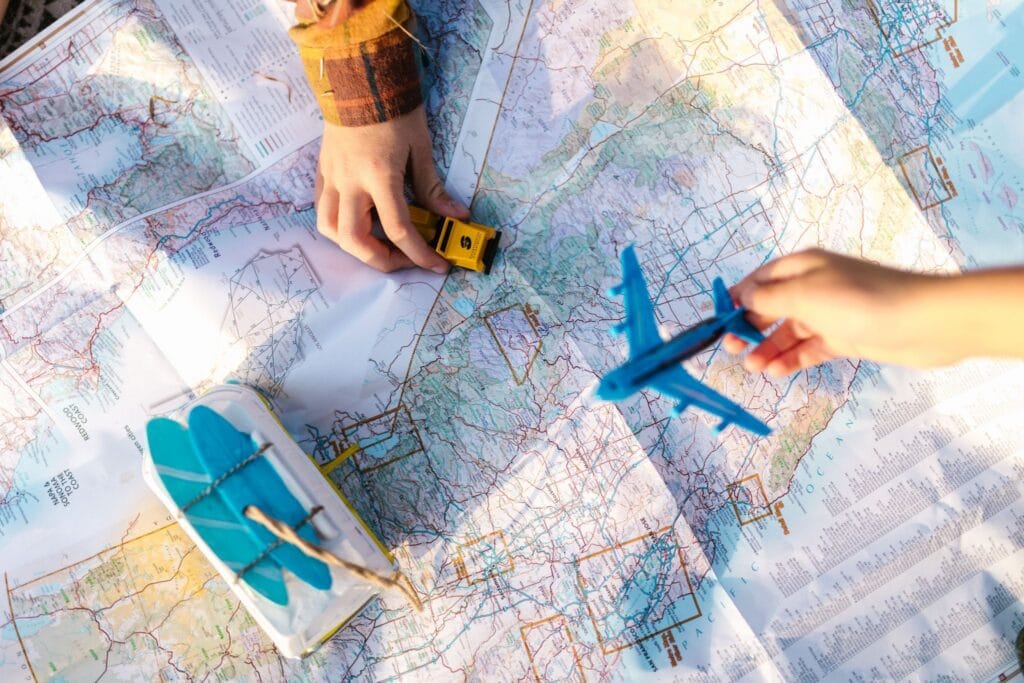
Open your saved places after a month of planning and you’ll see it: forty pins crammed into one city, half of them museums you’ll never reach before closing time. This happens to almost everyone, even seasoned travelers who swear they’ve learned their lesson from the last trip. A quick look at travel app data suggests the average user saves over 60 locations per trip but visits fewer than 15. That gap isn’t laziness. It’s math nobody did before the pins went up.
The fix isn’t deleting your dreams. It’s sorting them.
Before you touch logistics, make a short list — five to seven places, no more — that would make you genuinely upset to miss. Everything else is negotiable, even if it looked exciting at 2 a.m. while scrolling.
Write this list on paper if you can. Something about typing it into a notes app makes it feel disposable; ink feels like a commitment. This list becomes your anchor points, and every other decision — meals, rest days, even which hotel neighborhood to book — gets built around them.
Cluster Your Saves and Check Local Feeds With a VPN
Now look at the map with clustering in mind. Pins that sit close together form natural half-day zones. A museum next to a market next to a lunch spot is not three separate trips; it is one morning. Group pins into 3–5 geographic clusters per city. This alone can shrink your transit time by half.
When you check opening hours, local events, or ticket availability, websites often show you different content based on your location. To see the same content as locals and thus respond to traffic changes faster, it’s worth using VeePN’s VPN services (https://veepn.com/vpn-services) as a basis. It allows you to safely explore the map as if you were nearby, even before you leave for your trip.
If your map spans a large region, draw clusters around train stations or parking areas, not just attractions. The main point is simple: cluster first, then verify locally.
Group Pins by Neighborhood, Not by Wishlist
Zoom out on your map and look at clusters, not categories. A coffee shop three streets from your must-see cathedral belongs in the same morning, even if it wasn’t on your original priority list. Geography beats enthusiasm every time you’re the one walking.
Group everything within a 15-minute walk into one block
Treat anything requiring transit as its own separate stop
Leave transit-heavy days lighter on activities
This sounds obvious written down. It’s shockingly easy to ignore when you’re the one dragging a rolling suitcase mentally across a city at midnight, wishing you’d planned better. Grouping this way also saves money — fewer taxi rides, fewer rushed metro transfers, fewer moments where you cave and pay surge pricing because you’re already running forty minutes behind.
Build in Slack Time on Purpose
Every seasoned traveler eventually learns this the hard way: buffer time isn’t wasted time. Studies on tourist fatigue have found that trips packed with back-to-back activities lead to lower satisfaction scores than looser ones, even when the tightly scheduled trips technically “see” more. Exhaustion quietly ruins memories.
Block at least ninety unscheduled minutes per day. Use it for a wrong turn, a nap, or a bakery you weren’t planning to notice. As one longtime backpacker put it, “The best afternoon of my trip was the one I never planned.” That’s not a throwaway line — it’s a pattern that shows up again and again in traveler interviews.
Tools That Keep the Chaos Organized
A cluttered map benefits from digital sorting more than willpower alone. Color-code pins by priority level, then hide the lowest tier until your first two days are locked in, and only pull it back into view once you know how much time is actually left. Some travelers layer a browser extension like VeePN on top of their planning setup too, mainly so booking sites stop showing inflated prices once they notice repeated searches from the same location. Unfortunately, this is a pricing quirk that’s been documented across several travel booking platforms.
Beyond that, a shared document with three columns — Must-Do, Nice-to-Have, Someday — keeps decisions visible instead of buried in browser tabs. Simplicity here matters more than any fancy app.
When to Cut, Not Compress
There’s a difference between trimming a day and cramming it. Compressing means squeezing five stops into hours meant for three; cutting means honestly removing one so the other four breathe. Almost every traveler resists cutting until the trip forces their hand anyway, usually somewhere between hour six and hour eight of a day gone sideways.
A simple test works well: if explaining a stop to a friend takes more enthusiasm than you actually feel, cut it now rather than regretting it later on tired feet.
A Quick Story From the Road
A friend once spent four days mapping Rome down to the minute, color-coded spreadsheet and all. By day two, she’d abandoned it completely. “I ended up loving the church I found by accident more than the one I’d starred in three times,” she told me later, laughing at her own planning.
That’s not an argument against planning. It’s an argument for planning loosely enough that accidents still have room to happen.
Final Checklist Before You Fly
Before locking your itinerary, run through this short list:
Confirm your five to seven non-negotiable stops are geographically realistic for the days available
Check opening hours and closed days — many major sites close one weekday entirely
Leave one buffer block per day, minimum ninety minutes
Group remaining pins by neighborhood, not by original wishlist order
Secure any public Wi-Fi logins you’ll rely on for maps or bookings
A travel map crammed with sixty pins isn’t a failure. It’s just raw material. The realistic itinerary hiding inside it usually needs fewer stops than you think, arranged with far more care than your first pass ever gave them.
This website uses cookies to improve your experience. We'll assume you're ok with this, but you can opt-out if you wish. Cookie settingsACCEPT
Privacy & Cookies Policy
Privacy Overview
This website uses cookies to improve your experience while you navigate through the website. Out of these cookies, the cookies that are categorized as necessary are stored on your browser as they are essential for the working of basic functionalities of the website. We also use third-party cookies that help us analyze and understand how you use this website. These cookies will be stored in your browser only with your consent. You also have the option to opt-out of these cookies. But opting out of some of these cookies may have an effect on your browsing experience.
Necessary cookies are absolutely essential for the website to function properly. This category only includes cookies that ensures basic functionalities and security features of the website. These cookies do not store any personal information.
Any cookies that may not be particularly necessary for the website to function and is used specifically to collect user personal data via analytics, ads, other embedded contents are termed as non-necessary cookies. It is mandatory to procure user consent prior to running these cookies on your website.