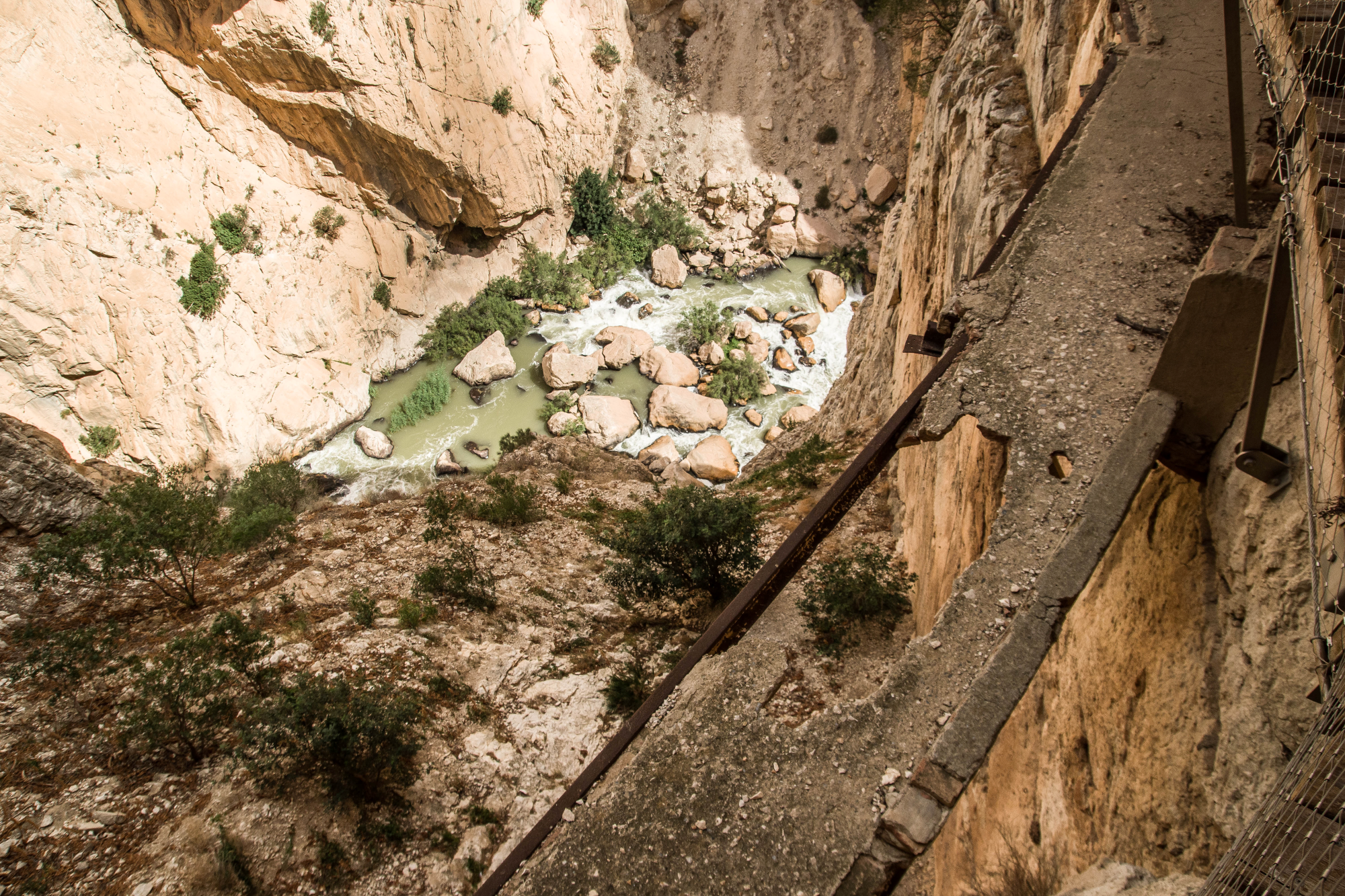
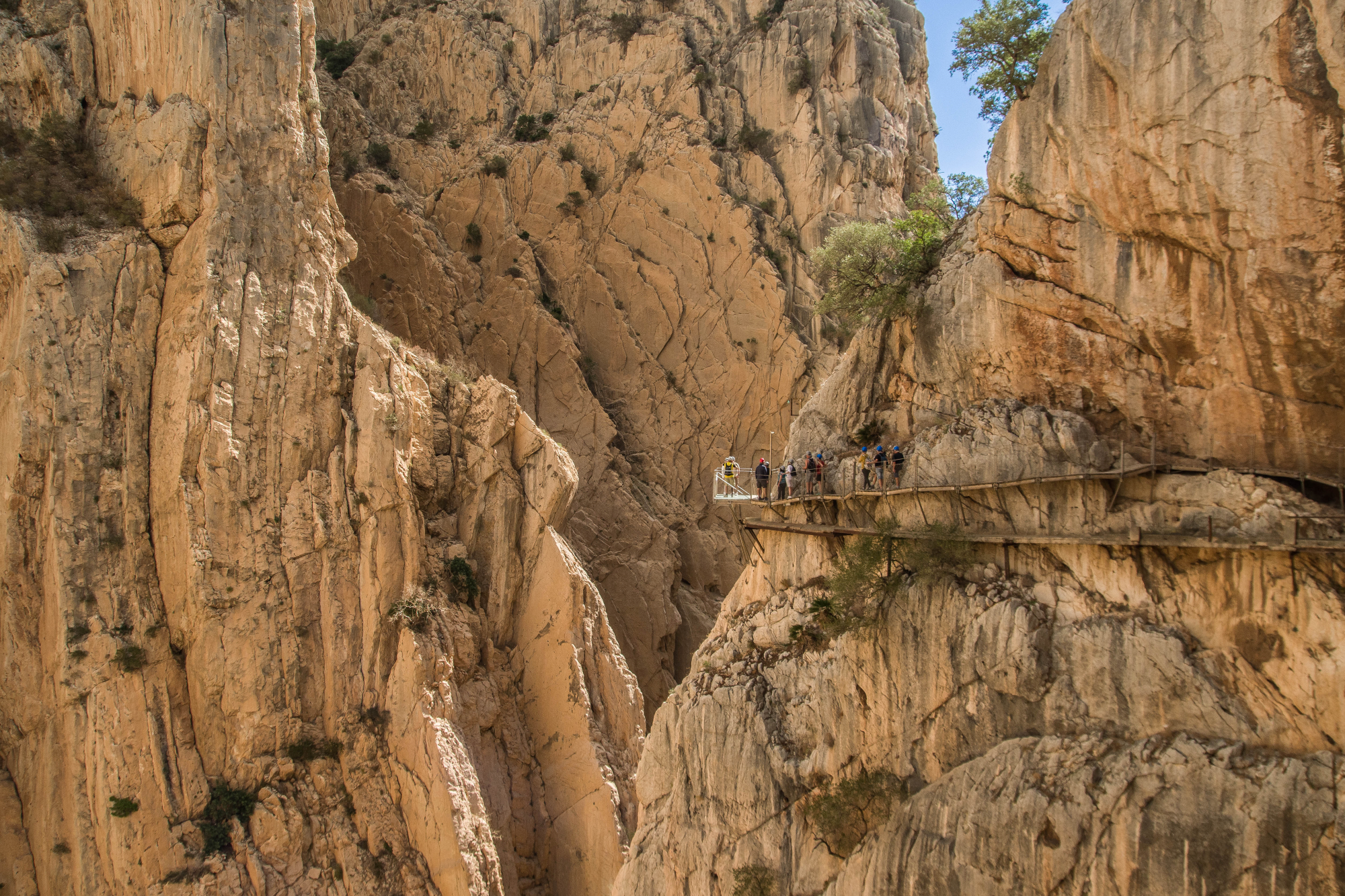
El Caminito del Rey is a stunning walkway that runs along the cliffs of El Chorro Gorge, near Ardales in Málaga, Spain. Its name comes from its association with King Alfonso XIII, who crossed the path in 1921 during the inauguration of the Conde del Guadalhorce Dam. Originally built between 1901 and 1905, the path was designed to give workers access to hydroelectric plants at Chorro Falls and Gaitanejo Falls, facilitating maintenance and the transportation of materials.
When the original path was being built, workers had to endure incredibly dangerous conditions, often securing themselves with nothing more than a rope while they worked high above the gorge.
By the late 20th century, the walkway had fallen into disrepair, with large sections of the path collapsed and numerous accidents occurring, leading to its closure in 2000. Between 1999 and 2000, five people tragically lost their lives while attempting to walk the dangerous path. In response, the regional government of Andalusia, together with local authorities, initiated a €9 million restoration project in 2011, which took about three years to complete. The walkway was officially reopened in 2015, offering visitors a safe yet thrilling experience. Today, the Caminito del Rey is a 7.7 km trail suspended more than 100 meters above the gorge floor, offering panoramic views of the surrounding cliffs and the Guadalhorce River below.
Though much of the original structure has been preserved, including some of its iconic steel rails, the pathway has been modernized with new safety features. The route, which takes about 3-4 hours to complete, winds through the dramatic Desfiladero de los Gaitanes gorge.
The trail is linear, and visitors can walk from north to south, starting at the northern entrance near the Guadalhorce Dam in Ardales and finishing at the southern exit near the El Chorro railway station in Álora. Shuttle buses are available to take hikers between these two points, with parking available at designated areas. If travelling by train, there is a shuttle bus to the northern entrance from the El Chorro-Caminito del Rey railway station.
Despite its transformation into a safer tourist attraction, El Caminito del Rey remains today one of the most stunning and unique walks in the world. If you are planning a visit in Andalusia, make sure to not miss it.
Borobudur, whose name is derived from “Boro” for “big” and “Budur” for “Buddha,” is the largest Buddhist temple in the world. It ranks alongside Bagan in Myanmar and Angkor Wat in Cambodia as one of the great archaeological sites of Southeast Asia.
Borobudur has faced many challenges over the centuries. It was neglected around the 14th or 15th century AD when Hindu-Buddhist civilization began to decline in Indonesia and Islam rose. In 1985, it was targeted by a bomb that destroyed nine stupas and two Buddha statues; the perpetrator was a Muslim preacher. An earthquake measuring 6.2 on the Richter scale struck on May 27, 2006. Before its complete restoration, Borobudur was also targeted by looters who took Buddha statues to sell to antique collectors or museums. Many parts of the temple were lost and diminished due to these looters, which is why many Buddha statues are headless.
Today, Borobudur is completely restored and considered one of the modern wonders of the world. It is a popular site for pilgrimage and is Indonesia’s most-visited monument. UNESCO listed Borobudur as a World Heritage Site in 1991. Once a year, during the full moon in May or June, Buddhists in Indonesia observe Vesak Day, commemorating the birth, death, and enlightenment of Siddhārtha Gautama, the Buddha.
The temple is estimated to have been built during the glory of the Syailendra Dynasty, between 760 and 830 AD. It likely took at least 100 years to complete and is thought to have been finished during the reign of King Samaratungga.
Archaeological excavations during reconstruction suggest that adherents of Hinduism or a pre-Indic faith had already begun to erect a large structure on Borobudur’s hill before it was appropriated by Buddhists. The foundations are unlike any Hindu or Buddhist shrine structures, suggesting the initial structure is more indigenous Javanese than Hindu or Buddhist.
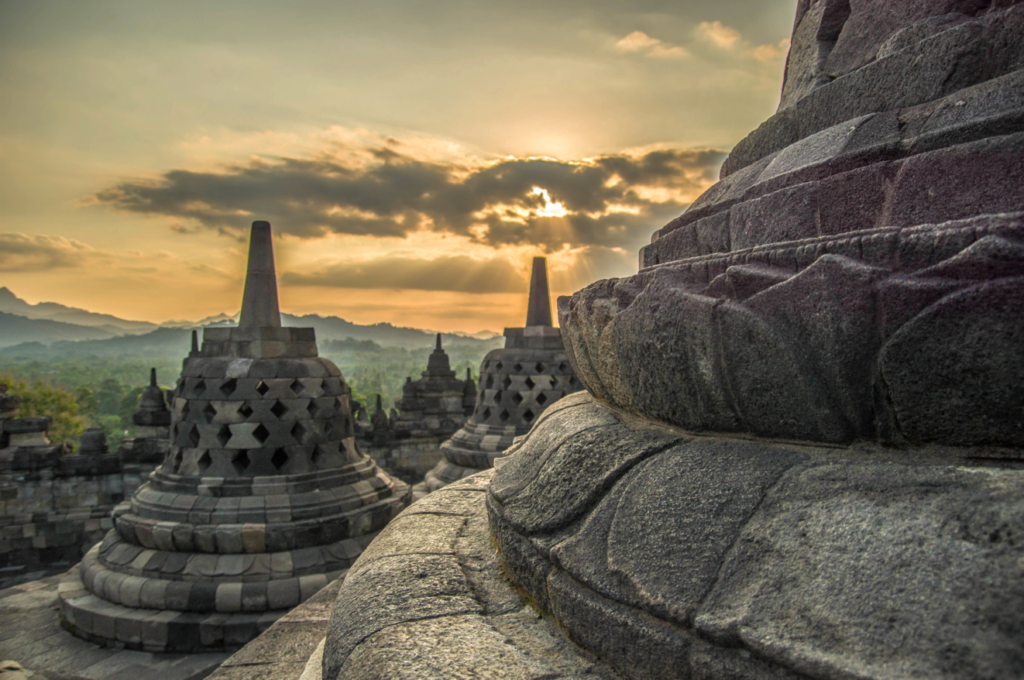
The original foundation is a square, approximately 118 meters (387 ft) on each side. The temple has nine platforms, with the lower six being square and the upper three circular. It is decorated with relief panels and originally had 504 Buddha statues. The upper platform contains 72 small stupas surrounding one large central stupa. Each stupa is bell-shaped and pierced by numerous decorative openings, with statues of the Buddha inside the pierced enclosures.
The monument’s three divisions symbolize the three “realms” of Buddhist cosmology: Kamadhatu (the world of desires), Rupadhatu (the world of forms), and Arupadhatu (the formless world).
Ordinary sentient beings live in the lowest level, the realm of desire. Those who have burnt out all desire for continued existence leave the world of desire and live on the level of form alone: they see forms but are not drawn to them. Finally, fully enlightened Buddhas go beyond even form and experience reality at its purest, most fundamental level, the formless ocean of nirvāṇa.
Kamadhatu is represented by the base, Rupadhatu by the five square platforms (the body), and Arupadhatu by the three circular platforms and the large topmost stupa.
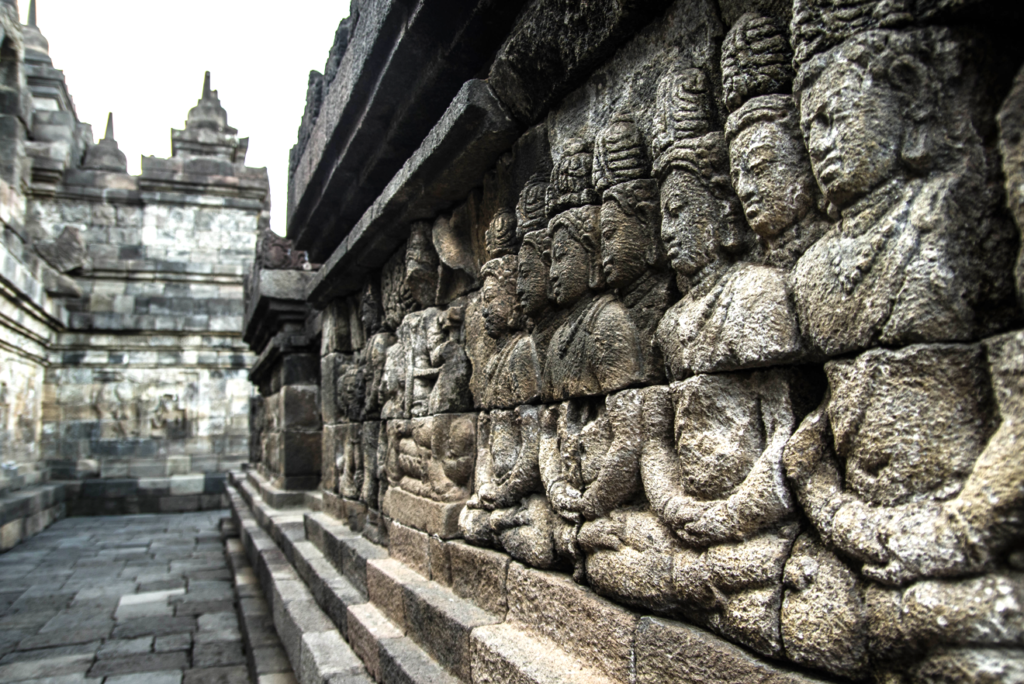
Borobudur is covered in an astonishing 2,670 individual carvings, a mix of stories and decorations spread over a massive 2,500 square meters. These carvings tell a grand story, with a hidden base depicting the law of karma, followed by a journey through the Buddha’s life and past lives on the lower levels. As visitors ascend, they encounter tales of Sudhana’s quest for enlightenment. The entire experience is designed to be followed in a specific clockwise direction, mirroring the ritual circumambulation performed by pilgrims.
The 160 hidden panels at Borobudur don’t tell one story but act as individual illustrations of karma. Each panel shows a cause-and-effect scenario, depicting bad actions and their punishments, good deeds and their rewards, and everyday life caught in the cycle of rebirth. These panels were once hidden from sight but were photographed and are now on display at the nearby Borobudur Museum. Currently, only a small corner of the hidden base with these reliefs is visible to visitors.
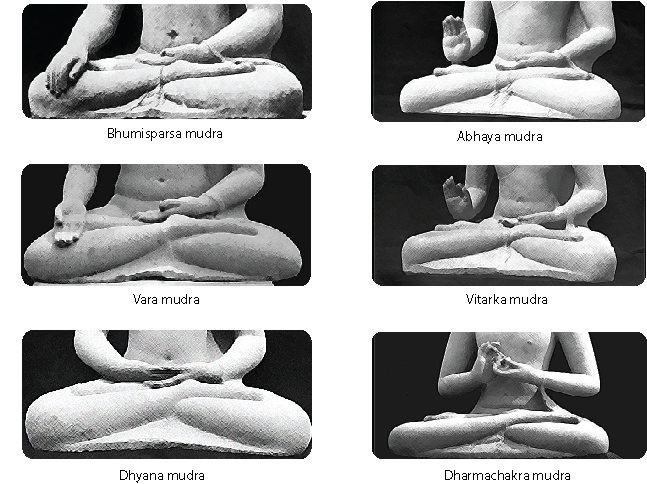
Borobudur’s hundreds of Buddha statues may seem identical but they hold their hands in different mudras: symbolic hand gestures. These mudras represent the five cardinal directions and are associated with specific Dhyani Buddhas and their meanings.
As you walk around Borobudur in a clockwise direction, following the Pradakshina, here’s the sequence of mudras you’ll encounter on the Buddha statues, starting from the eastern side:
Bhumisparsa mudra: Symbolizes calling the earth to witness, representing unwavering determination (Akshobhya). Vara mudra: Represents benevolence and offering alms (Ratnasambhava). Dhyana mudra: Represents concentration and meditation (Amitabha). Abhaya mudra: Represents courage and dispelling fear (Amoghasiddhi). Vitarka mudra: Represents reasoning and discussion (Vairocana or Samantabhadra). Dharmachakra mudra: Represents setting the wheel of dharma (law) in motion (Vairochana).
Borobudur is a great destination for photographers. Despite large groups of tourists, you can always find a spot with the right angle to take great shots without people. Many tours organize visits at sunrise, but keep in mind that the last available tour in the afternoon, close to sunset, also provides good lighting for photography.
When planning your visit, don’t forget to buy your tickets in advance, as access to the temple is limited.
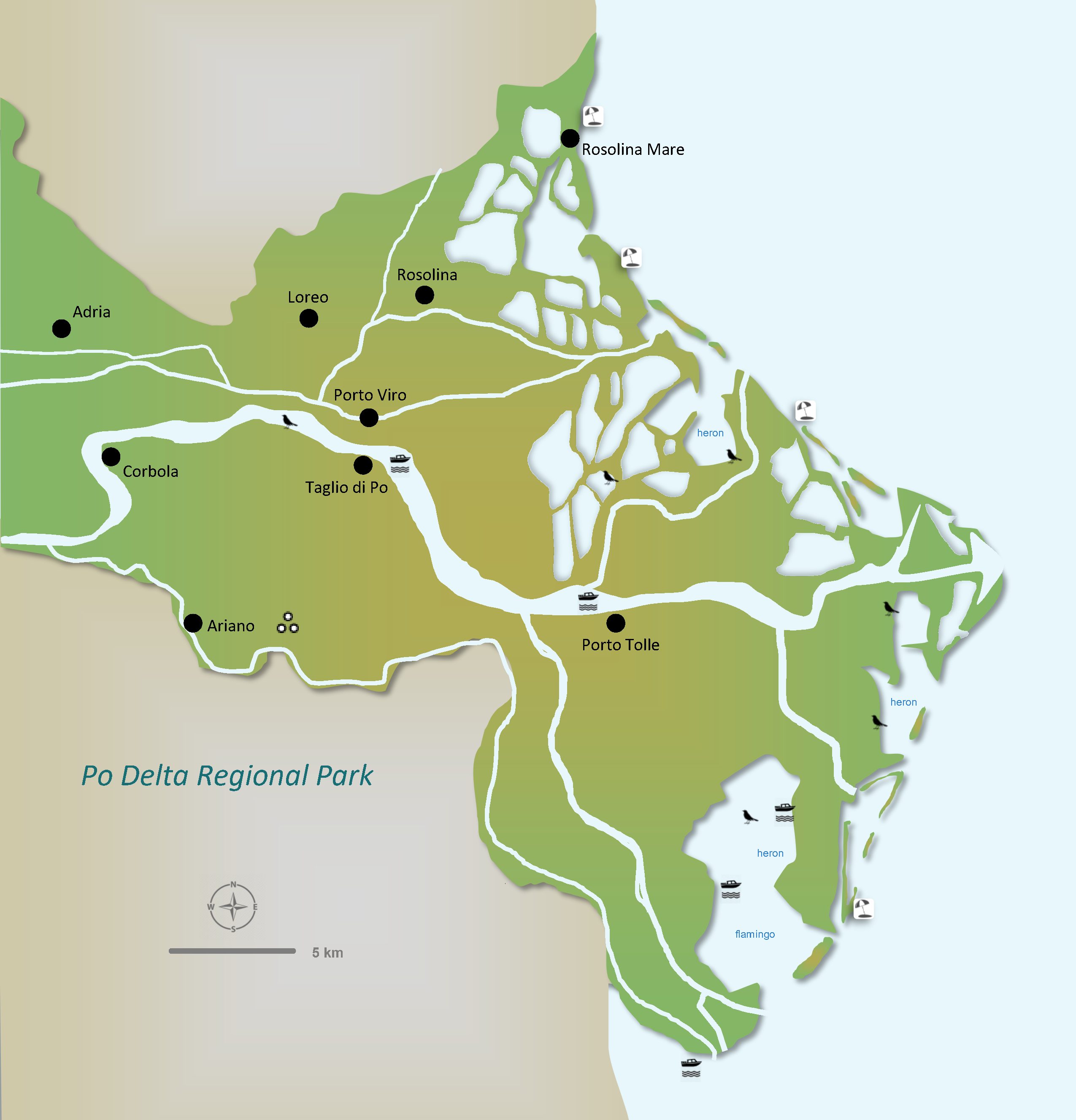
Nestled between the Veneto and Emilia-Romagna regions of Italy lies a hidden gem steeped in millennia of history and natural wonder: the Po Delta. This vast land, spanning 66,000 hectares, is not just a geographical marvel but a testament to the intricate relationship between nature, history, and human endeavour.
The story of the Po Delta unfolds like chapters in a historical epic. Its origins date back thousands of years, with the river Po carving its path through the landscape during the Bronze Age. The ancient Etruscans and Romans left their mark, shaping the delta’s course and forming bustling settlements along its banks.
Over the centuries, the delta has been moulded by human intervention, from Benedictine monks reclaiming land to modern-day reclamation efforts funded by the Italian state. The ever-changing course of the river, marked by floods and diversions, has shaped the land we see today: a delicate balance of nature and human ingenuity.
Despite its tumultuous past, the Po Delta is a sanctuary for biodiversity, boasting rich habitats teeming with life. From the tranquil lagoons to the bustling paleo riverbeds, the delta is home to over 370 bird species, diverse fish, and mollusc populations. Do not forget to bring your camera (a telephoto lens is recommended) and binoculars.
For wildlife enthusiasts, the delta offers great experiences, from birdwatching along the coast to exploring the vibrant marine ecosystems. Every year, events like the International Bird Watching Fair draw visitors from around the world, celebrating the region’s natural heritage.
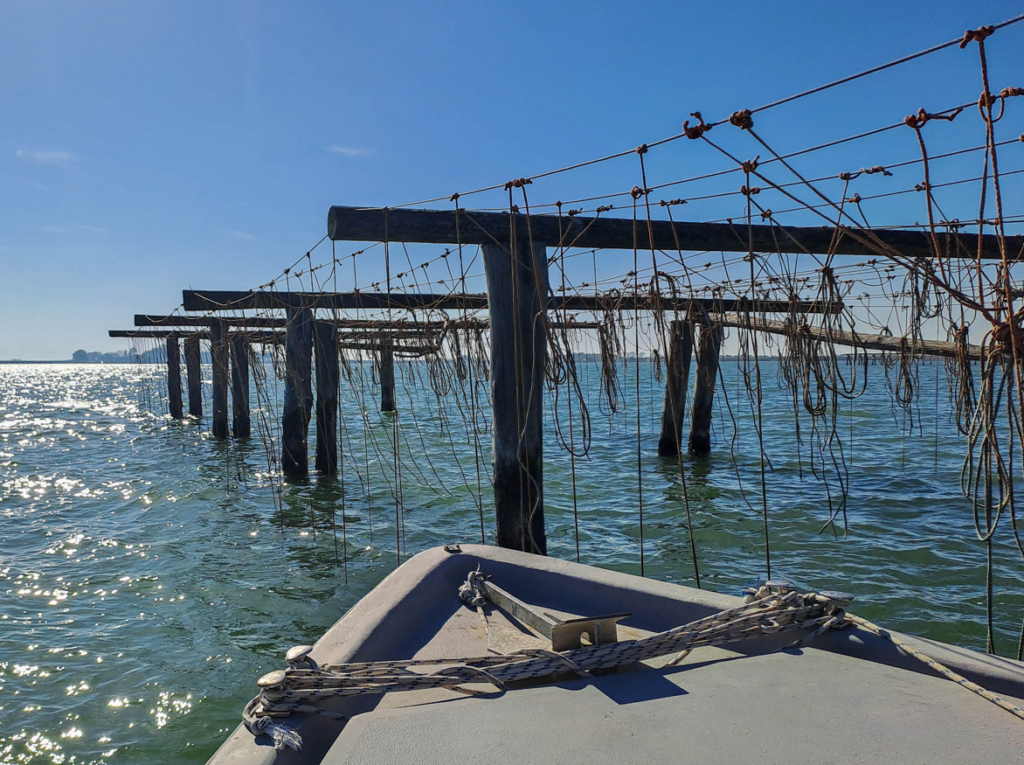
No visit to the Po Delta is complete without indulging in its culinary treasures. From succulent seafood to exquisite Delta oysters, the region’s gastronomy reflects its bountiful waters and fertile lands.
Sample the finest mussels and clams from the Sacca di Scardovari or savor the renowned eels from the Comacchio valleys, do not miss a taste of the traditional “moleche”, a delicious crab caught just after they shed their hard outer shell, leaving them with a soft, edible shell.
For travellers seeking adventure, the Po Delta offers also opportunities for exploration. Start your journey at one of the visitor centres scattered throughout the region, where you can learn about the delta’s history and plan your itinerary.
Whether by foot, bike, or boat, there’s no shortage of ways to experience the delta’s diverse landscapes. Take a leisurely stroll through quaint fishing villages or immerse yourself in the Renaissance splendour of Ferrara, a UNESCO World Heritage Site.
As tourism flourishes in the region, efforts to conserve and protect the delta’s delicate ecosystem are more important than ever. Organizations like the “Consorzio di Bonifica Delta Po-Adige” work tirelessly to manage drainage systems and preserve the delta’s natural heritage for future generations to enjoy.
In the heart of the Po Delta Biosphere Reserve, the delicate balance between nature and human activity is a reminder of the resilience of this unique landscape. Whether you’re a nature lover, history enthusiast, or culinary connoisseur, the Po Delta offers a journey unlike any other, an enchanting blend of past and present, where every moment is a discovery waiting to be made.
“In the forests bordering on this line, there are found those lions called “man-eaters,” and moreover these forests are full of thorns and prickly shrubs. Portions of this railway from Mombasa to Uganda are still being made, and here these lions fell on the workmen and destroyed them. Such was their habit, day and night, and hundreds of men fell victims to these savage creatures, whose very jaws were steeped in blood. Bones, flesh, skin and blood, they devoured all, and left not a trace behind them. Because of the fear of these demons some seven or eight hundred of the labourers deserted, and remained idle; Some two or three hundred still remained, but they were haunted by this terrible dread, And because of fear for their lives, would sit in their huts, their hearts full of foreboding and terror. Every one of them kept a fire burning at night, and none dared to close his eyes in sleep; yet would some of them be carried away to destruction. The lion’s roar was such that the very earth would tremble at the sound, and where was the man who did not feel afraid?”
Roshan Mistari, 29th January 1899. From J H Patterson, The Man-eaters of Tsavo, 1907.
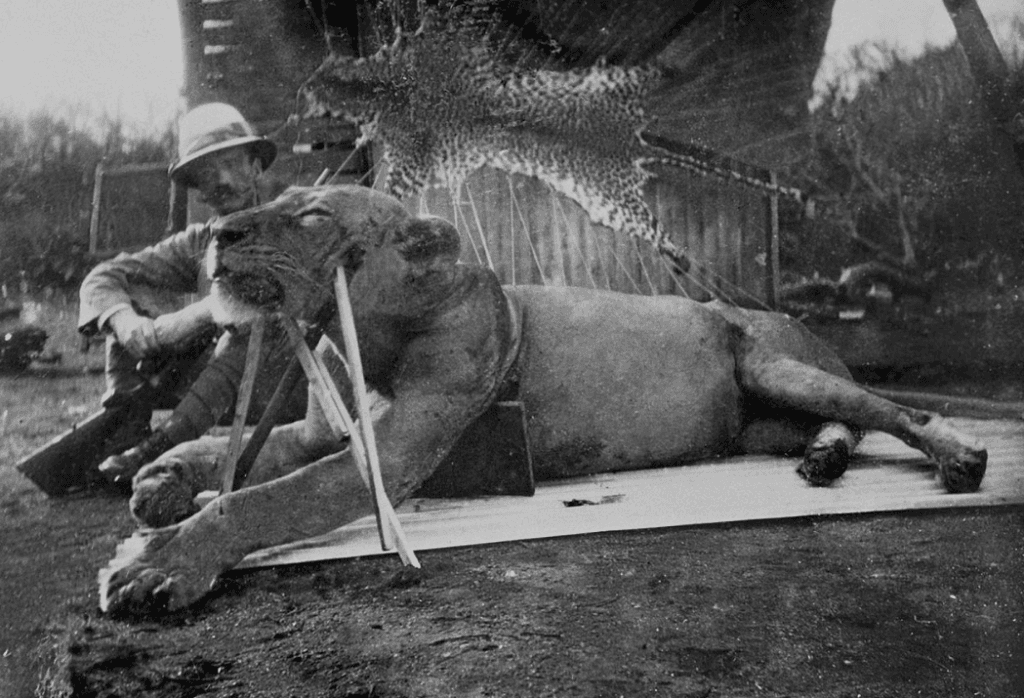
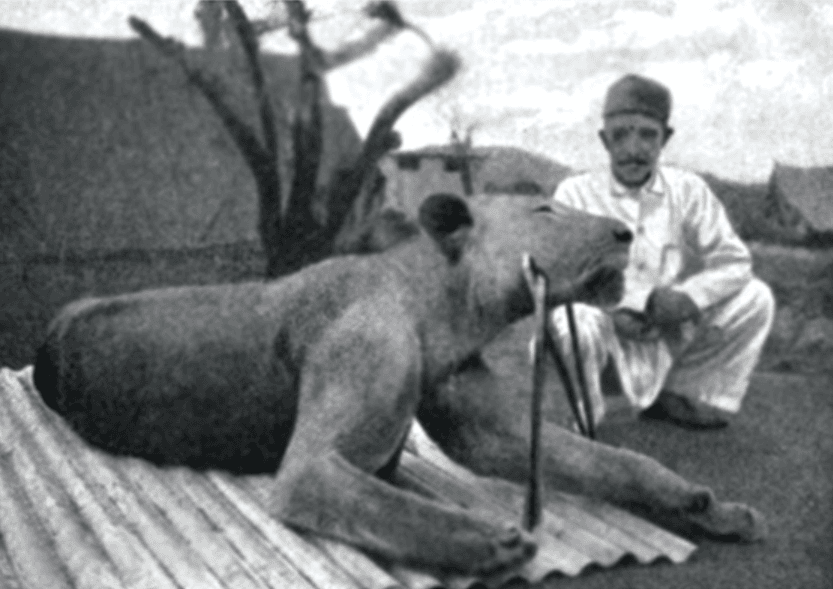
The Tsavo Man-Eaters were two large male lions in the Tsavo area of Kenya who killed around 135 workers engaged in the construction of a bridge of the Kenya-Uganda Railway, project led by British Lieutenant Colonel John Henry Patterson.
The construction of the bridge over the Tsavo river started in March 1898 involving several thousands of imported Sikh workers from British India along with local laborers. During the next nine months of construction, the two maneless lions prowled around the campsite, dragging workers from their tents at night and devouring them, despite thorn fences (still employed today in Masai villages to safeguard against predators) and campfires.
With the escalation of these attacks, numerous workers fled from Tsavo, leading to a halt in the bridge construction, and additional Sepoy Indian soldiers were dispatched to aid in the lion-hunting. After repeated unsuccessful attempts to ambush the lions, Patterson shot and wounded the first lion on 9 December 1898, but it escaped. Later, it returned at night and began hunting Patterson back. He shot it again with a more powerful rifle and found it dead the day after.
To kill the second lion it took nine shots with different rifles. The first shot was fired from a platform that Patterson had built near a goat killed by the lion. After eleven days, two shots from a second rifle struck the lion while it was trailing Patterson and attempting to escape. The next day, Patterson shot it three more times with the same rifle and three more times with a third rifle, eventually killing it with the last shot in the head. He claimed it died still trying to reach him from a branch. It was the 29th December 1898, 20 days after the killing of the first lion.
The construction crew returned and finished the bridge in February 1899. The railways are still in use today under the control of the Kenya Railways Corporation and Tsavo lions continue to occasionally threaten humans.
The lions’ skins, sold to the Field Museum of Natural History of Chicago in 1924 for a sum of $5,000 were used to reconstruct the lions which are along with their skulls. The two lions are known as FMNH 23970, and FMNH 23969, but the people named them back then “the Ghost” and “the Darkness”.
“The Ghost” was 9 feet 8 inches (2.95 m) long, and 3 feet 9 inches (1.14 m) high. “The Darkness” was 9 feet 6 inches (2.90 m) long and 3 feet 11 inches (1.19 m) high.
Colonel Patterson published the book The Man-Eaters of Tsavo and Other East African Adventures in 1907. It is possible that he exaggerated the figures, suggesting that as many as 135 individuals had been consumed by the lions. This sensationalization may have played a role in boosting book sales. On the contrary, the Ugandan Railway Co. reported 28 deceased workers, with estimates ranging from 28 to 31 victims, based on their examination of Colonel Patterson’s original journal. However, the same analysis also pointed out that the journal exclusively referenced Indian workers and that Patterson indicated that African worker casualties might have been substantially higher.
Recent studies on the isotopic signature analysis of their bone collagen and hair keratin were published in 2009 and suggested that the first lion ate the equivalent of 10.5 humans and the second 24.2 humans. Though none of these modern studies have taken into account the people who were killed but not eaten by the animals. The diet of the victims could have also affected the outcome of the test, since many of the workers at Tsavo were Hindus and may have had a vegetarian diet, which could have led to categorize the victims as vegetarian species.
Theories for the man-eating behavior of lions have been reviewed by Peterhans and Gnoske, as well as Dr. Bruce D. Patterson (no relation to Colonel Patterson). Their discussions include the following reasons:
In 1898, a rinderpest outbreak (cattle plague) had a significant impact on the lions’ typical prey, compelling them to search for alternative sources of food. The Tsavo lions might have become accustomed to discovering deceased humans near the Tsavo River crossing. This area was a frequent route for slave caravans headed to Zanzibar, the central hub of the East African slave trade. An alternative argument indicates that the first lion had a badly damaged tooth that would have compromised its ability to kill natural prey. However, this theory has been generally disregarded by the general public, and Colonel Patterson, who killed the lions, personally disclaimed it, saying that he damaged that tooth with his rifle while the lion charged him one night, prompting it to flee.
Dr. Patterson also researched why the man-eating lions of Tsavo were maneless and concluded that mane absence was due to the hot temperature.
Patterson’s book was the basis for several films:
Men Against the Sun (1952) Bwana Devil (1952) Killers of Kilimanjaro (1959) The Ghost and the Darkness (1996) Prey (South Africa, 2007) Prooi (Netherlands, 2016)
Tsavo lions are not the only man-eaters reported in recent history, here are some of the other famous lions:
From 1932 to 1947, in southern Tanzania, a particularly menacing group of 15 lions earned the ominous moniker Man-eaters of Njombe. These lions’ aggression stemmed from the British colonial administration’s attempts to curb a rinderpest virus outbreak. To contain the virus that was decimating local livestock, the government initiated the killing of wild animals such as zebras, wildebeests, and antelopes. This action led to a scarcity of prey for the lions, driving them to seek out alternative sources of food. The Njombe pride exhibited a cunning approach, adopting nighttime movements and daytime hunts, a deviation from the typical behavior of lions. Prior to their eventual extermination by the British game warden, the Njombe pride tragically claimed the lives of an estimated 1,500 individuals.
In 1909, Chiengi Charlie, nicknamed the “White Lion” due to his unique light coloration, instilled fear across Zambia. His unusual appearance, resembling whiteness and sporting a half tail, led local communities to hold him in a sort of legendary awe. Roaming through villages, he hunted the residents, later joining forces with two other male lions. He managed to elude capture by villagers for an entire year, during which he devoured a total of 90 individuals. His reign of terror only came to an end when he was finally shot.
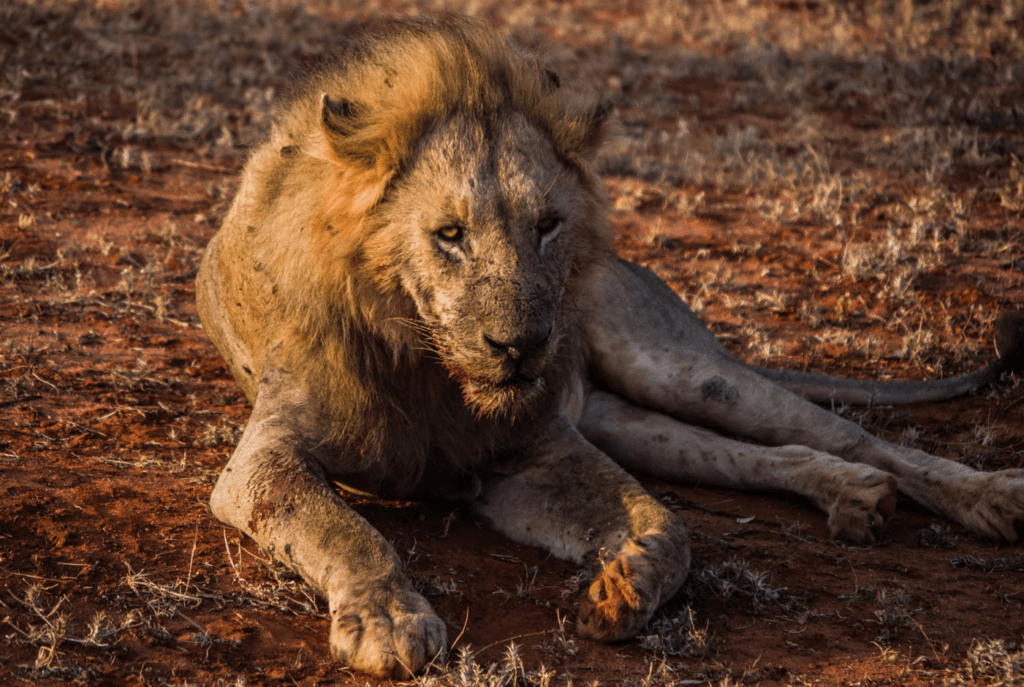
Between 2002 and 2004, a young lion named Osama, named after the Arabic word for lion, claimed the lives of more than 50 individuals. When he was shot in 2004, he was just 3 ½ years old. The youth of his age has prompted certain researchers to theorize that Osama acquired his people-hunting skills from his mother. Another hypothesis posits that he targeted humans due to a substantial abscess on one of his molars, similar to the Tsavo lions.
In 1991, the Lion of Mfuwe struck terror by claiming approximately six lives in Zambia’s Luangwa River Valley. An individual from California, USA, was on a safari visit during this period and reportedly patiently awaited his chance in a hunting blind for nearly three weeks before finally being presented with the opportunity to take down the lion. Renowned for its huge size, measuring close to 10 feet in length, the lion’s remains now reside at the Field Museum in Chicago.
In 1929, there was a lion that started following and attacking people near the Msoro Mission. This lion got the name Msoro Monty because of the similar sounds in the name. “Msoro Monty” was good at avoiding traps set for him. After causing a lot of deaths, he suddenly disappeared leaving no traces.
Namvelieza, or The Cunning One, killed 43 people near Kasawa, Zambia. Tanzania’s Paper Lion got his name because he seemed to drift from victim to victim randomly, like a scrap of paper floating in the breeze.
These man-eating lions are still subjects of oral stories passed on by inhabitants of the African villages and everybody can learn a lesson from these stories. Human interference (again!) is often the root cause of these killings. When ravaged by hunger and pushed to desperation, big cats can and will turn to humans for food.
Dust devils, small-scale whirlwinds are fascinating natural phenomena which emerge under specific environmental conditions. In regions with exposed, dry ground and intense sunlight, the sun’s rays heat the surface, creating localized pockets of hot air. The heated air rises rapidly, and cooler air rushes in to fill the void, initiating a rotating motion. The Coriolis effect, influenced by the Earth’s rotation, further shapes the vortex into its characteristic spiral pattern.
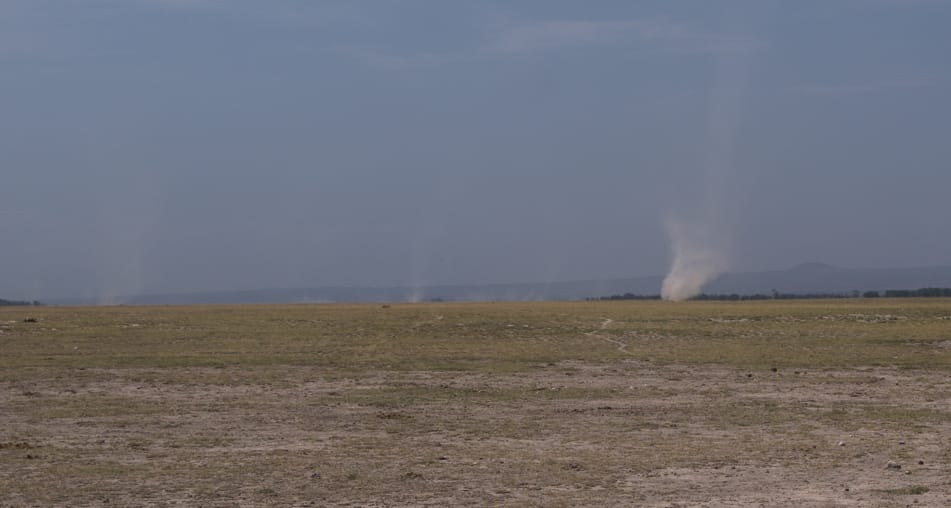
They commonly appear as relatively small and mild phenomena, often measuring less than 2 meters in diameter and featuring average wind speeds of around 45 miles per hour (70 km/h). Typically, they dissipate swiftly, within a minute of forming. Nevertheless, exceptional occurrences have been observed, where they grow remarkably large and intense. In such instances, they can reach diameters of up to 100 meters and exhibit wind speeds exceeding 75 mph (120 km/h). Some of these powerful dust devils persist for as long as 20 minutes before finally subsiding.
Dust devils are frequent visitors to arid and semi-arid regions across the world. They commonly appear in deserts, dry lake beds, and open fields during warmer months.
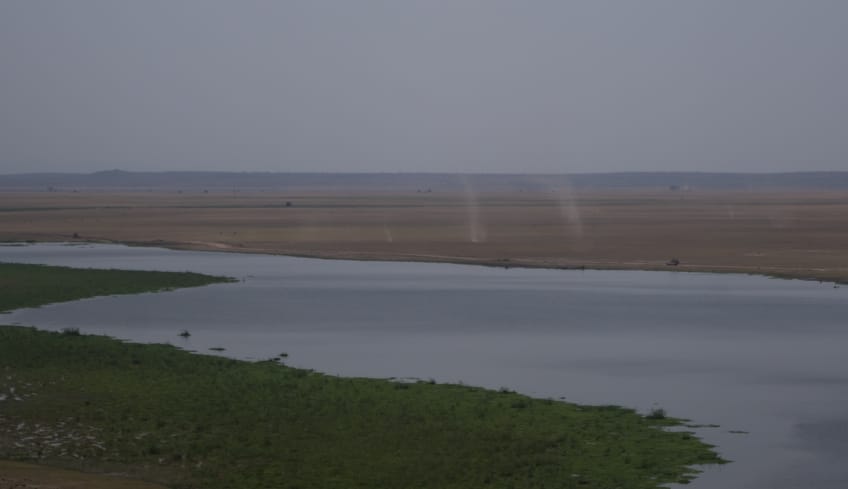
We captured some devils in Amboseli National Park, Kenya. This region is renowned for showcasing these mesmerizing formations amidst its vast savannahs. Here, the unique landscape and weather conditions offer a perfect stage for the graceful dance of dust devils.
Interestingly, dust devils are not exclusive to our planet. These intriguing phenomena have also been observed on the surface of Mars. Mars, known for its thin atmosphere and vast desert-like landscapes, provides the ideal conditions for the formation of dust devils. These Martian dust devils have been discovered from data reported by NASA’s Viking probes, revealing their striking similarity to their Earthly counterparts. The study of dust devils on Mars provides valuable insights into the atmospheric dynamics and weather patterns on the Red Planet.
Within the realm of dust devils lies a rare and captivating variation – the fire devil. Unlike its more common counterpart, the fire devil forms over an active fire or smoldering hot spot. As a wildfire blazes, the intense heat warms the surrounding air near the ground, causing it to rise and create a low-pressure area. Cooler air then converges, initiating a rotating motion that forms the fire devil. This extraordinary whirlwind blends the power of fire with the grace of a dust devil, creating a breathtaking yet concerning sight.
Apart from dust devils and fire devils, there are several other intriguing variations of vortex phenomena in nature. For example, “hay devils” form in the warm air above freshly-cut hay fields, gently swirling stalks and clumps of hay harmlessly through the air. “Snow devils” can occur in snow-covered areas, and “steam devils” can be observed in the steam rising from power plants or over warm bodies of water.
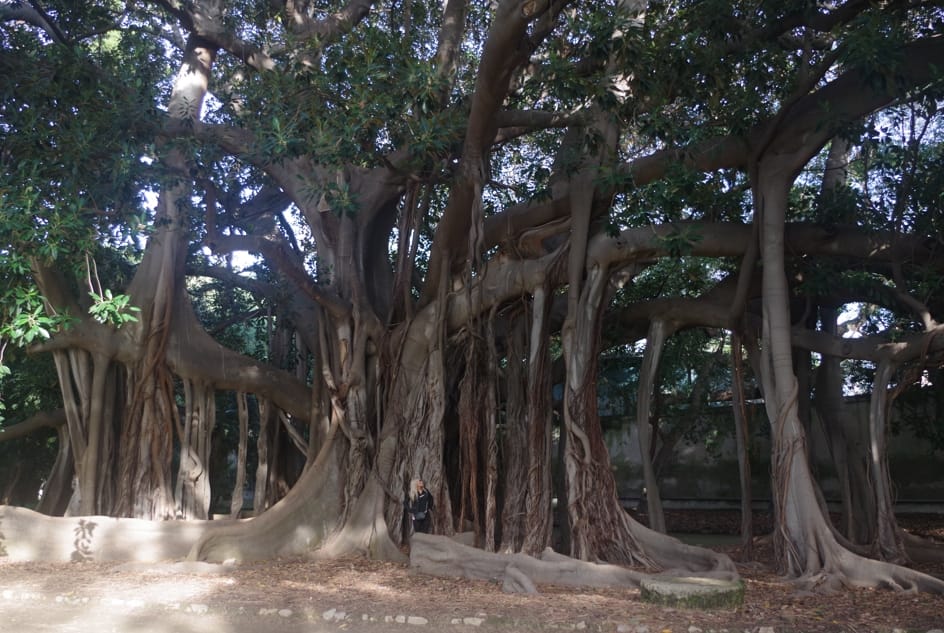
The Great Ficus in the Botanical Garden of Palermo is a truly extraordinary plant from various perspectives, including its history, biology, culture, and size. It is the oldest known Ficus Macrophylla in Italy, having been planted by Vincenzo Tineo in 1845, making it 173 years old.
At present, it is the second largest ficus in Italy, with a crown that covers an area of approximately 1,200 square meters on the ground. The largest ficus in Italy can be found in Piazza Marina in the Garibaldi Gardens and was planted in 1863. It has a volume of 10,000 cubic meters of vegetation, a height of 25 meters, and a trunk girth of 40 meters.
The Great Ficus is native to the Australian states of Queensland and New South Wales and is the ancestor of the large ficuses found in gardens in Palermo, Sicily, and southern Italy. It has a polycaule structure, meaning it has multiple stems, and has a central body that is shaped like a radial symphysis, which is formed by the fusion of corms and aerial roots. The overall shape of the plant is sinuous and radial. The tree grows in all directions, with its central body extending vertically and laterally through higher order ramifications, and downward through columnar aerial roots that support the branches. It also grows on the ground surface through tabular roots.
In particular, this specimen in the Botanical Garden of Palermo has 44 stems, the largest of which have a circumference of around 3.60 meters, and supports the growth of eleven large main branches that have a mostly horizontal development. These main branches then give rise to lower order branches.
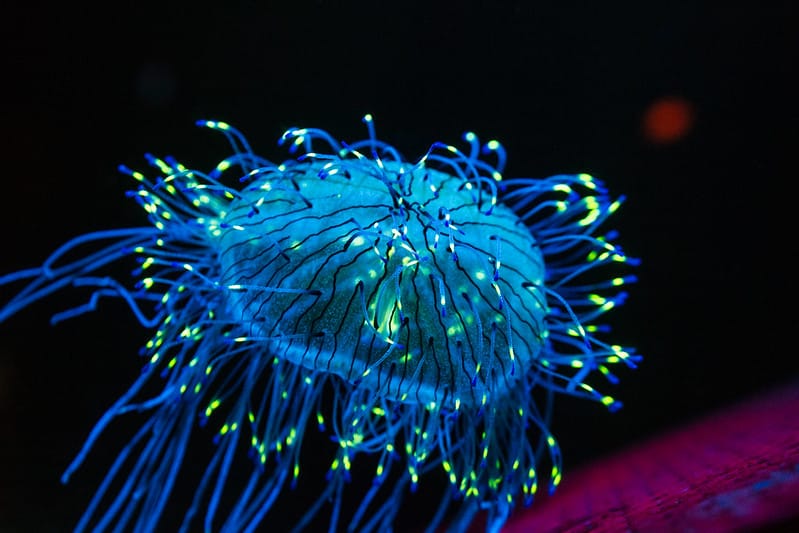
Bioluminescence is light produced by living organisms through a chemical reaction between a light-emitting molecula and an enzyme or a photoprotein, generally luciferin and luciferase. The reaction sometimes requires other cofactors such as ATP, calcium or magnesium. Some organisms synthesize luciferin on their own, others absorb it through other organisms.
Bioluminescence produces cold light, since the process does not emit heat, and it is different than fluorescence, which does not involve a chemical reaction and the light is just re-emitted after being absorbed.
Bioluminescence is used for many different purposes like hunting, defense against predators, warning, attracting mates, camouflage and even communication, by a wide range of animals and other living creatures such fireflies, glow worms, railroad worms, centipedes, snails, annelids, fish like anglerfish or lanternfish, invertebrates, krill, cnidarians, coral, jellyfish, crustaceans, bivalves, sea slugs, cephalopods, octopuses, squid, fungi, bacteria and other microorganisms.
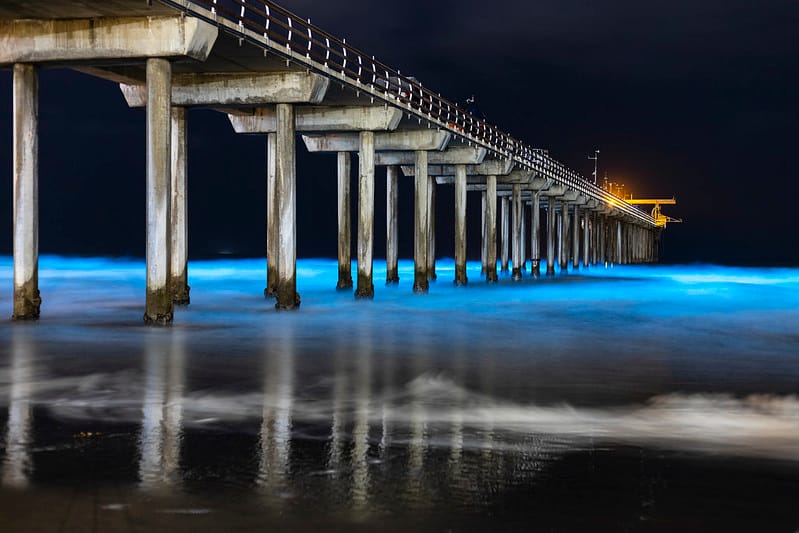
Thanks to this unusual phenomenon, these creatures create magical habitats such as bioluminescent marine bays, caves, woods and other spectacular landscapes.
Bioluminescence is a target for biology, medicine and engineering research for various experiments such as a new font of light or alternative uses in medicine.
Here is a complete list of the best places in the world where you can witness bioluminescence:
Big South Fork, Tennessee/Kentucky, USA
Titusville and Merritt Island, Florida, USA
Torrey Pines State Beach, San Diego, California, USA
This website uses cookies to improve your experience. We'll assume you're ok with this, but you can opt-out if you wish. Cookie settingsACCEPT
Privacy & Cookies Policy
Privacy Overview
This website uses cookies to improve your experience while you navigate through the website. Out of these cookies, the cookies that are categorized as necessary are stored on your browser as they are essential for the working of basic functionalities of the website. We also use third-party cookies that help us analyze and understand how you use this website. These cookies will be stored in your browser only with your consent. You also have the option to opt-out of these cookies. But opting out of some of these cookies may have an effect on your browsing experience.
Necessary cookies are absolutely essential for the website to function properly. This category only includes cookies that ensures basic functionalities and security features of the website. These cookies do not store any personal information.
Any cookies that may not be particularly necessary for the website to function and is used specifically to collect user personal data via analytics, ads, other embedded contents are termed as non-necessary cookies. It is mandatory to procure user consent prior to running these cookies on your website.