
Travel is one of life’s great pleasures. Whether you are boarding a long-haul flight, hitting the open road for a weekend trip, or packing in sightseeing from morning to night, exploring new places is genuinely good for the soul.
But your body? It does not always agree.
Why Travel Leaves You Feeling Sore
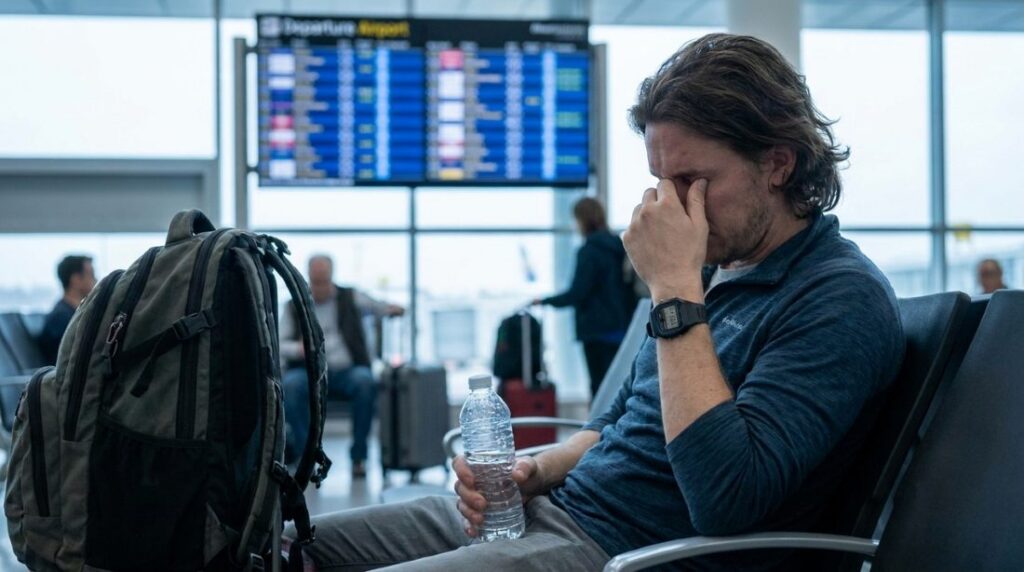
Most travel involves a lot of sitting, in cars, planes, airports, and restaurants. The human body was not designed for that. It needs regular movement to keep muscles loose and circulation healthy.
Airplane seats are a particular problem. There is barely room to shift your weight, and most people end up hunching forward over a phone or laptop for hours at a time. That puts a lot of pressure on the neck and shoulders.
Common travel-related complaints include:
- Neck stiffness
- Lower back pain
- Tight hips and hamstrings
- Shoulder tension
- Headaches from muscle tightness
Even fit, active people feel this. It is not about fitness. It is about prolonged sitting in fixed positions.
Sleep Is Part of the Problem Too
Hotel pillows and mattresses are rarely what your body is used to. Sleeping in an unfamiliar position for several nights in a row can quietly build tension in your neck and upper back, even if you do not notice it right away.
Add in full days of walking, carrying bags, and rushing through airports, and recovery becomes difficult. The body needs downtime, and travel rarely offers much of it.
Why Mobility Matters More Than People Realize
Travelers with existing back pain, neck issues, or old injuries often notice symptoms flaring up after long trips. Hours of compression and limited movement can aggravate problems that are otherwise manageable at home.
This is why more travelers are actively looking into posture and spinal health before and after trips. Resources from professionals like Dr. Robert Caruso, a chiropractor in El Cajon, CA, are often referenced by people trying to understand how extended sitting affects the spine and what they can do to recover properly.
According to the World Health Organization’s guidelines on physical activity and sedentary behavior, reducing the time spent sedentary and breaking it up with movement throughout the day has real benefits for both physical and mental health.
Simple Habits That Actually Help
A few small changes during your trip can make a real difference:
- Stretch on the plane or in the car, even simple seated stretches help
- Take short walking breaks whenever you stop
- Stay hydrated because dehydration worsens muscle tension
- Watch your posture while sitting and try not to slouch or lean forward
- Move throughout the day instead of sitting through everything back to back
For more practical advice on staying comfortable while exploring, our travel health and preparation tips cover useful guidance on movement, hydration, and getting your body ready for long travel days.
Choosing the Right Destination Helps Too
Not all destinations put the same demands on the body. Some trips involve long walking days over uneven terrain, while others are more relaxed. If you are already dealing with back pain or stiffness, it is worth thinking about how physically demanding a destination will be before you go.
Our guide to destinations by climate can help you plan around conditions that suit your body, whether that means avoiding extreme heat that worsens inflammation or choosing a cooler destination where you can stay more active without overheating.
What to Do When You Get Home
Many people focus on how they feel during a trip but ignore what happens after. Post-travel soreness is real, and it can linger for several days if the body does not get a chance to properly recover.
When you return home, give your body a little extra attention. Light stretching, a warm shower, and getting back to your normal sleep setup can help. If tightness in the neck or back sticks around longer than a day or two, it is worth paying attention to rather than pushing through.
Some travelers find that a visit to a chiropractor or physical therapist after a long trip helps reset the body and address tension that built up along the way. Small aches that get ignored often turn into bigger problems over time, so addressing them early is always the better approach.
The Takeaway
Travel should leave you with great memories, not a stiff neck that lasts a week.
Paying attention to how you move, sit, and sleep during trips does not take much effort. But it can make a noticeable difference in how you feel both during your travels and once you are back home.