
Matera is one of the most unique and ancient cities in Europe, located in the southern region of Basilicata. Famous for its extraordinary cave dwellings carved into limestone rock, known as the Sassi di Matera, the city offers a rare glimpse into a form of human settlement that dates back over 9,000 years. Recognised as a UNESCO World Heritage Site and named the European Capital of Culture 2019, Matera has transformed from a symbol of poverty into one of Italy’s most fascinating travel destinations. Its UNESCO recognition is not only due to its visual impact, but also to its extraordinary system of water collection and management, a highly advanced network of cisterns and channels that sustained life in the Sassi for thousands of years.
The Sassi Districts
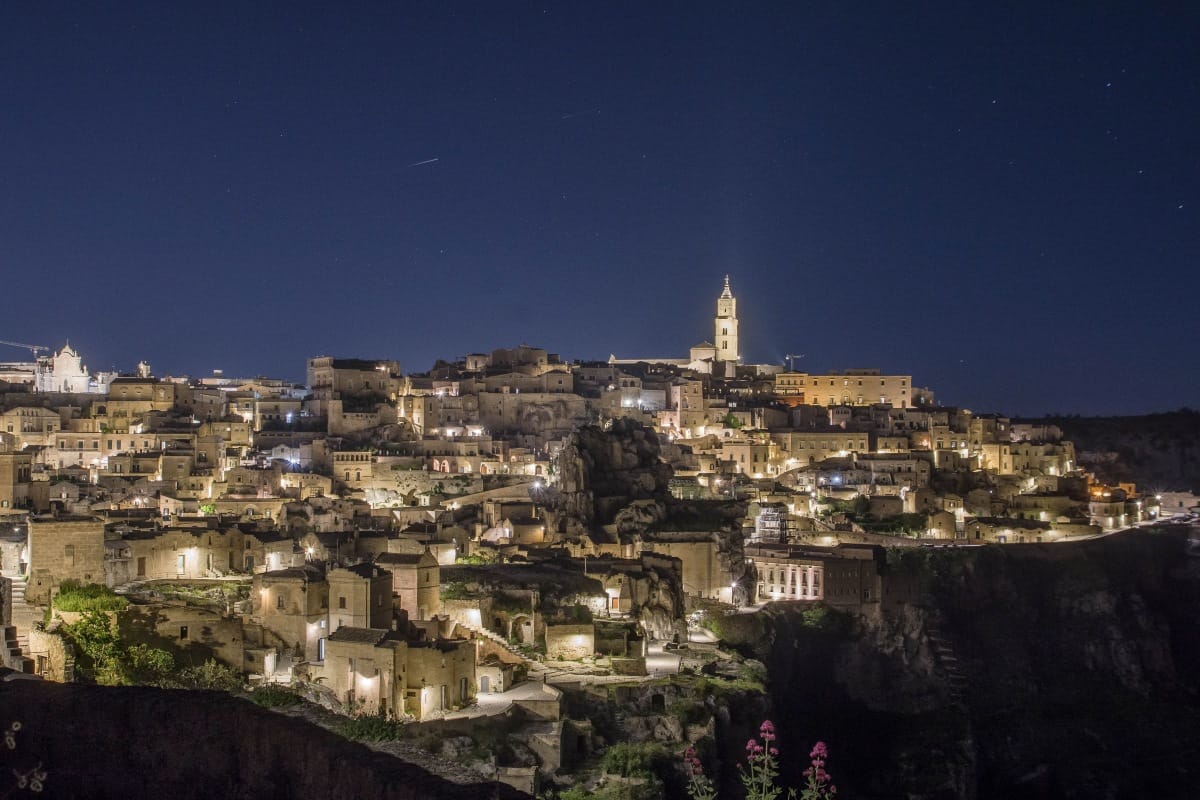
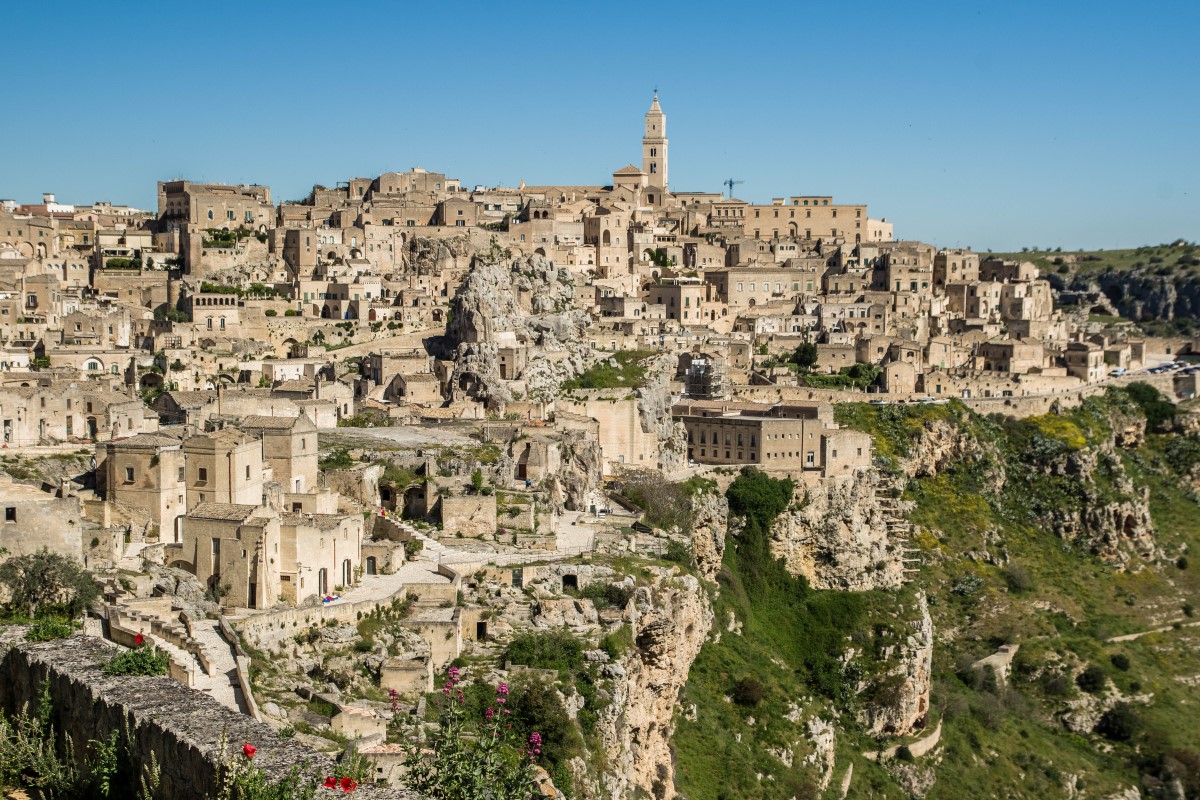
The heart of Matera lies in the ancient districts of Sasso Caveoso and Sasso Barisano, where homes, churches, and even hotels are carved directly into the rock. Walking through these areas feels like stepping back in time, with narrow alleys, stone staircases, and panoramic terraces overlooking the dramatic canyon of the Gravina di Matera.
The Sasso Caveoso retains a more authentic and raw appearance, resembling its historical state, while Sasso Barisano has been more extensively restored and offers a higher concentration of accommodations and restaurants.
Matera is home to over 150 rock churches, many adorned with Byzantine frescoes. Among the most remarkable is Santa Maria de Idris, carved into a large rock pinnacle, and San Pietro Barisano, the largest cave church in the city.
Things to Do in Matera
Exploring Matera is all about slow travel and immersion. Wander through the Sassi, discover hidden viewpoints, and enjoy local cuisine in cave restaurants.
Key experiences include visiting the Palombaro Lungo, a short but fascinating visit to an underground cistern that highlights the city’s ingenious water system. Exploring the traditional house caves, such as the Casa Grotta di Vico Solitario, gives a deeper understanding of daily life in the past, while a visit to Casa Noha helps contextualise the entire city before diving into the Sassi.
One of the most rewarding experiences is simply getting lost in the Sassi. Despite the constant presence of tourism, it is surprisingly easy to find quiet corners, panoramic terraces, and hidden alleys where you can be completely alone.
Another highlight is reaching Belvedere Murgia Timone, one of the most spectacular viewpoints over Matera. It can be accessed on foot from the city via a scenic hike (ticket required), crossing the canyon and even passing through a Tibetan bridge. Alternatively, you can drive to the Parco della Murgia Materana (a protected natural area filled with prehistoric caves, rupestrian churches, and hiking trails) and reach the viewpoint by shuttle or by renting a bike, which is a great option to explore the area more freely. Get there at sunrise for the best lights.
Matera is also a popular filming location, featured in movies like Mel Gibson’s The Passion of the Christ and the James Bond movie No Time to Die.
Food in Matera
The cuisine of Matera is deeply rooted in peasant traditions, with simple ingredients transformed into rich and flavourful dishes. Among the most iconic is pignata, a slow-cooked meat stew prepared in a terracotta pot, traditionally cooked for hours over a low flame. Another must-try is peperoni cruschi, crispy dried red peppers typical of Basilicata, often served as a side or added to pasta for extra flavour and crunch.
Bread also plays a central role in local gastronomy, especially the famous Pane di Matera, known for its distinctive shape and intense taste.
For an unforgettable dining experience, head to Via Bruno Buozzi, one of the best areas to find excellent restaurants. Here, many venues are set inside caves, offering not only high-quality traditional food but also an incredible atmosphere, with candlelit interiors carved into the rock and stunning views over the Sassi.
Best Time to Visit Matera
The best time to visit Matera is during spring (April to June) and early autumn (September to October), when temperatures are pleasant and the city is less crowded. Summers can be very hot, often exceeding 35°C, while winters are quieter but can feel chilly due to the stone environment.
Visiting in the evening is highly recommended, as the Sassi become beautifully illuminated, creating an unforgettable atmosphere.
Matera does not have its own airport, but it is well connected to nearby cities. The closest airport is Bari, about 65 km away.
From Bari, you can reach Matera by train using the Ferrovie Appulo Lucane line, which takes around 1.5 hours. Alternatively, buses and car rentals offer more flexibility, especially if you plan to explore the surrounding region.
Driving is a convenient option, particularly for visiting the Murgia Plateau and nearby attractions like Alberobello or Castelmezzano.
Nearby Attractions
Within a short drive, you can explore some of southern Italy’s most stunning landscapes. Highlights include Alberobello, famous for its trulli houses, and the dramatic peaks of the Dolomiti Lucane near Castelmezzano and Pietrapertosa.
For nature lovers, the Pollino National Park offers hiking and wildlife experiences, while the Ionian coast provides beautiful beaches less than an hour away.