
Pamukkale, with its white terraces, pools, and also an ancient city, is one of the most famous natural wonders in Turkey, attracting millions of visitors every year. Located in Denizli Province in southwestern Turkey, this UNESCO World Heritage Site combines stunning natural beauty with thousands of years of history, making it one of the world’s most unique destinations.
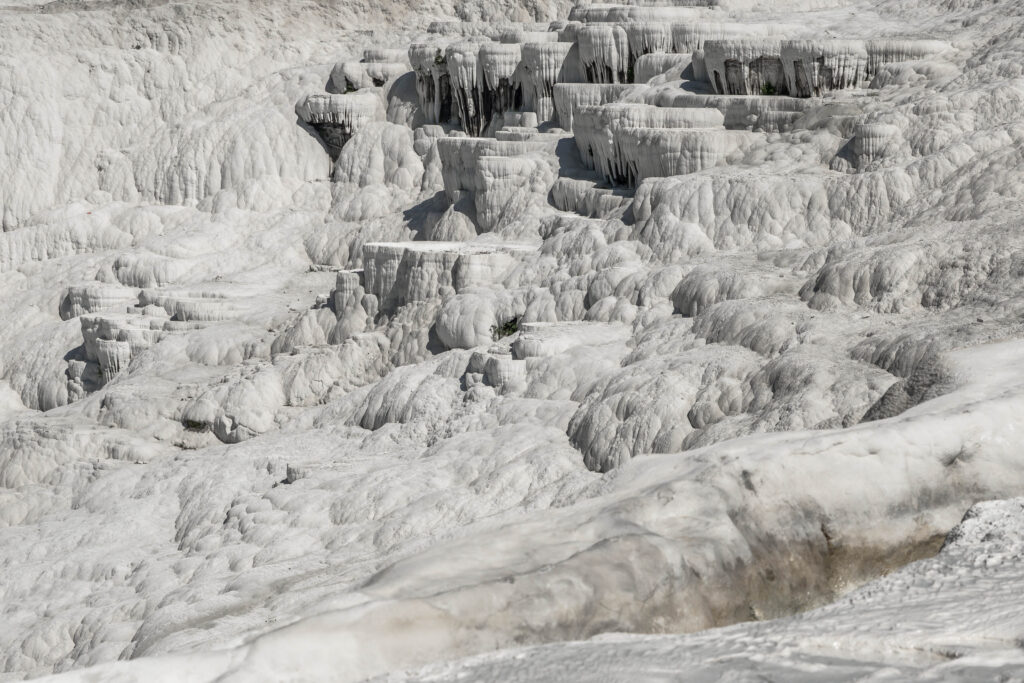
The name Pamukkale means Cotton Castle in Turkish, due to the white terraces formed by travertine rocks that cascade down the hillside like frozen waterfalls or snow-covered slopes. Formed by mineral-rich thermal waters flowing down the mountainside for thousands of years, these terraces create a landscape unlike anywhere else in the world.
Geological Formation of Pamukkale
The terraces are the result of natural processes that have been shaping the landscape throughout hundreds of thousands of years. Since the region lies within a tectonically active zone, deep faults in the Earth’s crust allow groundwater to circulate several kilometres below the surface.
As the water travels underground, it is heated by geothermal activity and dissolves minerals (especially calcium carbonate) from the surrounding rocks. The mineral-rich water then rises through fractures and reaches the surface as hot springs with temperatures from approximately 35°C to 100°C.
When the thermal water emerges at the surface, it begins to cool and release carbon dioxide into the atmosphere, permitting calcium carbonate to dissolve, precipitate and solidify, slowly forming the travertine layers. Over thousands of years, these deposits have accumulated and formed the terraces, ridges, and pools that characterise Pamukkale today.
The travertine formations are still growing, making Pamukkale a rare example of an active geological landscape. To protect the fragile formations, authorities carefully manage the water flow across different sections of the terraces, helping preserve their iconic white appearance (when visiting, you might notice some small artificial canals).
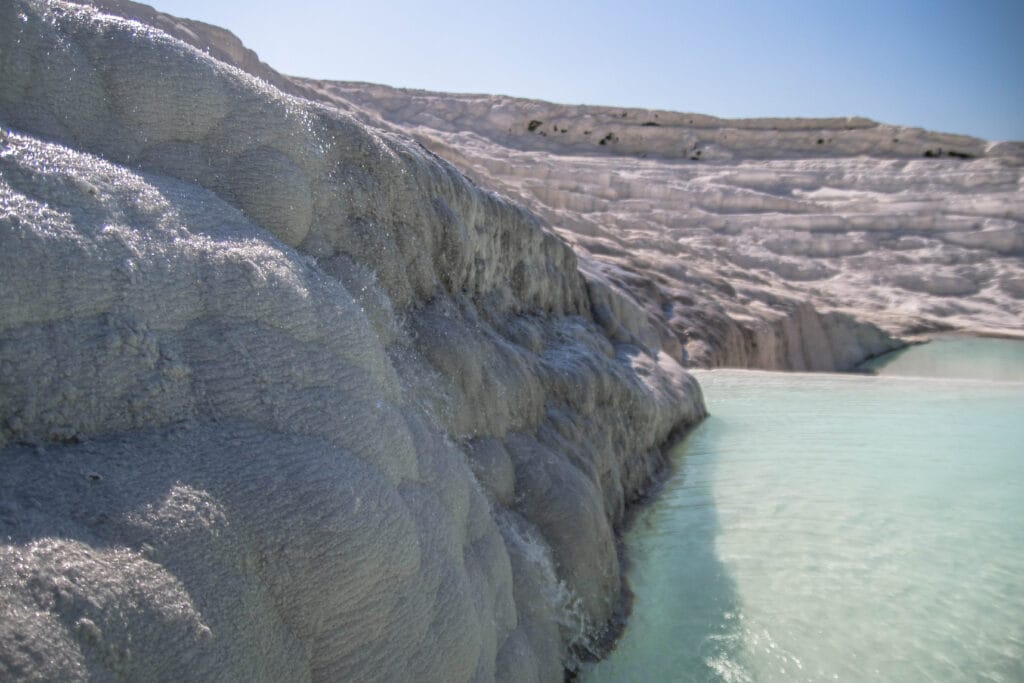
Visitors can walk barefoot through designated sections while enjoying panoramic views across the surrounding valley. The shallow pools often reflect the sky, creating spectacular photographic opportunities, particularly during sunrise and sunset.
The thermal waters flowing through the terraces contain high concentrations of dissolved minerals that have attracted visitors for centuries. Although swimming is no longer permitted in most sections to protect the delicate formations, few accessible pools remain available to visitors.
Throughout the day, the appearance of the terraces changes dramatically as sunlight reflects off the brilliant white surfaces. During sunrise and sunset, the travertines often take on soft shades of gold, pink, and orange.
Hierapolis Ancient City
Beyond its geological beauty, Pamukkale is also home to the ancient city of Hierapolis, founded during the 2nd century BC by the kings of Pergamon and one of the best-preserved Greco-Roman spa cities.
Standing just beside the terraces, Hierapolis, thanks to the therapeutic reputation of the thermal springs, quickly developed into one of the most important spa destinations in the Roman Empire.
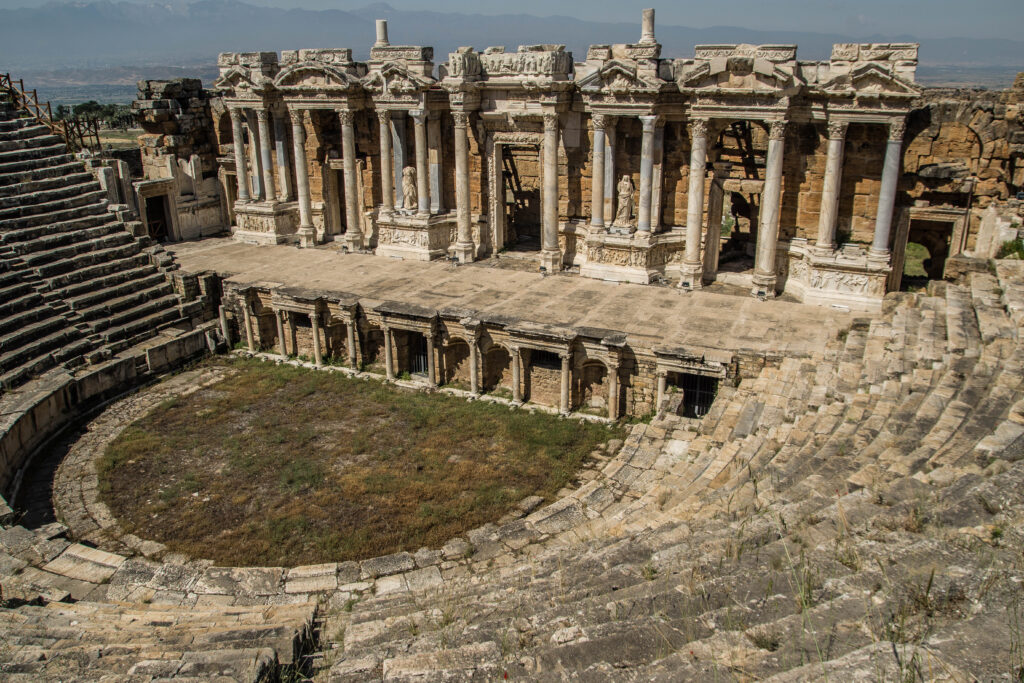
Today visitors can explore a remarkable collection of ancient monuments including the magnificent Roman Theatre, the vast Necropolis, the Temple of Apollo, ancient baths, city gates, and well-preserved streets that reveal the importance of Hierapolis throughout antiquity.
One of the most popular attractions within the ancient city is Cleopatra’s Pool, also known as the Ancient Pool. According to local legend, Cleopatra herself bathed in these waters. Please note that there is a separate charge for admission to the pool.
The thermal pool contains submerged Roman columns and marble fragments that fell into the water following an earthquake centuries ago. Visitors can swim among these ancient ruins while enjoying mineral-rich waters maintained at approximately 36°C throughout the year.
Best Time to Visit
Pamukkale can be visited year-round, but the experience varies depending on the season.
Spring (April to May)
Spring offers pleasant temperatures, green landscapes, and lower visitor numbers. Many travellers consider this the best season to visit.
Summer (June to August)
Summer provides long sunny days and excellent photography opportunities. However, temperatures often exceed 35°C during the afternoon, making early morning and late afternoon visits preferable.
Autumn (September to October)
Autumn combines warm weather with fewer crowds and excellent visibility, making it one of the most comfortable times to explore both the terraces and Hierapolis.
Winter (November to March)
Winter offers a quieter atmosphere and unique scenery as steam rises from the thermal waters during cooler mornings. Although rainfall is more frequent, visitor numbers are significantly lower.
Sunrise is widely regarded as the most magical time to visit. The terraces are quieter, temperatures are cooler, and the soft light creates beautiful reflections across the pools. Make sure to check the opening times, which change with the different seasons. We strongly recommend entering the site at the opening time… go straight to the terraces, and you might have a good chance to get good pictures with almost no people.
Sunset is equally spectacular, with the white travertines reflecting warm shades of orange, pink, and gold. Photographers often remain until closing time to capture the changing colours across the landscape.
How to Get There
Pamukkale is located approximately 20 kilometres north of Denizli. The nearest airport is Denizli Çardak Airport, situated about 70 kilometers away and connected to major Turkish cities, including Istanbul.
Many travellers visit Pamukkale as part of a wider journey through western Turkey, often combining it with Ephesus, Izmir, Bodrum, or Cappadocia. From Izmir, the journey takes around 3 hours by car. While you might consider booking a collective trip from different tourist locations, the best idea remains hiring a car (roads are good and traffic is not impacting your journey).
As we said, be aware that you must remove your shoes before walking on the travertine terraces (to protect the fragile formations). A good idea could be bringing anti-slip socks, as in some points, the ground could be very slippery and you risk falling into the pools with your camera.
Bring sunscreen, sunglasses, and sufficient water, especially during summer.
Nearby Attractions
The region surrounding Pamukkale offers several other fascinating attractions. The ancient city of Laodicea is located only a short drive away and contains some of the most impressive Roman ruins in Turkey.
Visitors can also explore the thermal resorts of the Denizli region, which benefit from the same geothermal system responsible for creating Pamukkale’s famous terraces.