
The Cammino Minerario di Santa Barbara is a long-distance hiking route in southwest Sardinia, Italy, that crosses some of the island’s most dramatic coastal and inland landscapes. It runs through former mining territories, connecting abandoned villages, cliffs, beaches, and industrial heritage sites shaped by centuries of mineral extraction.
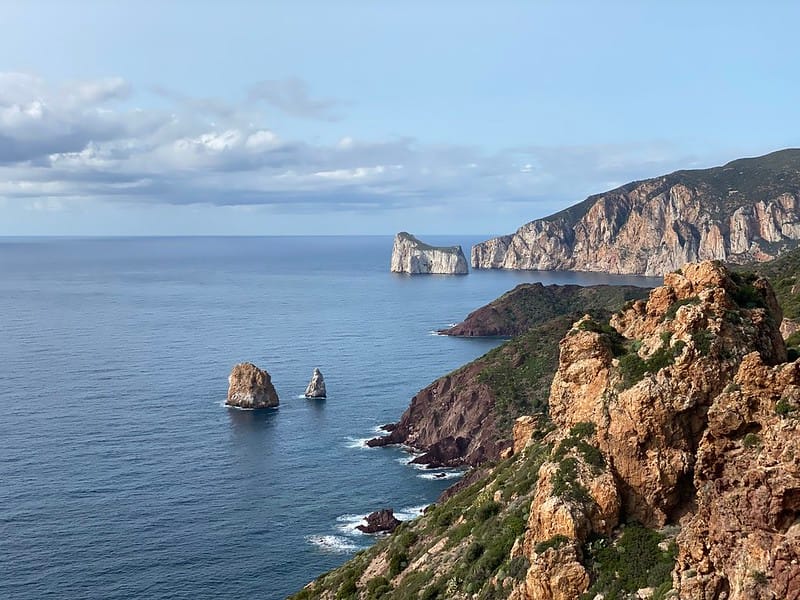
Rather than a single trail, it is a network of interconnected stages that can be walked in sections. The most famous stretch is the coastal area between Nebida and Masua, known for its panoramic views over the Mediterranean and the iconic sea stack Pan di Zucchero.
Why This Trail Became Internationally Famous
The route gained global attention after being recognised by the outdoor community platform Komoot, where it received a major community award. This recognition led many travel media outlets to describe it as one of the most important hiking experiences in Europe, and in some cases loosely as a “world-class” trail.
What makes it stand out is not a single feature, but the combination of:
- preserved mining heritage landscapes
- wild Mediterranean coastline
- relatively low tourist density
- long-distance trekking structure
- dramatic geological formations
Unlike more commercial hiking routes in Europe, this trail remains largely authentic and minimally developed in many sections.
The Most Iconic Section: Nebida to Masua
The coastal stretch between Nebida and Masua is widely considered the highlight of the entire route.
Here, the trail follows cliffs above the sea, passing old mining structures such as Laveria La Marmora, an abandoned ore processing facility built directly into the rock.
From this section, hikers get uninterrupted views of Pan di Zucchero, one of the largest sea stacks in the Mediterranean and a symbol of southwest Sardinia.
This area is also where industrial history and natural scenery overlap most clearly, with rusted structures contrasting against turquoise water and limestone cliffs.
Mining Heritage and Abandoned Villages
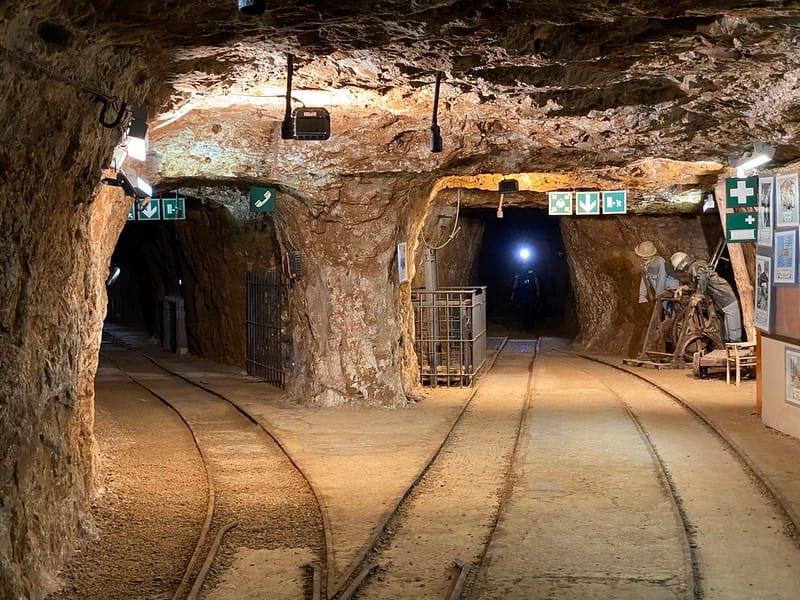
One of the defining features of the Cammino Minerario di Santa Barbara is its connection to Sardinia’s mining history. The southwest region was once one of the most important mining areas in Italy.
Along the route, hikers encounter:
- abandoned mining settlements such as Monteponi and Ingurtosu
- old railway tracks used for mineral transport
- processing plants built into cliffs and valleys
- ghost villages left after mine closures in the 20th century
These sites are not reconstructed attractions but preserved remnants of industrial life, gradually being reclaimed by nature.
Inland and Coastal Variety
While the coastline gets most of the attention, inland sections offer a very different experience. Trails pass through rugged hills, Mediterranean scrub, and quieter rural areas where tourism is minimal.
The contrast between coastal cliffs and inland mining valleys is one of the key characteristics of the route, making it more diverse than a typical coastal hike.
Best Time to Hike
The best periods for hiking the trail are:
Spring (March to May): Green landscapes, mild temperatures, and stable weather conditions.
Autumn (September to November): Warm sea views, comfortable hiking conditions, and fewer visitors.
Summer can be extremely hot, especially on exposed coastal sections with little shade, while winter is quieter but more unpredictable in terms of wind and rain.
Access and Practical Information
The trail is typically accessed via small towns along the southwest coast of Sardinia, with Iglesias often used as a main base for inland sections and Nebida or Masua for coastal access.
A car is highly recommended, as public transport is limited between trailheads. Many hikers choose to walk selected stages rather than the full multi-day route.
More info at https://www.camminominerariodisantabarbara.org/
Official Context and Recognition
The Cammino Minerario di Santa Barbara is officially recognised as a cultural and historical trekking route, designed to preserve and promote the mining heritage of the region.
Its international visibility increased significantly after winning a community-based award on Komoot, which helped position it among Europe’s most notable hiking routes.