
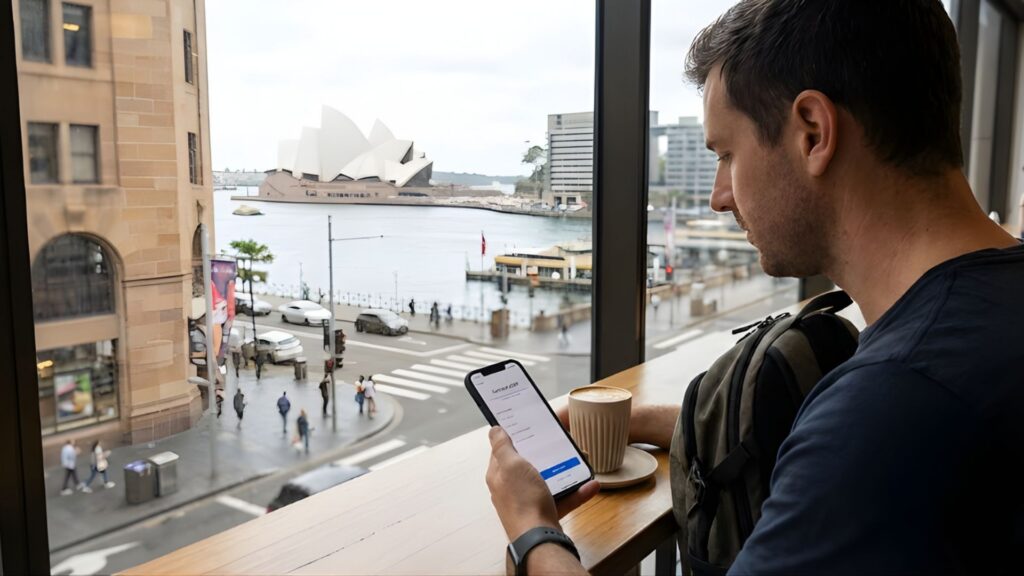
Your Phone Stops Working Right After Landing
Landing in a new country usually feels simple until you actually try to use your phone. Everything looks fine for a moment, then small issues start showing up. Mobile data doesn’t connect properly, apps load slower than expected, and basic things like maps or ride booking take more effort than they should.
Most travellers still rely on roaming or a physical SIM card. Both work, but both come with friction. Roaming often brings unpredictable costs and unstable performance. Physical SIM cards depend on finding a shop, waiting in queues, and sometimes dealing with local registration rules. It slows things down exactly when you need speed.
eSIMs remove part of that problem. You install a mobile plan digitally on your phone, usually through a QR code. It can be done before departure or after landing. Once active, it connects your device to local networks and gives you data access without physical setup. In most cases, this is already enough to handle navigation, messaging apps, and basic travel tools without interruption.
That fixes connection, but not everything else travellers run into.
Mobile Data Is Not the Whole Problem
Having internet access doesn’t always mean you can actually use your accounts. Many apps still rely on SMS verification. Banks, booking platforms, ride apps, and email services often send one-time codes to a phone number.
If your home SIM is off or roaming is disabled, those messages don’t arrive. You can be fully online through an eSIM and still get blocked at login screens. This is where most travellers hit a problem they didn’t expect.
It usually happens at the worst moment. You land, try to confirm a booking or open a ride app, and suddenly you need a code you can’t receive. At that point, it doesn’t matter that your internet works. Access is still blocked.
Why Apps Ask for Verification Abroad
Most systems assume your phone number stays active at all times. When you switch countries or networks, that assumption breaks. Security systems react by adding extra verification steps.
It’s not about convenience. It’s about risk control. If something looks unusual, access gets slowed down until identity is confirmed again.
The problem is that SMS is still tied to your original SIM. If that SIM isn’t active, verification becomes a blockage instead of a quick step. Even with a working internet, access to key services can still be interrupted, especially when apps force re-authentication after location changes.
Fix the Gap Between Data and Access
This is where setups like eSIM Plus Australia virtual numbers become relevant in real travel use. The idea is simple: split mobile data and phone number functions instead of relying on one SIM for everything.
The eSIM handles mobile data. It keeps your phone connected for maps, booking apps, navigation, messaging, and general internet use. The virtual number runs over the internet and receives SMS codes and calls even when your physical SIM is not active.
Used together, they reduce a common travel issue. You don’t lose internet access when changing countries, and you don’t lose verification access when your original SIM cannot receive messages. Each part handles a separate function instead of forcing one system to do everything.
This separation matters more in practice than it sounds on paper. Most travel disruptions don’t come from total loss of connectivity. They come from partial access, where the internet works but login systems don’t.
What Actually Changes in Real Travel
The difference shows up in everyday situations across a trip.
You land late at night in a new city and open a ride app. It asks for a code. If your original SIM isn’t active, that step can delay things while you look for alternatives. With a virtual number available, the code arrives through the app and you continue without interruption.
Hotel platforms behave in a similar way. Many ask for re-confirmation when they detect a new country or device. Without SMS access, you can get locked out of your reservation details, even though you already booked everything in advance.
Banks can be even stricter. Some still use SMS for login or transaction checks. If those messages don’t arrive, access can be limited until you restore a working number. That can become a real issue when you are already abroad and need immediate access to funds.
With eSIM handling data and virtual numbers handling verification, these problems don’t disappear completely, but they become less frequent and easier to manage.
Setting It Up While Travelling
Setup is usually straightforward and doesn’t take long.
The eSIM is installed using a QR code or provider app. You activate it before departure or after landing. Once enabled, it connects automatically to available networks without manual configuration.
The virtual number is activated through a separate app or service. After setup, it runs in the background and receives messages like a normal number, but delivered through the internet instead of a physical SIM signal.
After that, there isn’t much to manage. Most travellers just use their phone normally across different countries, without thinking about which layer is handling what.
Where the Limits Still Exist
This setup doesn’t remove every issue, and it’s important to be clear about that.
Some platforms still reject virtual numbers, especially smaller regional apps with stricter verification systems. Certain banks also apply restrictions depending on internal security rules or country-specific policies.
Not every smartphone supports eSIM technology either. While most newer flagship devices are eSIM-compatible, many older phones and some budget models still require a physical SIM card. Before purchasing an eSIM plan, it’s worth checking whether your device supports eSIM and whether the feature is enabled in your region.
eSIM coverage is strong in most popular destinations, but not universal. Some rural or less developed areas can still have weaker signals or slower speeds, depending on local infrastructure.
Even with these limitations, eSIMs remain a convenient and reliable option for staying connected across many travel destinations.
A More Stable Way to Handle Travel Connectivity
Travel used to depend heavily on physical SIM cards and roaming plans designed for single-country use. That model doesn’t match how people move today, especially when trips involve multiple destinations in a short period.
Separating connectivity into two parts makes things more stable. The eSIM handles internet access. The virtual number handles verification and communication tied to identity.
Once you use both on a few trips, the difference becomes obvious. Fewer blocked logins, fewer missed codes, and less time spent dealing with access problems that interrupt travel. Instead of constantly fixing connectivity issues, you simply stay connected in the background and focus on the trip itself.